
Udon Thani Expo 2026: The Definitive Visitor Guide to Thailand's World Horticultural Expo
From 1 November 2026 until 14 March 2027, Udon Thani will welcome visitors from Thailand and around the world to one of the most ambitious events ever staged in Northeast Thailand: the Udon Thani International Horticultural Expo 2026.
And if the words horticultural expo make you imagine a particularly large flower show, think again.
This is being created as an enormous living landscape of water, gardens, extraordinary architecture, international exhibitions, Isan culture, food, technology and nature, covering the Nong Dae Wetland in Kut Sa, Mueang Udon Thani.
Its official theme is:
"Diversity of Life: Connecting People, Water and Plants for Sustainable Living."
More importantly, organisers describe Udon Thani 2026 as the world's first international horticultural expo staged on a wetland site. The main Expo site covers approximately 1,030 rai, or 164.8 hectares, and is expected to attract millions of visitors during its 134-day run.
This is not simply a major event for Udon Thani.
It could become one of the defining moments in the city's transformation into an international tourism destination.
Udon Thani Expo 2026: Quick Facts
Dates: 1 November 2026 to 14 March 2027
Duration: 134 days
Location: Nong Dae Wetland, Kut Sa, Mueang Udon Thani, Thailand
Site: Approximately 1,030 rai / 164.8 hectares
Theme: Diversity of Life: Connecting People, Water and Plants for Sustainable Living
Main experiences: International gardens, landmark architecture, wetlands, greenhouse displays, Isan culture, agricultural innovation, flowers and ornamental plants, orchids, indoor exhibitions, food and family activities
Official status: An international horticultural exposition recognised by the International Association of Horticultural Producers, AIPH
Best advice: Don't think of it as a flower show. Allow plenty of time to explore it.

What Will Udon Thani Expo 2026 Actually Feel Like?
Perhaps the most exciting thing about the Expo is the setting itself.
Rather than constructing an exhibition centre and filling it with temporary displays, the Expo has been designed around the existing landscape of Nong Dae Wetland.
Water is therefore not something sitting beside the event.
It is part of the event.
Visitors will move through landscaped gardens, waterfront areas, bridges, walkways, buildings and exhibition spaces that explore the relationship between people, plants and water.
The masterplan includes international gardens, orchid displays, flower and ornamental plant gardens, indoor plant exhibitions, cactus displays, a butterfly garden and the specially created Bung-Bua Wetland Experience, alongside water-crossing bridges and activity areas.
Imagine arriving on a cool Udon Thani morning, with water reflecting the sky between gardens and contemporary buildings, before spending the day moving between colourful international landscapes, tropical planting, cultural spaces and architecture that could only have been created in Isan.
That sense of place may ultimately be what makes Udon Thani Expo 2026 special.
It isn't trying to transplant another country into Northeast Thailand.
It is taking Isan itself and presenting it to the world.
The Commemorative Building: A New Udon Thani Landmark
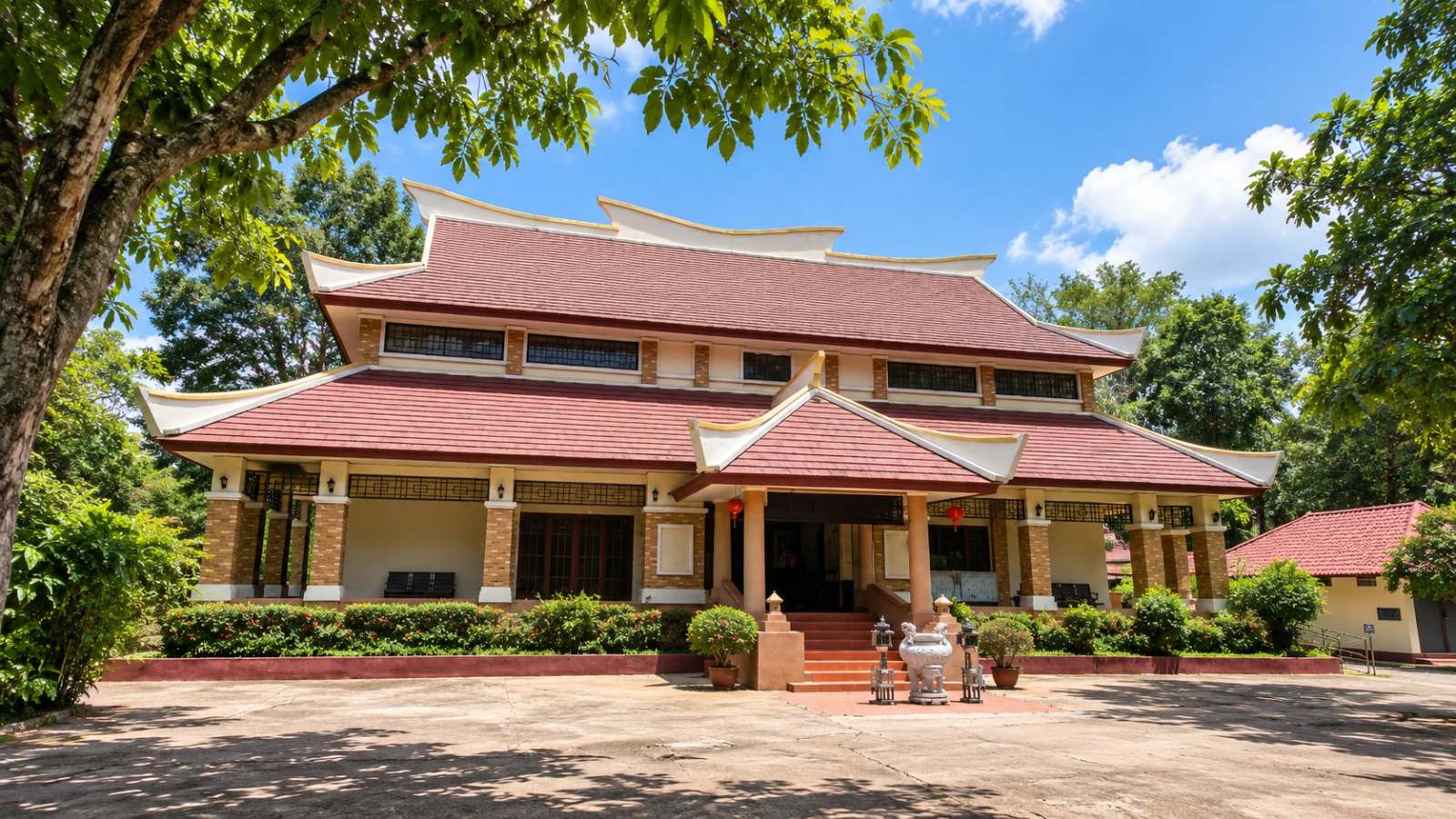
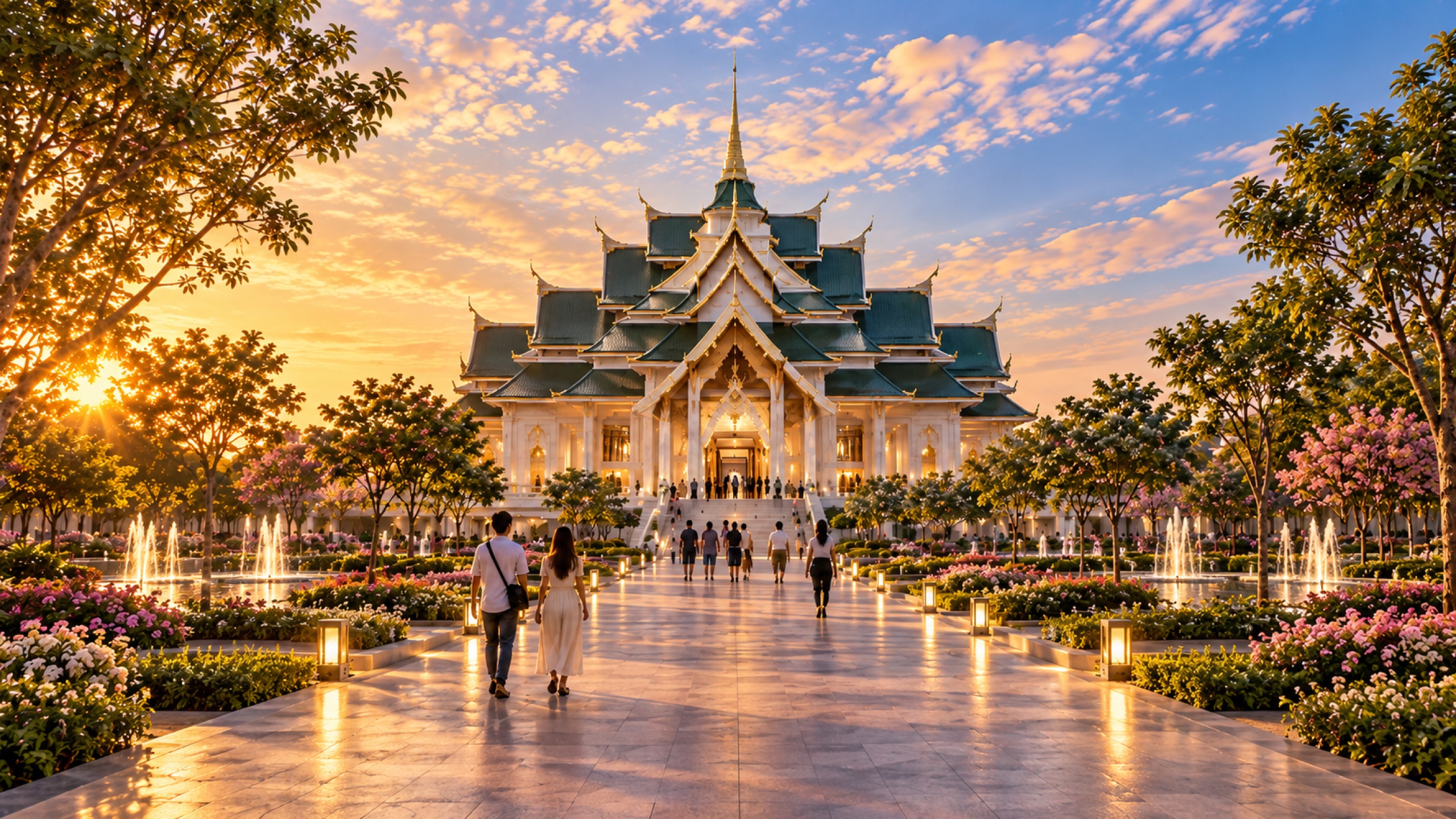
One of the buildings visitors are likely to remember long after leaving the Expo is the Commemorative Building.
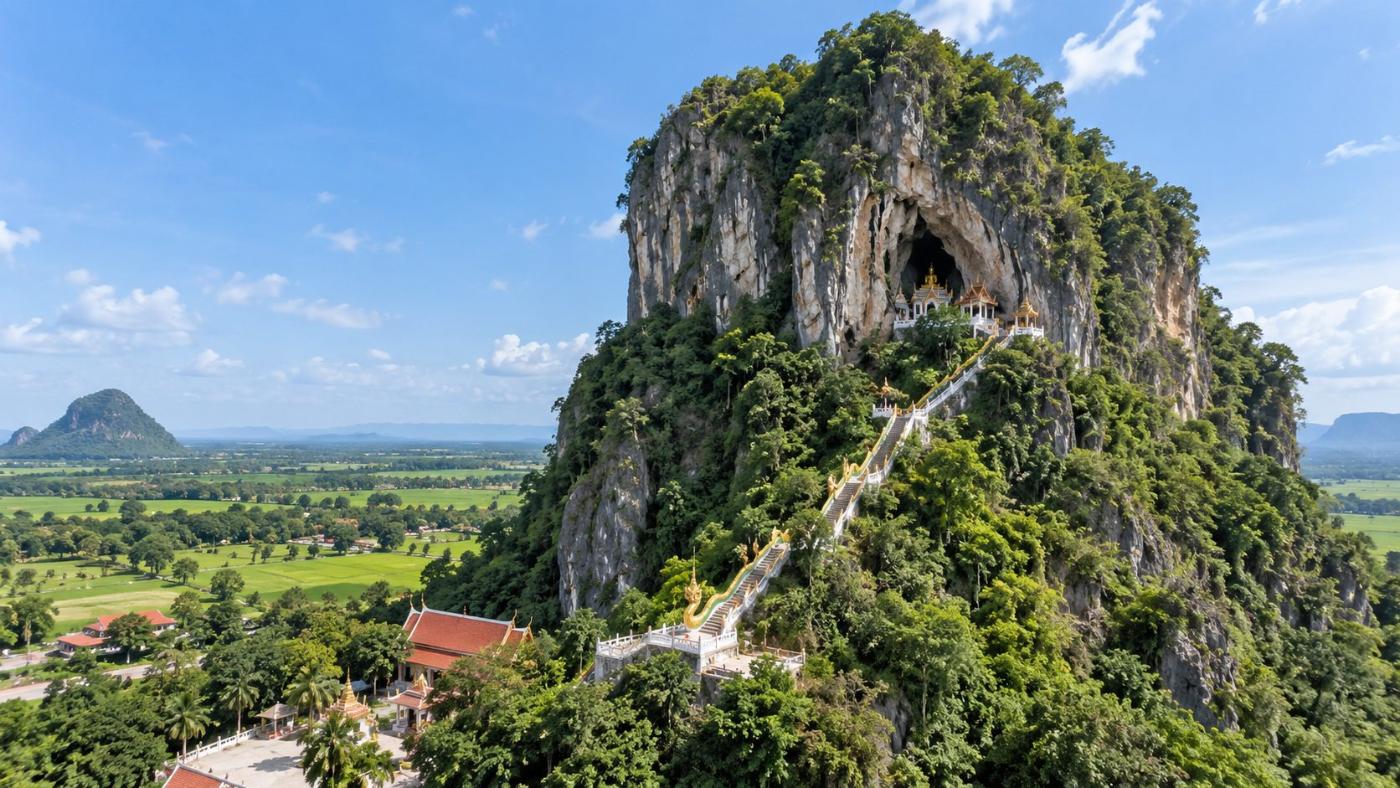
Its architecture takes inspiration from one of Udon Thani's most beautiful landmarks, Wat Pa Phu Kon, the famous forest temple in the mountains of Na Yung.
The official Expo description presents the building as a centre of faith reflecting the Buddhist way of life of Udon Thani.
That inspiration matters.
Wat Pa Phu Kon is instantly recognisable for its elegant Thai rooflines and its remarkable position amid the forests of northern Udon Thani. The Expo does not simply reproduce the temple, but takes that architectural identity and reinterprets it as a contemporary landmark for a completely different setting.
Placed among the landscaped gardens and wetlands of Nong Dae, the building should create one of those moments when visitors stop walking, reach for their phones and simply look.
But this is intended to be more than a beautiful background for photographs.
The Commemorative Building represents the spiritual side of Udon Thani, a reminder that in Isan, landscape, community, culture and Buddhism have long existed alongside one another.
It is precisely this combination of contemporary ambition and deeply local identity that makes the Expo fascinating.

A Giant Building Inspired by an Isan Fish Trap
Perhaps even more unexpected is the design of the main Exhibition Building.
Its inspiration?
A fish trap.
More precisely, the traditional woven Sai, a simple fishing tool that has been used for generations by communities living beside the rivers, ponds and wetlands of Northeast Thailand.
The Expo architects have taken the distinctive form of this humble piece of Isan rural life and transformed it into a major contemporary exhibition building.
The official design describes the structure as representing the connection between people and waterways, while creating a large and flexible interior exhibition space.
It is a wonderful idea.
Something once woven by hand and placed quietly into a stream becomes the inspiration for architecture designed to welcome people from around the world.
It also captures the spirit of the Expo perfectly.
People. Water. Plants. Isan.
All connected.

The Greenhouse: Traditional Isan Living Reimagined
Even the Expo's greenhouse carries a distinctly local story.
Rather than designing a conventional glass exhibition hall, the architects have taken inspiration from the traditional Isan Huan Faet, or twin house.
Traditional Isan homes were not simply individual buildings. Spaces connected families, cooking, sleeping, working and communal life.
The Expo greenhouse reinterprets that idea through large interconnected spaces surrounding a central courtyard, with glass-roofed sections providing the environment needed to display different plant species.
Visitors therefore won't simply be walking into a greenhouse.
They will be walking into a modern interpretation of the way communities in this part of Thailand once organised their homes and their lives.

Step Back Into Traditional Isan at the Esan Village
For visitors coming from Bangkok or overseas, the Esan Village should provide another very different experience.
The area brings together traditional architectural forms including Huan Koei, Huan Khong and Huan Fai, representing different elements of traditional Isan houses and community life.
It is planned as more than a collection of old-looking buildings. The open areas are intended to provide space for Isan art and cultural performances, bringing traditional architecture to life rather than presenting it as something behind museum glass.
This matters because Udon Thani Expo 2026 isn't only telling visitors about plants.
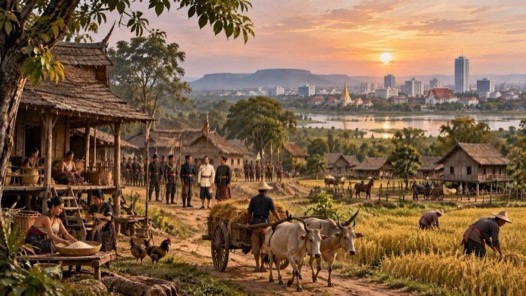
It is telling the much bigger story of how generations of people in Northeast Thailand have lived alongside their landscape.

Start the Experience Above the Water
Even entering the Expo has been designed as part of the experience.
The Arrival Building and Skywalk form the starting point of the site, linking the natural waterfront landscape at the front of the Expo with the Visitor Center.
It should create an immediate change of atmosphere.
Behind you is the road and modern Udon Thani.
Ahead lies a landscape of water, gardens and architecture.
And then you begin exploring.

Gardens From Thailand and Around the World
Of course, this is still one of the world's great horticultural events, and plants remain at its heart.
Visitors can expect international gardens and exhibitions, offering participating countries and organisations the opportunity to present their own approaches to horticulture, landscape design, biodiversity and sustainable living.
Official plans also incorporate extensive Thai planting and exhibition areas covering flowers, ornamental plants, aquatic plants, orchids, indoor plants and more.
For ordinary visitors, however, you do not need to know your Dendrobium from your Dracaena.
That isn't really the point.
Walk through it.
Enjoy it.
Take photographs.
Find gardens you love and others you don't.
Sit beside the water.
Discover plants you have never seen before.
Then stop somewhere for something good to eat.
You are allowed to enjoy a world horticultural expo without becoming a botanist.

Orchids, Tropical Plants and Extraordinary Displays
Thailand is one of the world's great tropical plant-growing countries, and the Expo masterplan gives significant space to horticultural displays.
An Orchid Exhibition Building, flower and ornamental gardens, indoor plant areas, cactus displays, aquatic planting and outdoor plant exhibitions all appear in the official site plan.
Because the Expo runs from November through to March, it also falls across some of the most comfortable months of the year to explore Udon Thani.
Early mornings during the cool season can be surprisingly fresh by Thai standards, while the softer light around sunrise and late afternoon should transform the gardens and wetlands into some of the most photogenic spaces at the Expo.
A Living Wetland, Not Just Landscaping
Nong Dae is important because it is a real wetland ecosystem, not simply a decorative lake created for an exhibition.
Udon Thani is a province shaped by wetlands.
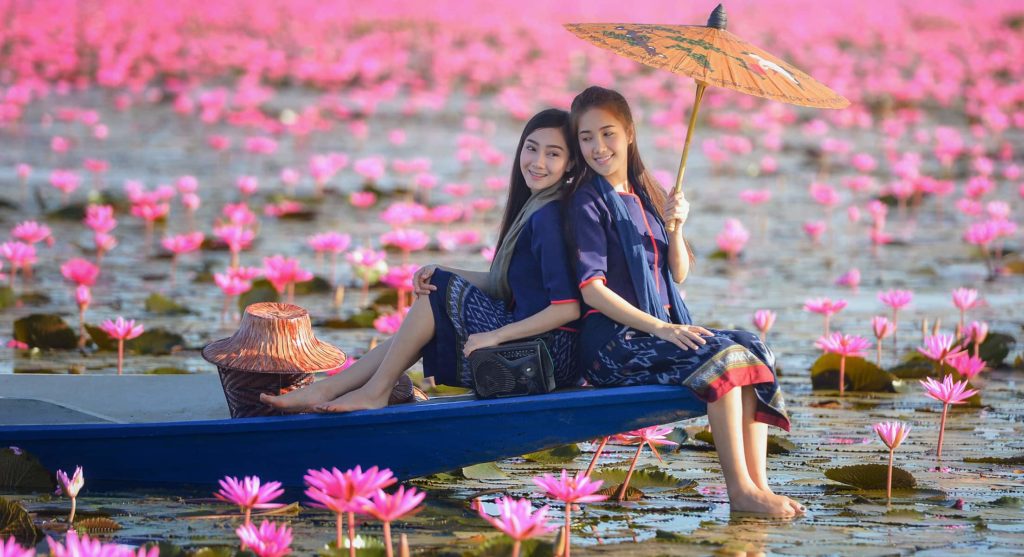
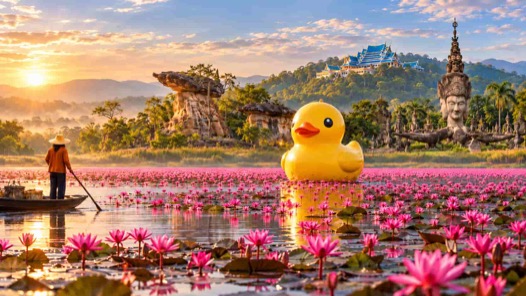
They store water, support wildlife and plant life, influence agriculture and have sustained local communities for generations. Provincial Expo material notes that the province contains hundreds of wetland areas, including internationally recognised natural landscapes such as Nong Han Kumphawapi, better known to visitors as the Red Lotus Lake.
This makes Nong Dae an unusually appropriate place for an Expo built around the relationship between people, water and plants.
Rather than asking visitors to look at sustainability on an information board, the ambition is to allow them to walk through a landscape where those relationships can actually be seen.
The Future of Farming Is Part of the Show Too
Udon Thani Expo 2026 also looks forward.
The Agricultural Innovation Exhibition Area is designed to showcase areas including indoor farming, economic crops and modern agricultural technology such as drones.
Elsewhere, the Expo programme explores subjects including smart farming, urban and vertical farming, biodiversity, food security, climate change and the circular economy.
For farming communities throughout Isan, these are not abstract subjects.
Agriculture remains fundamental to the economy and culture of Northeast Thailand. Changes in rainfall, technology, markets and food production have real consequences for millions of people.
That makes the Expo's combination of ancient local knowledge and future technology particularly appropriate for Udon Thani.
This Is Also a Celebration of Isan
International visitors sometimes arrive in Thailand believing Thai culture means Bangkok, beaches and perhaps Chiang Mai.
Isan has always been different.
The food is different.
The language is different.
The music is different.
The landscape is different.
Its legends, temples, festivals, villages and relationship with the Mekong region give Northeast Thailand a culture that is unmistakably its own.
Udon Thani Expo 2026 gives the province an opportunity to put that identity on an international stage.
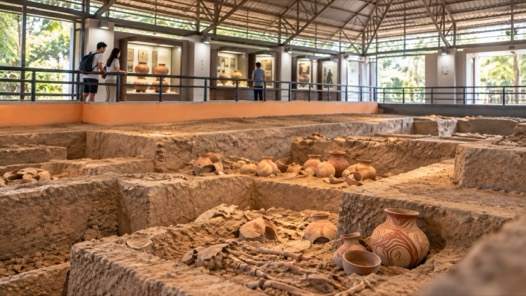
Look closely at the Expo's visual identity and you find references to the Red Lotus, ancient Ban Chiang pottery patterns, native wetland wildlife, medicinal plants, Thai orchids and the colourful Thung Isan decorations associated with local culture and belief.
The Expo may be international.
But its heart is unmistakably Isan.
Is Udon Thani Expo 2026 Worth Travelling For?
We believe so.
Not because everyone suddenly needs to develop a passionate interest in horticulture.
But because truly large international events change places.
They bring together architecture, landscape, food, culture and people in ways that may never be repeated in exactly the same form again.
Between 1 November 2026 and 14 March 2027, Udon Thani will have something nowhere else in the world has: an international horticultural Expo built around a living wetland landscape.
And outside the Expo gates, visitors have an entire province to discover.
You could combine the Expo with the ancient civilisation of Ban Chiang, the extraordinary rock landscapes and archaeology of Phu Phra Bat Historical Park, the mountain temple of Wat Pa Phu Kon, the Red Lotus Lake, rural Isan villages, local markets and some of Thailand's most distinctive food.
The official Expo organisation itself is actively positioning the event alongside Udon Thani's wider cultural and natural attractions.
So don't necessarily come for a few hours.
Come to Udon Thani.
When Is Udon Thani Expo 2026?
The Expo officially runs:
1 November 2026 to 14 March 2027
That means visitors have more than four months to attend, including the particularly pleasant cooler-season period from November through January.
The Expo's published regulations state that the exhibition will be open every day during its 134-day run.
Exact daily operating hours and visitor arrangements should be checked on the official Expo website before travelling, particularly as operational details may continue to be updated as the opening date approaches.
Where Is Udon Thani Expo 2026?
The Expo takes place at:
Nong Dae Wetland, Kut Sa Sub-district, Mueang Udon Thani, Udon Thani, Thailand
Official Expo material describes Nong Dae as being close to major transport routes and approximately 15 minutes from both Udon Thani Airport and Udon Thani Railway Station.
That makes the Expo unusually accessible for such a large event.
Udon Thani itself has direct air connections with Bangkok and other Thai destinations, road connections throughout Isan and rail services linking the city with Bangkok and Nong Khai.
How Long Should You Spend at the Expo?
Our recommendation is simple:
Don't rush it.
With more than 1,000 rai of Expo landscape, major buildings, gardens, exhibitions, wetlands, cultural experiences and places to eat, trying to "do the Expo" in two hours rather misses the point.
Allow at least half a day.
For visitors particularly interested in gardens, architecture, photography or Isan culture, a full day makes much more sense.
And if you are staying nearby, you have another advantage.
There is no need to turn the experience into a marathon.
Explore. Go home. Relax by the pool.
Then return another day if you want more.
Udon Thani Expo 2026 Tickets
Official pricing has now been confirmed. A 1-Day Pass costs 350 THB for general admission, 180 THB for students and 120 THB for seniors or visitors with health conditions. Designated group tickets start from 250–500 THB, and longer multi-day passes are also available.
These prices were published by the Expo's driving office in March 2026. We recommend checking the official Udon Thani International Horticultural Expo 2026 website for the latest confirmed ticket types, advance offers and visitor conditions before travelling.
Where Should You Stay for Udon Thani Expo 2026?
If you are planning to visit from outside Udon Thani, book accommodation early.
Organisers have previously projected millions of visits over the 134 days of the Expo, so particularly busy weekends, holidays and major event dates could place considerable pressure on nearby accommodation.
And this is where Nakara Villas & Glamping becomes particularly interesting.
We are a small, family-run resort surrounded by tropical gardens in Udon Thani, offering private villas and glamping accommodation away from the noise of the city.
Even better, depending on traffic and the final Expo access arrangements, guests at Nakara Villas & Glamping could potentially be just 8–10 minutes from the Nong Dae Expo site.
That creates a very different Expo break.
Spend your day exploring one of the biggest international events Udon Thani has ever hosted.
Then leave the crowds behind.
Come home to tropical gardens, a swimming pool, a cold drink and the warm, relaxed Isan hospitality that has always been at the heart of Nakara.