

Erawan Cave, Nong Bua Lamphu
One of Isan's Most Spectacular Hidden Caves
Check Nakara Availability NowHigh in a limestone mountain west of Nong Bua Lamphu is one of the most dramatic natural attractions within day-trip distance of Udon Thani. Erawan Cave, or Tham Erawan, combines a huge limestone cavern, towering stalactites and stalagmites, a giant Buddha image and sweeping views across the Isan countryside.
Getting there involves one unavoidable detail: around 600 steps from the foot of the mountain to the cave entrance. The Tourism Authority of Thailand confirms the climb, the giant Buddha at the entrance and the cave's connection with the local legend of Nang Phom Hom.
It is worth the climb.
A Mountain Shaped Like an Elephant
Erawan Cave lies inside Phu Pha Tham Chang, a dramatic limestone outcrop close to the boundary between Nong Bua Lamphu and Loei provinces.
Seen from a distance, the mountain is traditionally said to resemble a crouching elephant. This helps explain the cave's name. Erawan is the great elephant associated with Indra in Hindu mythology, usually represented in Thailand as a three-headed elephant.
The cave was previously known as Tham Chang, or Elephant Cave, before becoming known as Tham Erawan.
Even before you begin climbing, the setting feels different from most conventional tourist attractions. The limestone mountain rises abruptly from the surrounding agricultural landscape, with the cave entrance visible high above.
The 600-Step Climb
There is no lift, cable car or clever shortcut.
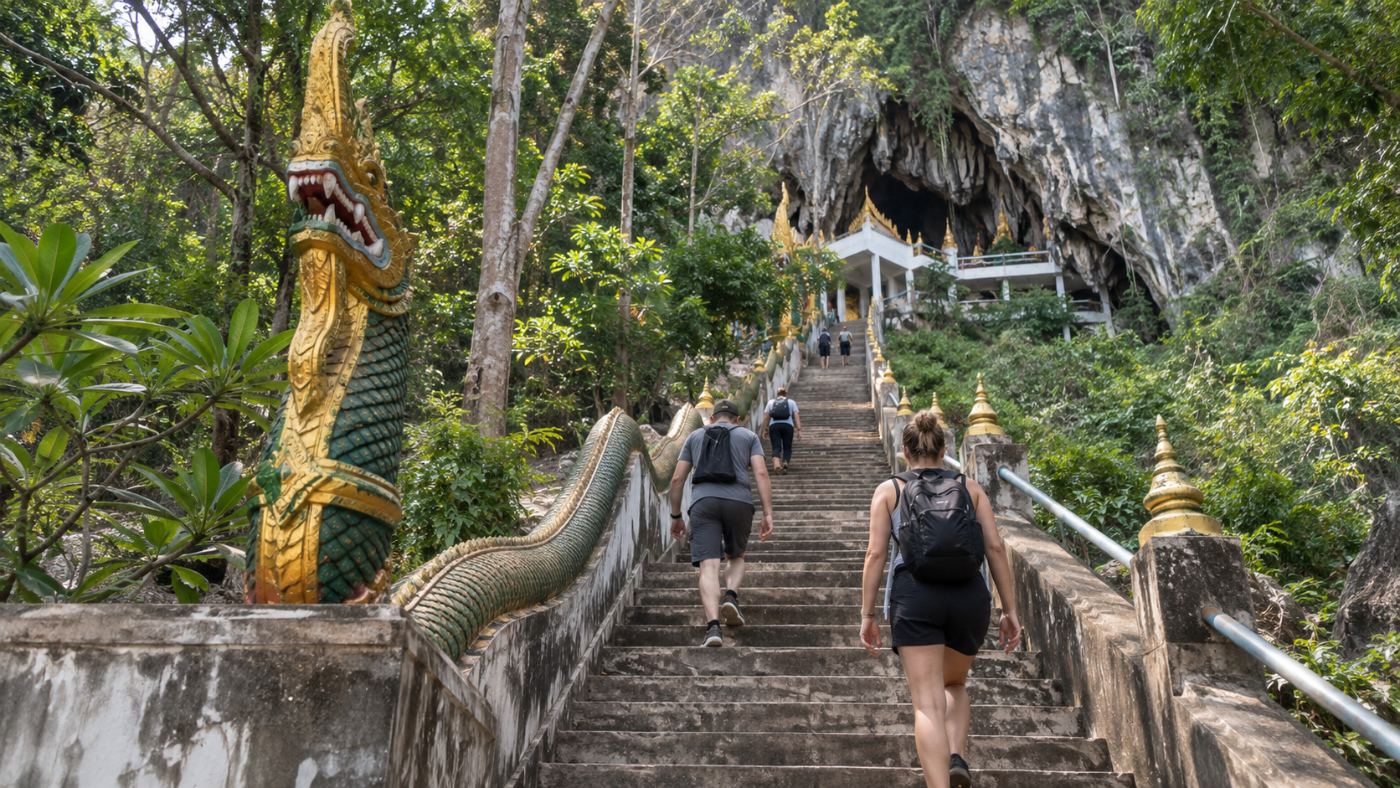
Reaching Erawan Cave means climbing the winding staircase from the temple grounds to the cave entrance, approximately 600 steps above.
That sounds worse than it is if you take your time, but this is definitely one attraction where arriving early makes sense. The climb becomes considerably harder under the midday Isan sun.
There are opportunities to stop along the way, and as you gain height the views across the surrounding countryside become increasingly impressive.
The reward waits at the top.
The Giant Buddha at the Cave Entrance
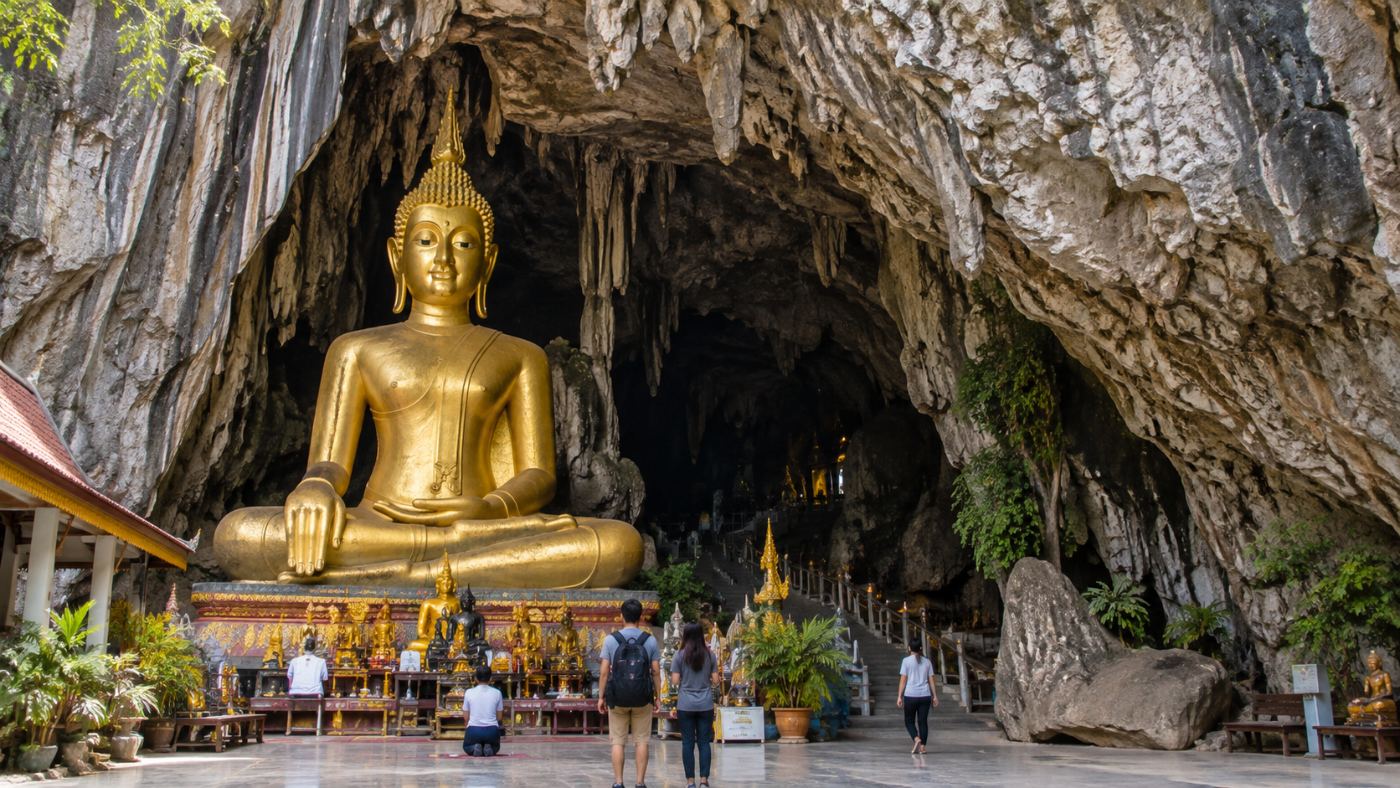
A huge seated Buddha image guards the entrance to Erawan Cave.
The contrast is spectacular: a golden Buddha sitting beneath an enormous natural limestone overhang, with the dark mouth of the cavern behind it and open countryside stretching away below.
It also immediately reminds visitors that Erawan Cave is more than a geological attraction. The cave forms part of a religious site and remains a place of worship.
Visitors should therefore dress respectfully and behave as they would at any Thai temple.
Inside Erawan Cave
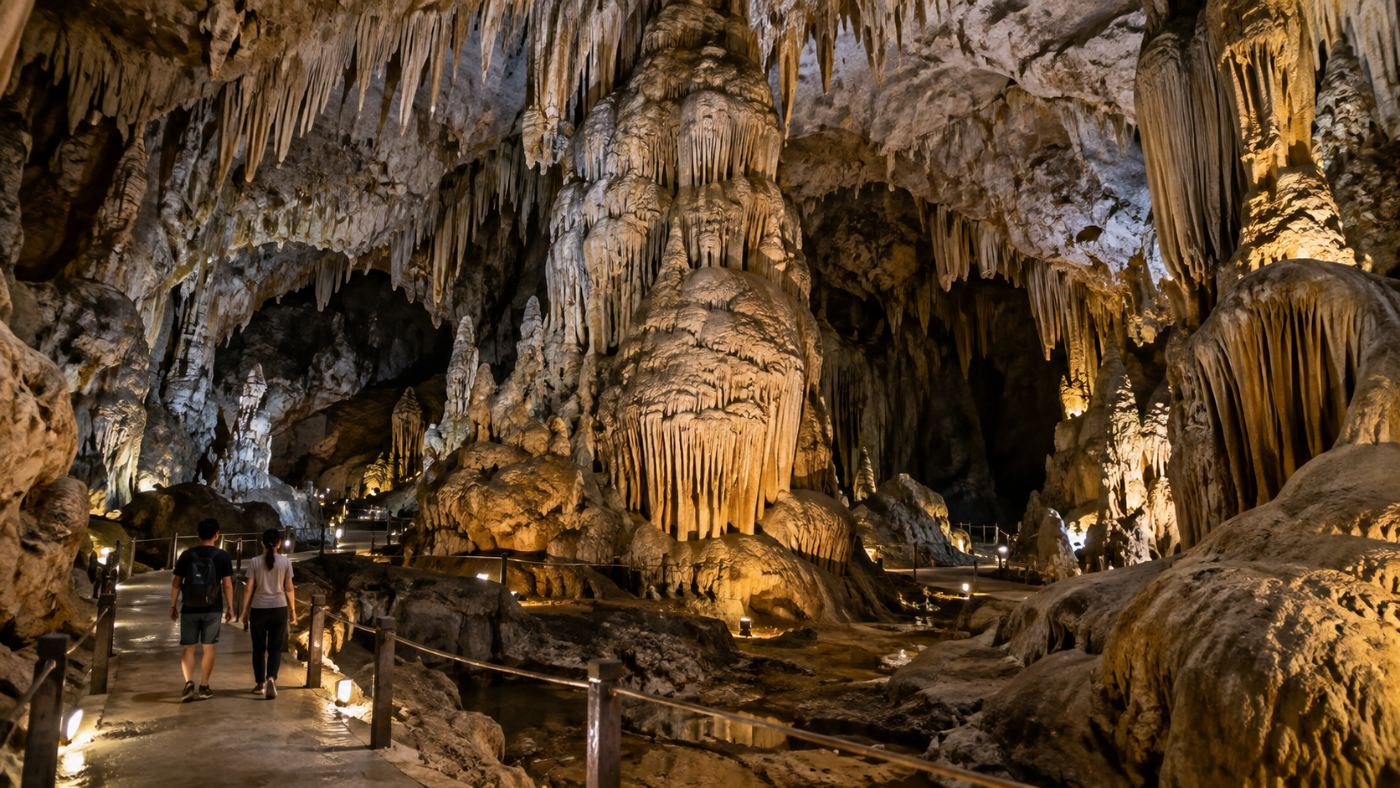
Step beyond the Buddha and the scale of Erawan Cave begins to reveal itself.
The entrance opens into a vast natural chamber filled with stalactites, stalagmites and huge limestone formations created over thousands of years. The cavern is large enough that photographs rarely convey its true scale.
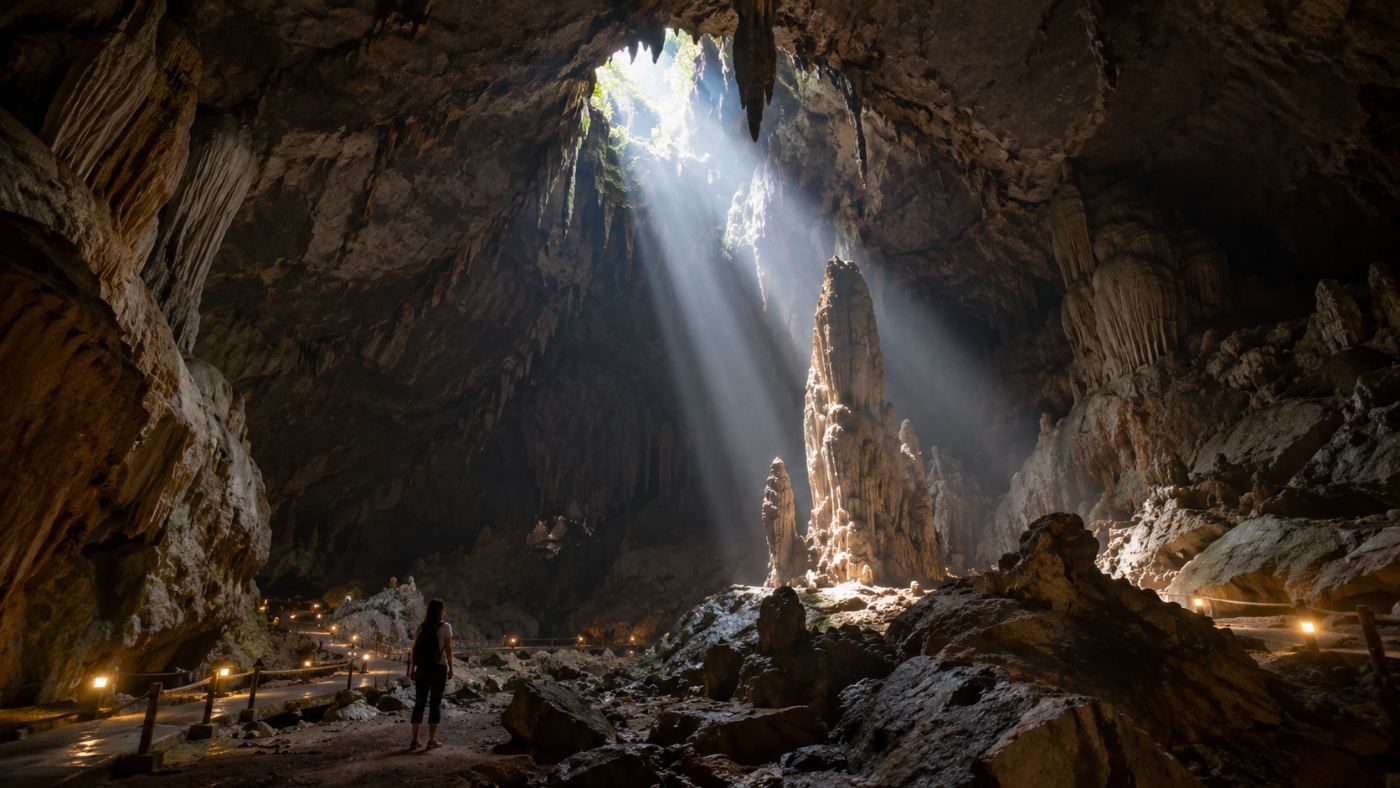
Several openings high in the cave roof allow shafts of sunlight to penetrate the darkness. Official Thai tourism material describes three openings in the ceiling, creating some of the cave's most dramatic views as sunlight cuts through the cavern and illuminates the rock formations below.
It can feel almost theatrical, except everything around you is natural.
Paths and steps lead deeper through the chamber, past formations that local tradition has given names and meanings.
The Legend of Nang Phom Hom
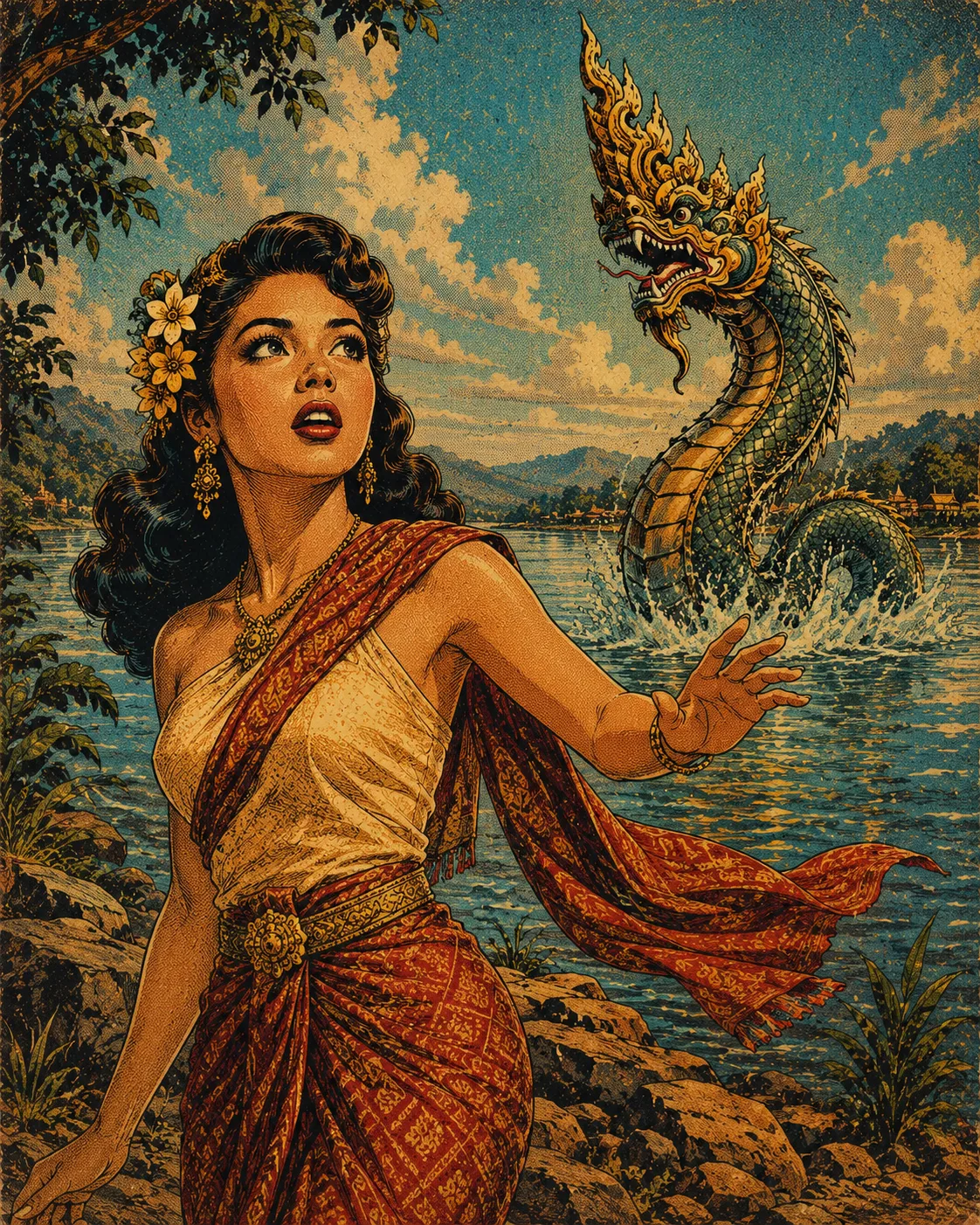
Erawan Cave is closely connected with the northeastern Thai folk story of Nang Phom Hom, whose name is often translated as the Fragrant-Haired Princess.
According to the local legend, the cave became associated with the princess and her elephant father. The story has remained part of the cultural identity of the cave rather than simply being added later as a tourist attraction. Thailand's tourism authorities specifically identify Erawan Cave as one of the locations connected with the Nang Phom Hom story.
It is another example of something that makes travelling through Isan fascinating: landscapes, Buddhism, older spiritual beliefs and folklore often overlap.
A mountain is rarely just a mountain.
And a cave is rarely just a cave.
The Sunlight Inside the Cave
One of the most memorable moments inside Erawan Cave comes when sunlight enters through openings in the limestone roof.
In the right conditions, bright shafts of light descend into the darker cavern below, illuminating the rock and giving the chamber an almost cathedral-like atmosphere.
The effect changes throughout the day as the angle of the sun moves.
This alone makes Erawan Cave one of the most photogenic caves in northeast Thailand.
Don't Forget to Look Back
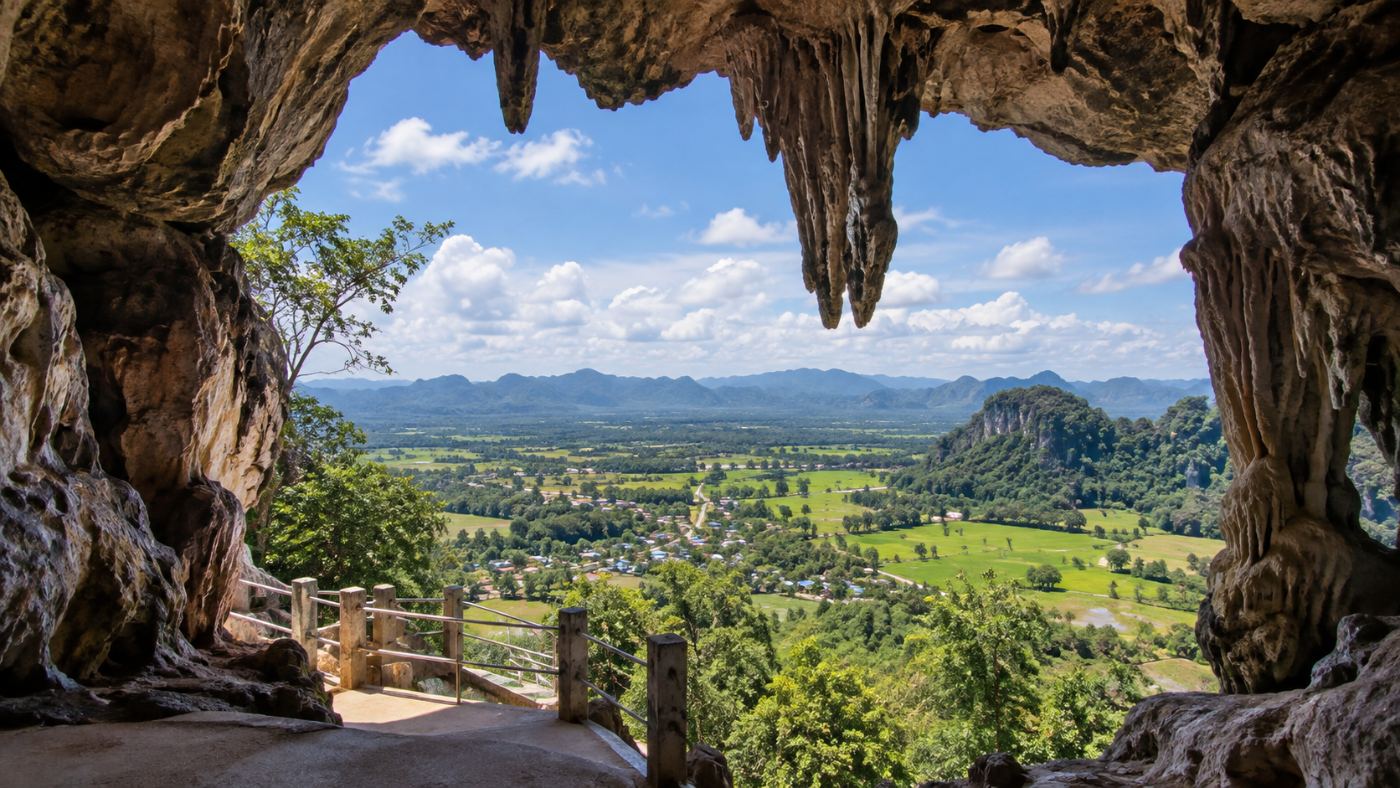
It is easy to become focused on reaching the cave, but the view from near the entrance is part of the experience.
From high on the limestone mountain you can look across a landscape of rice fields, villages, farmland and isolated green hills stretching towards the horizon. Official tourism material describes the entrance as offering a broad vista across the surrounding countryside.
After climbing hundreds of steps, this is also an excellent excuse to stand still for a while.
You earned it.
Quick Facts
Opening Hours
7:00 AM – 4:30 PM (Daily)
The Climb
Approx. 600 steps
Time Needed
Roughly 2 hours
Distance from Udon
~50 km west of Nong Bua Lamphu town
Good shoes are strongly recommended. The staircase and cave paths can be uneven, and surfaces may become slippery during wet weather. Bring water for the climb, but remember that this remains a religious site as well as a tourist attraction.
Best Time to Visit Erawan Cave
The best time to arrive is early morning.
November through February offers the most comfortable temperatures for climbing, while the countryside becomes particularly green during the rainy season.
Avoid making the main ascent during the hottest part of the afternoon if possible.
Visiting Erawan Cave from Udon Thani
Erawan Cave makes an excellent day trip from Udon Thani.
The route heads west along Highway 210 through Nong Bua Lamphu and towards Loei before turning north towards the cave. Thai government tourism material places Erawan Cave about 50 km west of Nong Bua Lamphu town, around 3 km north of Highway 210.
For visitors staying several days in Udon Thani, it provides a completely different experience from Red Lotus Lake, Ban Chiang or the temples and markets closer to the city.
This is wild, mountainous Isan.
Is Erawan Cave Worth Visiting?
Yes, particularly if you want to explore beyond the usual Udon Thani attractions.
Erawan Cave combines several things that make northeast Thailand special: extraordinary landscapes, Buddhist culture, local mythology and somewhere that still feels far removed from Thailand's busiest tourist trail.
The 600 steps mean you have to work for it.
But that is part of what makes reaching the giant Buddha and walking into the enormous cavern behind it feel like a genuine discovery.