
Just a few kilometres from the ancient community of Ban Chiang, one of Udon Thani's most unusual temples appears to float above a peaceful lake.
Wat Pa Dong Rai, more formally known as Wat Santi Wanaram, is instantly recognisable because of its extraordinary white ordination hall shaped like a giant lotus flower. The building sits in the middle of the water, reached by a long bridge from the shore, with its white petals reflected in the lake below.
Thailand has thousands of beautiful Buddhist temples, but this one looks quite unlike almost anything else in the country. The Tourism Authority of Thailand describes Wat Santi Wanaram as Thailand's only temple constructed on a lake in the form of a giant white lotus.
A Giant White Lotus Rising From the Water
The centrepiece of Wat Pa Dong Rai is its remarkable lotus-shaped ubosot, or ordination hall.
The structure measures approximately 19 metres across and 19 metres high, with 24 enormous lotus petals forming the exterior. Construction began in 2001, funded largely through public donations.
Seen from across the lake, the building appears almost to be floating. On a still morning, the reflection creates a second lotus beneath the first, making this one of the most distinctive architectural sights in Udon Thani.
The effect is impressive from a distance, but the building becomes even more unusual as you walk across the bridge towards it. Curving white petals rise overhead while the lake opens out on either side.
Why the Temple Is Shaped Like a Lotus
The lotus is one of Buddhism's most important symbols.
Its roots grow in mud beneath the water, yet the flower rises above the surface clean and beautiful. In Buddhist tradition, it represents purity, spiritual awakening and the possibility of rising above attachment and suffering.
That symbolism gives the architecture at Wat Pa Dong Rai much more meaning than simply creating an unusual building.
The visitor effectively travels from the shore, across the water and into the centre of the lotus itself.

Crossing the Bridge to the Lotus Temple
A long bridge connects the lakeshore with the ubosot.
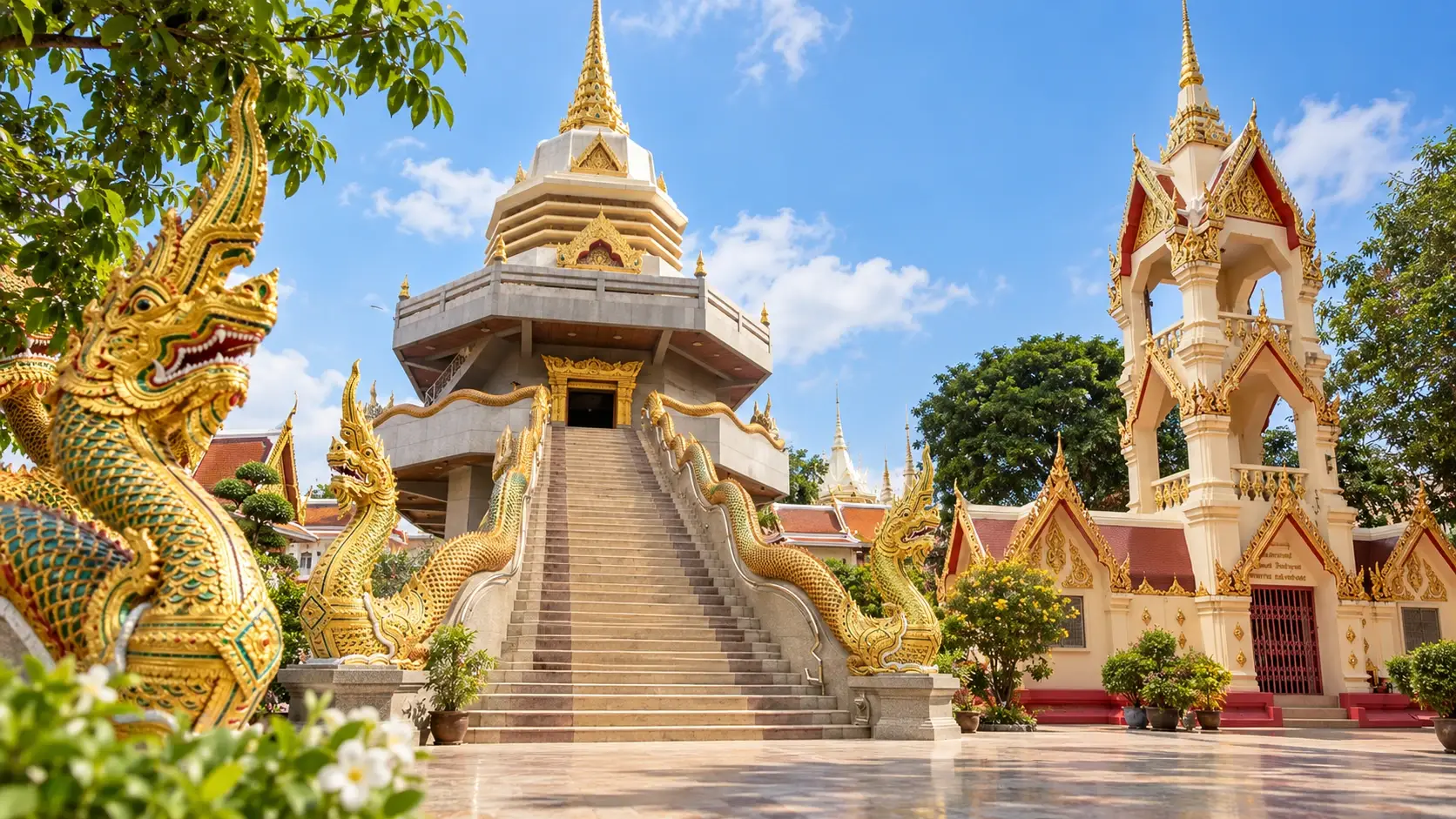
At the entrance, traditional Naga serpent guardians provide a striking contrast with the temple's modern white architecture. Nagas appear throughout Buddhist and Isan religious traditions and are particularly strongly associated with northeastern Thailand and the Mekong region.
The bridge is also one of the best places from which to appreciate the scale of the building. As you approach, the lotus fills more and more of the view until its petals tower above the entrance.
Visitors should remember that this is an active Buddhist temple rather than simply a sightseeing attraction. Dress respectfully, cover shoulders and knees and remove shoes where requested before entering sacred areas.

Inside Wat Pa Dong Rai
The exterior may be what first attracts visitors, but the interior is worth taking time to explore.

Large petal-shaped windows allow natural light into the hall, while colourful murals depict scenes connected with the life and teachings of the Buddha. Above is an elaborate golden-toned ceiling, while a Buddha image forms the spiritual focus of the room.
The atmosphere inside feels very different from the dramatic exterior. It is quiet, reflective and unmistakably a place of worship.
Spend a few minutes looking at the murals rather than simply taking a photograph and leaving. The contrast between the white modern exterior and the richly decorated Buddhist interior is an important part of what makes the temple interesting.
A Temple Surrounded by Forest and Water
Wat Pa Dong Rai is not only about the lotus building.
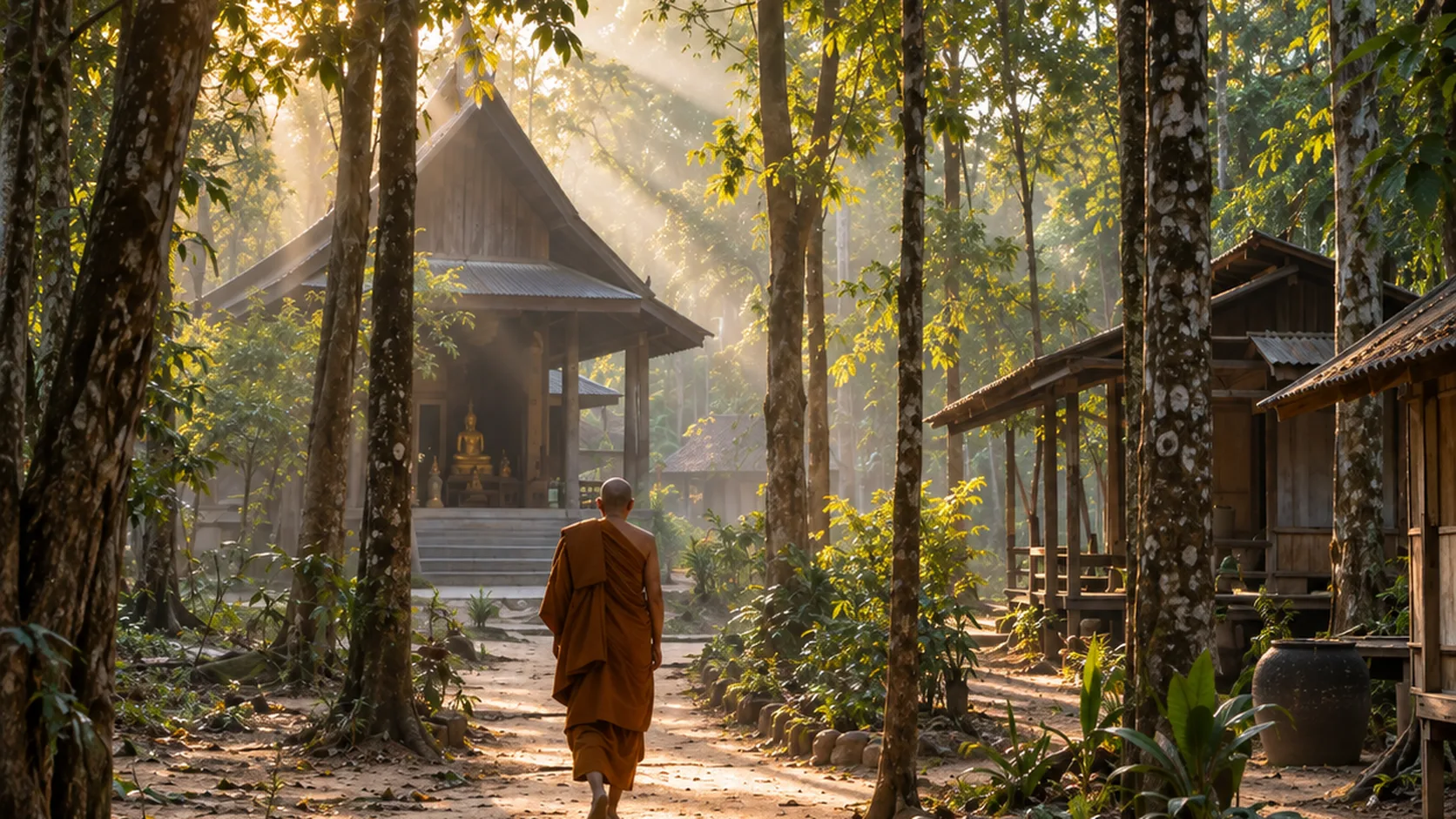
The temple sits within a large forested area north of Ban Chiang, surrounded by trees, water and quieter monastery grounds. Local sources describe the wider temple complex as occupying more than 1,000 rai of largely natural woodland and wetland.
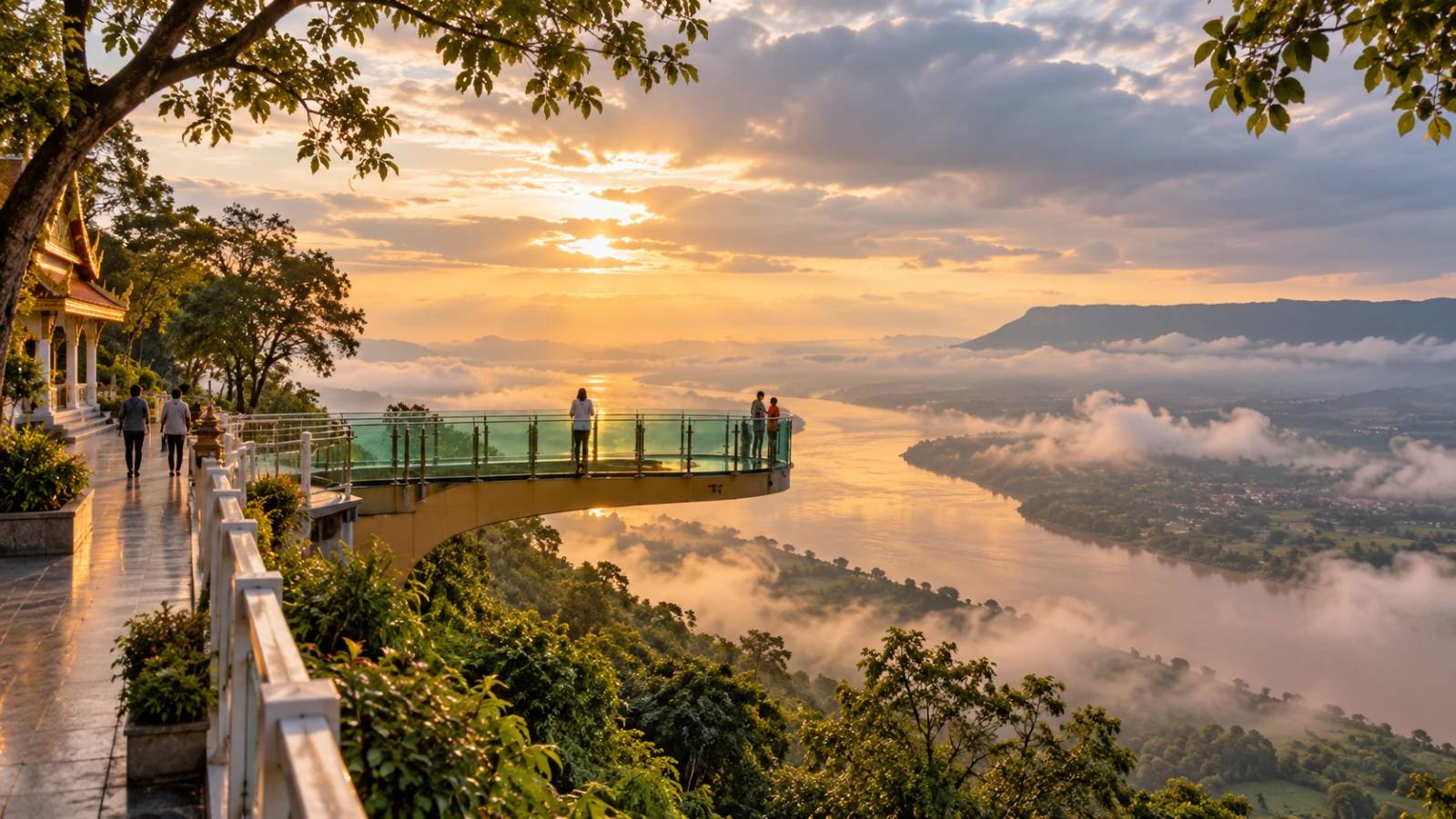
That setting makes the lotus chapel particularly striking from above. Rather than being surrounded by city streets or commercial development, the bright white structure sits inside a broad green landscape.
It is worth allowing enough time to walk around rather than treating the visit as a five-minute photo stop.

Combine Wat Pa Dong Rai With Ban Chiang
One of the best reasons to visit Wat Pa Dong Rai is its location.
The temple is only a short distance from Ban Chiang, the internationally important archaeological area east of Udon Thani city. Tourism Authority of Thailand itineraries specifically pair a visit to Ban Chiang with Wat Santi Wanaram.
That makes the two attractions an excellent half-day or full-day combination.
Visit Ban Chiang to discover the prehistoric culture, distinctive red-painted pottery and archaeology that made the area famous, then continue to Wat Pa Dong Rai for something completely different.
Together they show two very different sides of Udon Thani, one stretching thousands of years into the region's past, the other expressing Buddhist symbolism through striking contemporary architecture.
The Best Time to Visit Wat Pa Dong Rai
For photography, early morning is particularly attractive.
The light is softer, temperatures are cooler and calm conditions can produce beautiful reflections of the lotus in the lake. Later in the afternoon the building can also catch warm light, although the atmosphere changes considerably depending on the weather.
The temple has also been illuminated after dark, creating colourful reflections across the water, but for a first visit we would choose daylight. You can see the architecture properly, explore the grounds and appreciate how the building sits within the surrounding landscape.

Is Wat Pa Dong Rai Worth Visiting?
Yes, particularly if you are already exploring Ban Chiang or the eastern side of Udon Thani province.
Wat Pa Dong Rai is not a huge tourist complex. Its appeal comes from one exceptional piece of architecture, its peaceful surroundings and the contrast between the brilliant white lotus outside and traditional Buddhist art within.
It is also exactly the kind of place that makes travelling around Isan rewarding. You can drive through quiet countryside and suddenly find something extraordinary that would be a major attraction almost anywhere else.
If you are building an Udon Thani itinerary, combine Wat Pa Dong Rai, Ban Chiang Archaeological Site and the surrounding Nong Han district for a day that mixes history, architecture, religion and rural Isan.
And take your time on the bridge.
The closer you get to the lotus, the more remarkable it becomes.