
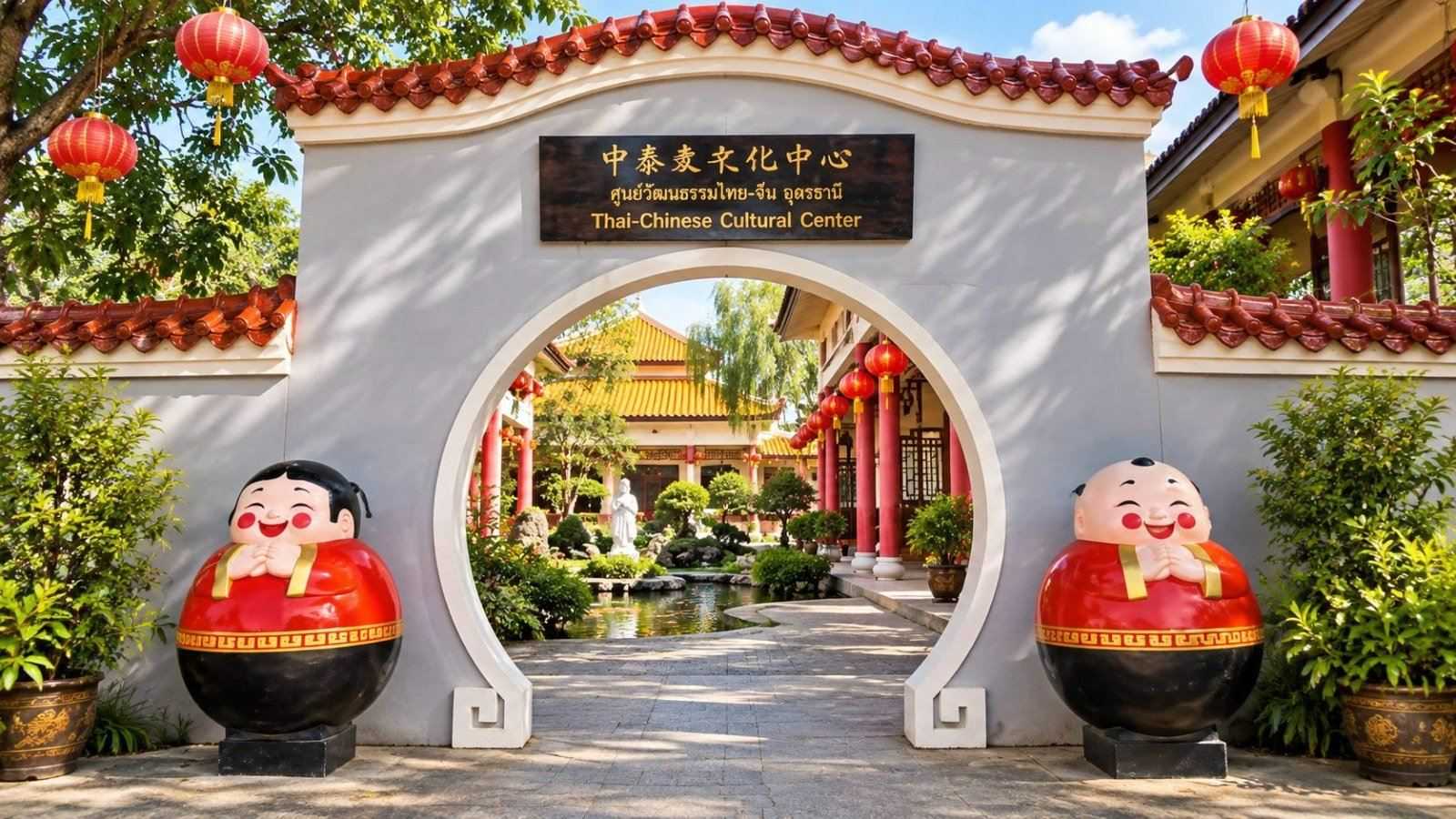
Thai-Chinese Cultural Centre Udon Thani: A Beautiful Meeting of Two Cultures
Check Nakara Availability NowUdon Thani may sit deep in the heart of Isan, but its story has been shaped by people from much further afield.
One of the best places to discover that story is the Thai-Chinese Cultural Centre in Udon Thani, a beautiful complex of Chinese gardens, pavilions, ponds and exhibition spaces created to preserve the heritage of the city's Thai-Chinese community.
Located beside the important Pu-Ya Shrine, the centre is quite unlike most attractions in the province. Step through its gates and the surroundings suddenly change. Red lanterns hang above pathways, colourful koi move through ornamental ponds and traditional Chinese pavilions rise between carefully landscaped gardens.
It is beautiful, certainly. But the real reason to visit is the story behind it.
The Chinese Families Who Helped Build Udon Thani
Chinese migration has played an important part in Udon Thani's development for more than a century.
Families arriving in the area established businesses, trading networks and community organisations, gradually becoming an integral part of the city rather than a separate community living alongside it.
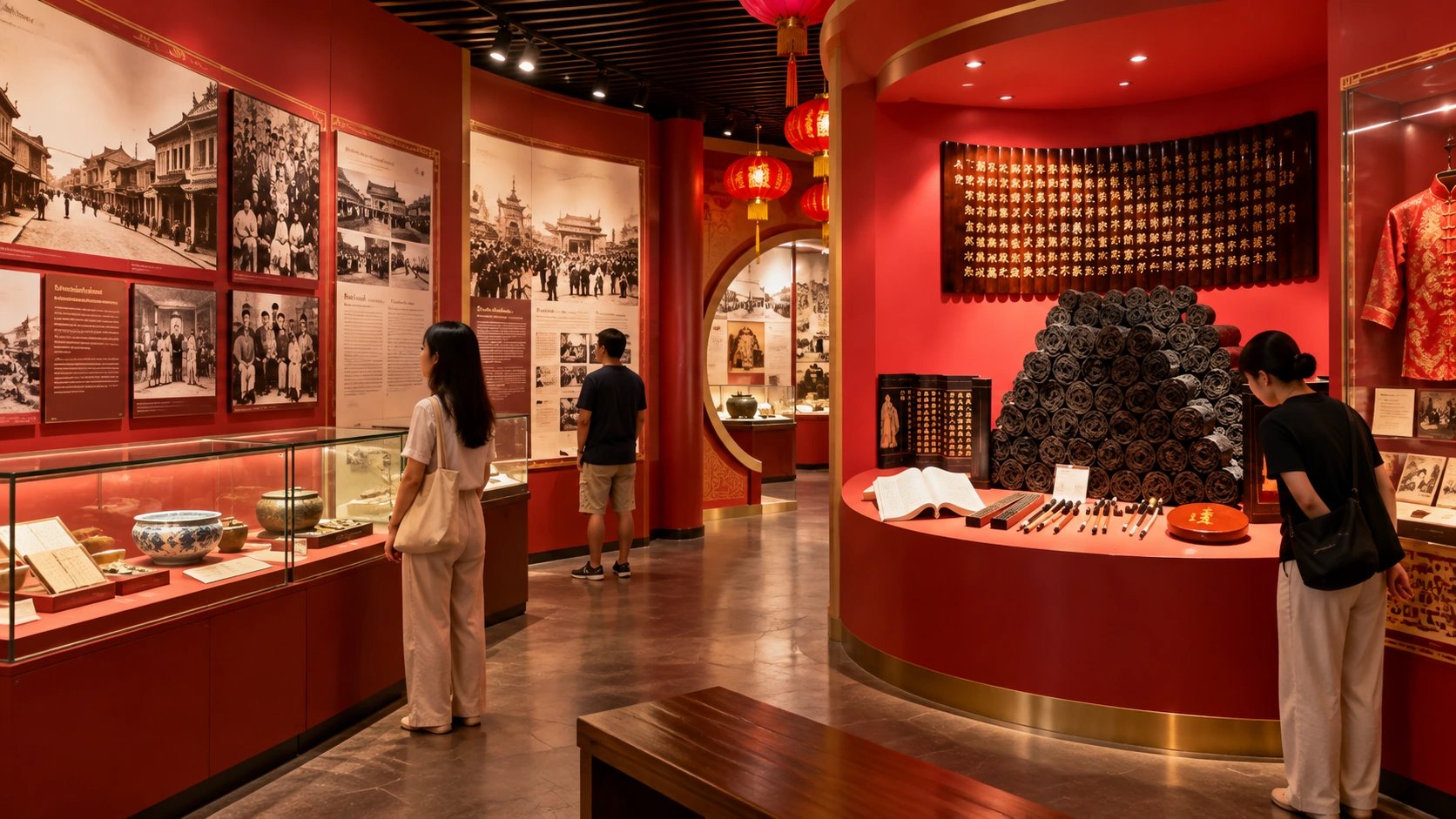
The centre's Museum of Morality tells the story of Thai-Chinese life in Udon Thani stretching back more than 120 years. Exhibits explore commerce, education, family associations, Chinese traditions and the organisations that developed around the Pu-Ya Shrine.
That makes the centre particularly interesting for travellers who want to understand Udon Thani rather than simply photograph it.
Modern Udon is a mixture of Isan, Lao, Chinese, Vietnamese and later Western influences. The Thai-Chinese Cultural Centre explains one important part of how that mixture developed.
The 24 Gratitude Chinese Garden
For many visitors, the most memorable part of the centre is outside.
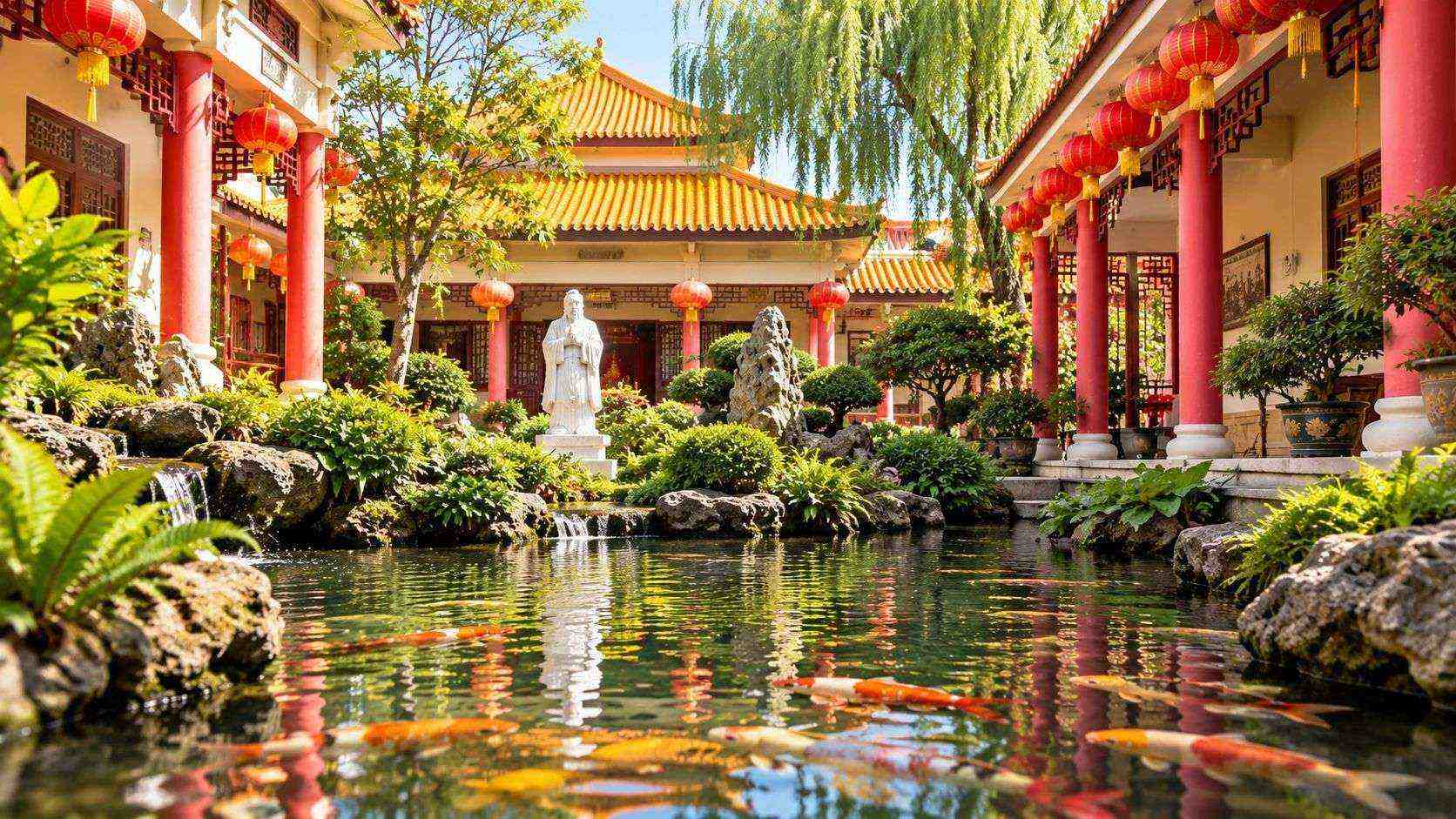
The landscaped Chinese garden is known as the 24 Gratitude Garden, or the Garden of the Twenty-Four Filial Exemplars.
Around the ponds are sculpted scenes telling traditional Chinese stories centred on gratitude, respect for parents and responsibility between generations. Explanations accompany the displays in Thai and Chinese.
The landscaping itself is equally impressive.
Traditional Chinese plants and trees surround lotus ponds and pools filled with large colourful koi. Curved bridges, red pavilions, stonework and hanging lanterns turn what could easily have been a conventional museum into somewhere worth wandering around slowly.
Despite being close to the centre of Udon Thani, it can feel surprisingly peaceful.
Confucius and the Ideas Behind the Culture
The centre does more than preserve old photographs and objects.
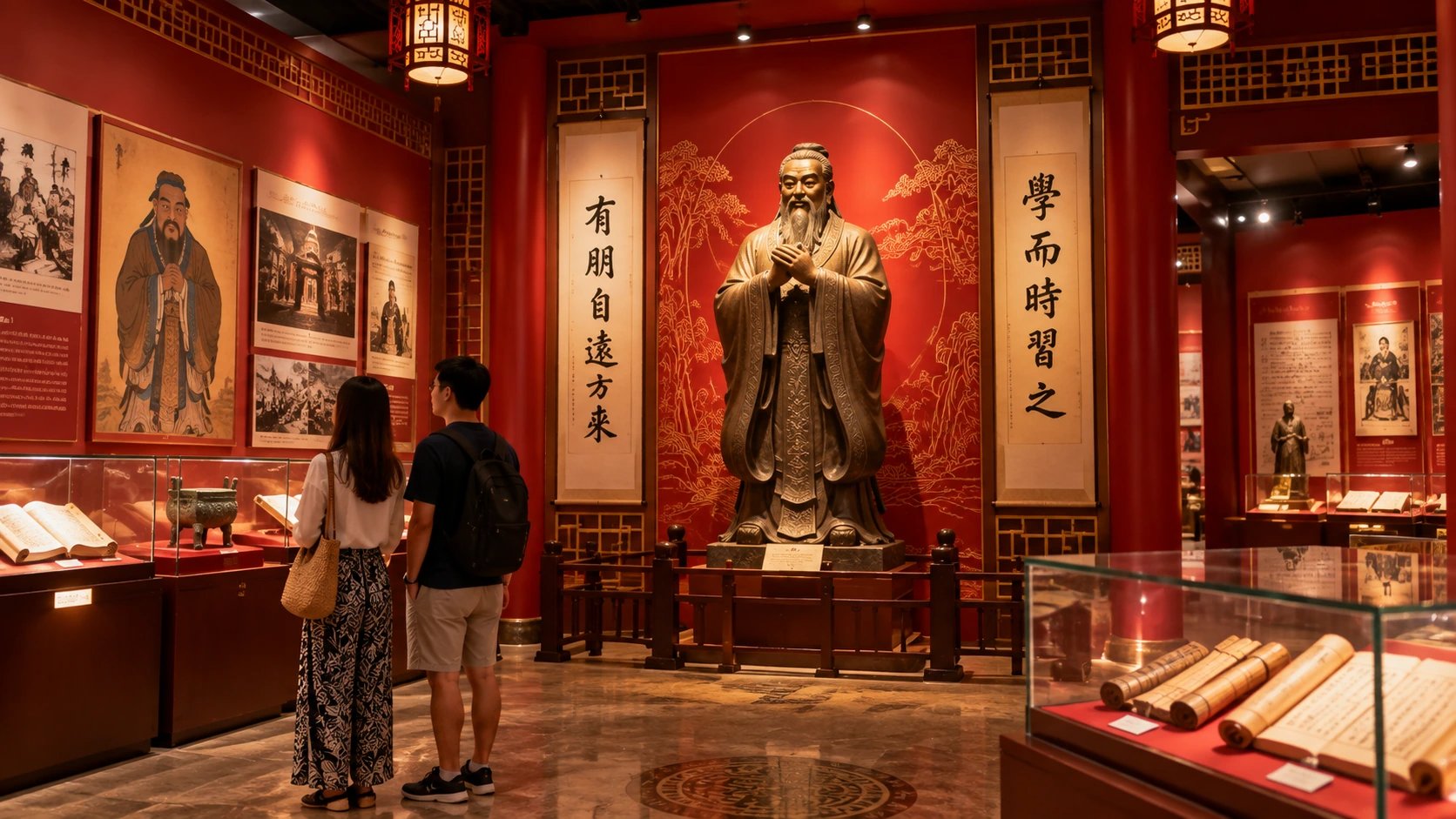
Part of the museum is dedicated to Confucius, whose ideas have influenced Chinese philosophy, education and family life for more than two thousand years.
Displays explore his life, travels and teachings using sculpture, reliefs, images and multimedia presentations.
It helps explain some of the ideas visitors have already encountered outside in the 24 Gratitude Garden.
Respect for family, education, responsibility, loyalty and the passing of knowledge from one generation to another run throughout the centre.
This is where the attraction becomes much more interesting than simply a collection of pretty Chinese buildings.
The Pu-Ya Shrine
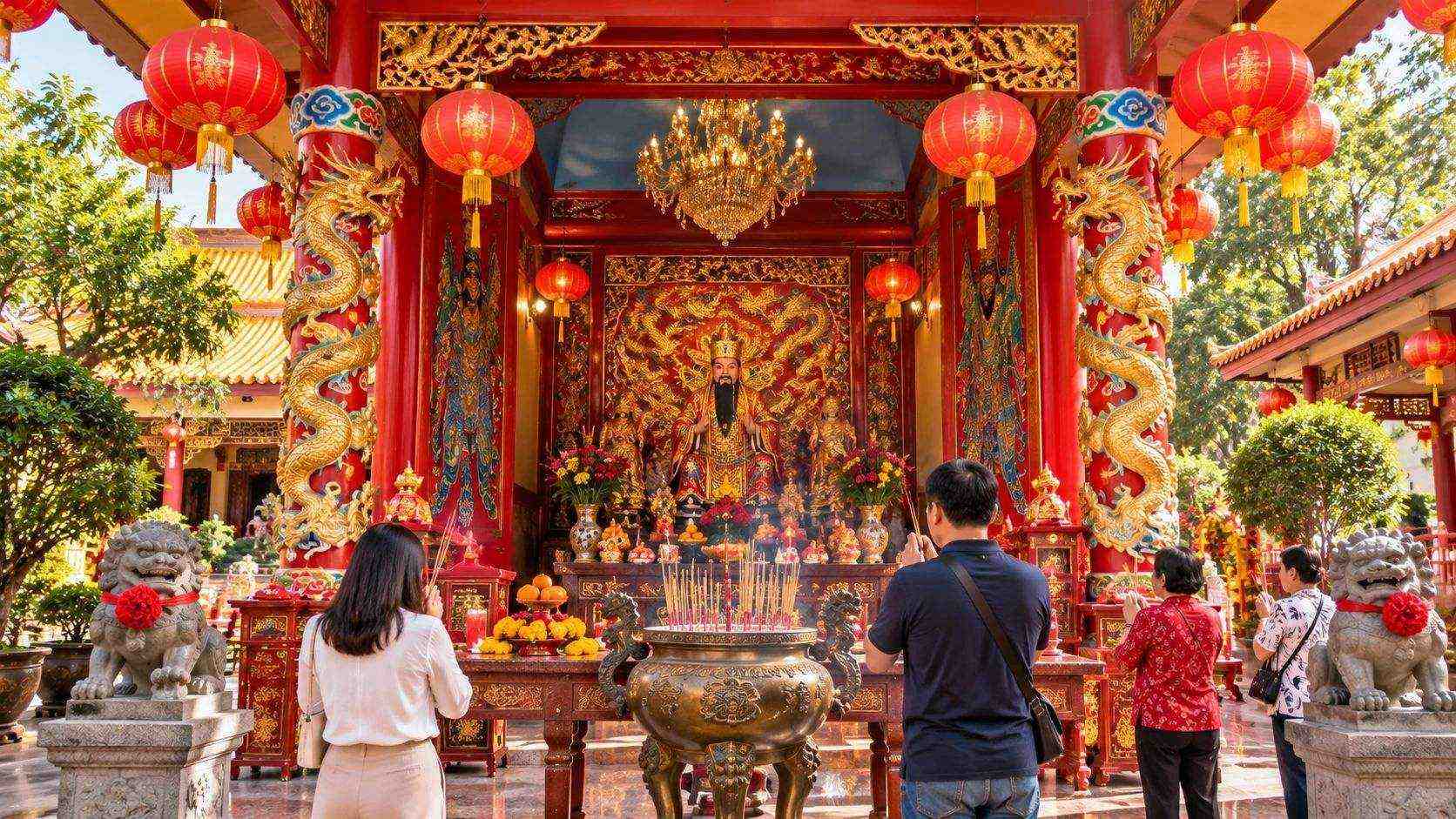
Next to the Cultural Centre stands the Pu-Ya Shrine, one of the most important spiritual centres for Udon Thani's Thai-Chinese community.
The two places belong together.
The Cultural Centre explains the history and traditions of the community, while the shrine shows that those traditions remain very much alive.
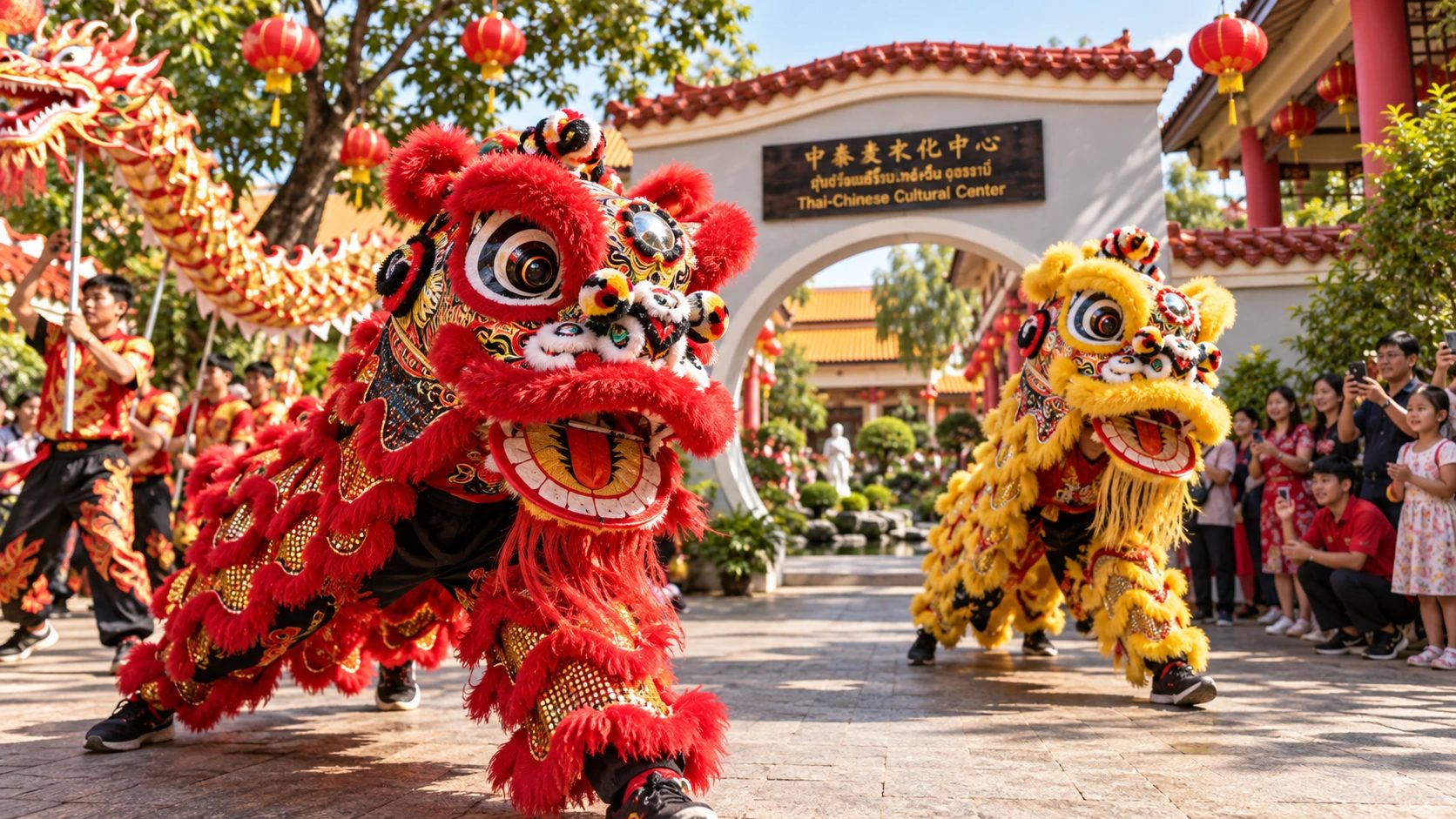
Local families still come here to pray, burn incense and make offerings. During important Chinese festivals the area becomes considerably busier, particularly when lion dances, dragon performances and traditional music form part of the celebrations.
The Creative Economy Agency describes the wider district as a centre for Chinese architecture, gardens, religious belief, lion and dragon dancing, traditional music and the teaching of Chinese cultural skills to younger generations.
Visitors are welcome, but remember that the Pu-Ya Shrine is an active religious site, not merely a tourist attraction.
Dragons, Lions and Chinese Festivals in Udon Thani
Visit on an ordinary morning and the Cultural Centre can feel almost meditative.
Come during one of Udon Thani's major Chinese celebrations and the atmosphere can be completely different.
Dragon dances, lion dances, Chinese music and brightly coloured costumes remain living traditions within the community. The centre also helps younger generations learn skills connected with their ancestry, including traditional music and the making of lion heads.
That matters.
Cultural centres can easily become places where traditions are placed behind glass and preserved as something belonging to the past.
Here, many of those traditions are still being practised.
When Was the Thai-Chinese Cultural Centre Built?
The Cultural Centre itself is relatively new.
The idea developed through the Pu-Ya Shrine Foundation, which wanted a permanent place to preserve the art, customs, philosophy and history of Udon Thani's Thai-Chinese population.
The foundation stone was laid on 4 August 2009, and the centre officially opened on 6 January 2013.
Its purpose, however, is to preserve a story that reaches much further back.
The result is a modern cultural attraction built around more than a century of local history.
Visiting the Thai-Chinese Cultural Centre
The centre is in Mueang Udon Thani, close to the Pu-Ya Shrine, Nong Bua area, Udon Thani railway station and UD Town.
You do not need an entire day here. Allowing roughly one to two hours gives enough time to explore the gardens, visit the museum and walk across to the shrine without rushing.
Opening times published online are inconsistent, so it is worth checking current hours before making a special journey late in the day.
The gardens are particularly attractive during the softer light of the morning or late afternoon, although the museum itself can be visited at any time during opening hours.
Dress normally for the Cultural Centre, but if you enter the Pu-Ya Shrine, behave as you would at any active religious site and be respectful of people praying or making offerings.
Is the Thai-Chinese Cultural Centre Worth Visiting?
Yes.
It is one of the easiest Udon Thani attractions to underestimate.
At first glance it looks like somewhere you might visit for half an hour to photograph the gardens. Spend a little more time here and it becomes something much more interesting.
It tells part of the story of how Udon Thani became the city it is today.
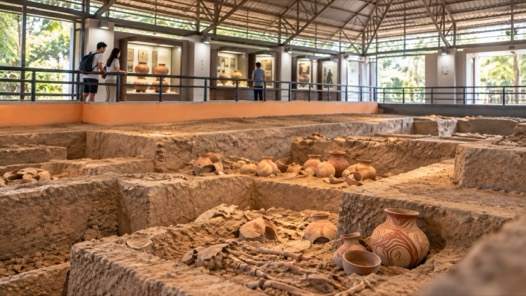
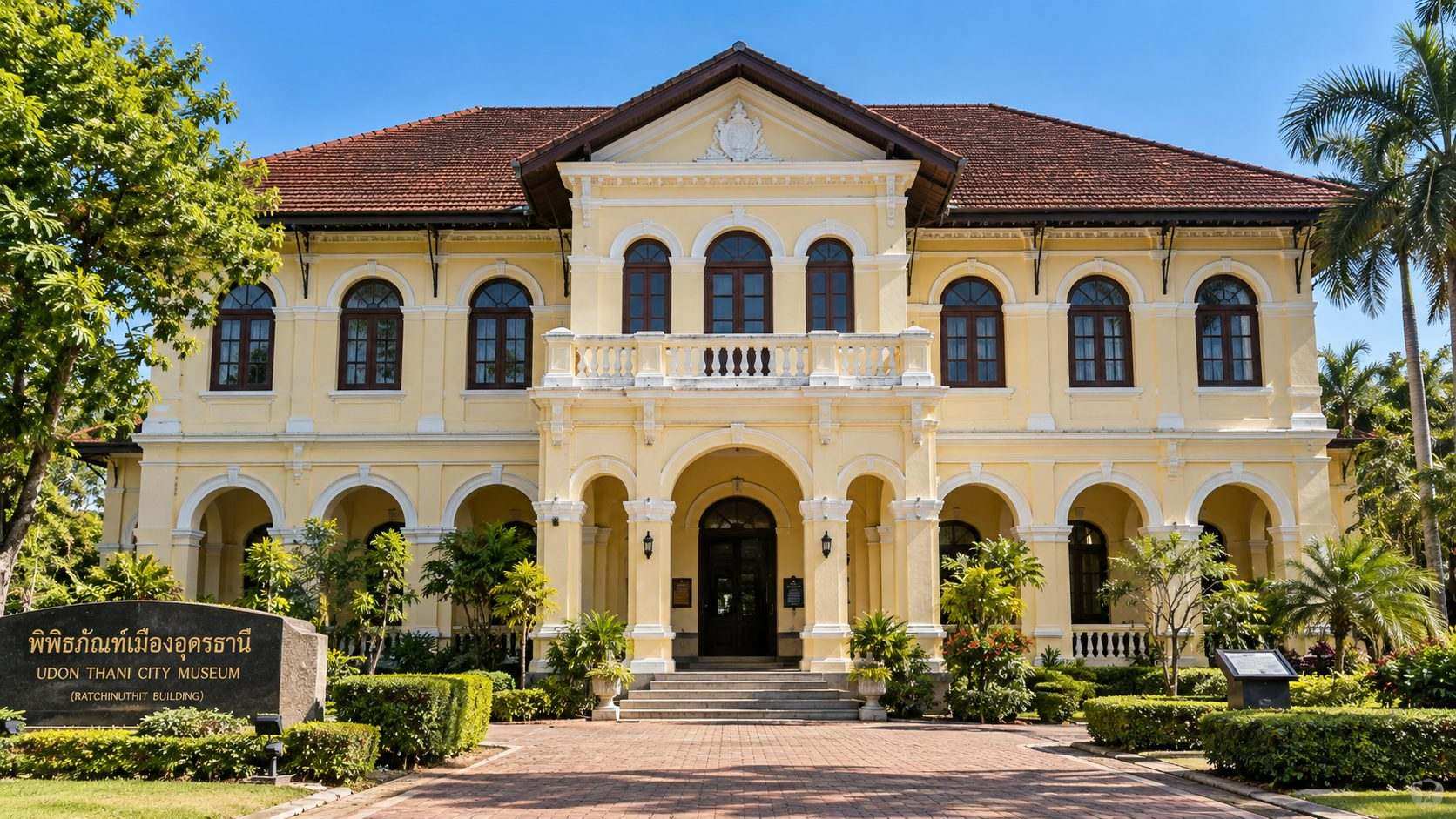
Ban Chiang tells us about people who lived in this region thousands of years ago. The city's museums explain the development of modern Udon. The temples preserve its Buddhist traditions.
The Thai-Chinese Cultural Centre adds another layer, telling the story of families who arrived from elsewhere, settled here, built businesses and communities, raised new generations and eventually became part of Udon Thani itself.
And fortunately, they left us a rather beautiful garden in which to tell it.
Why Stay at Nakara Villas & Glamping for Your Thai-Chinese Cultural Centre Visit?
Nakara Villas & Glamping is a relaxing base for discovering the cultural side of Udon Thani, including the beautifully designed Thai-Chinese Cultural Centre. A visit here combines naturally with the neighbouring Chao Pu-Ya Shrine, before continuing to Nong Prajak Park for a stroll around the lake and a look at Udon Thani's famous giant yellow ducks. Together, they make an easy and varied half-day in the city before returning to Nakara for a swim, dinner and a peaceful evening in the gardens.