
Wat Kham Chanot
Inside Udon Thani's Legendary Naga Kingdom
Check Nakara Availability NowThere are temples in Thailand that impress with size, gold and architecture. Wat Kham Chanot is different.
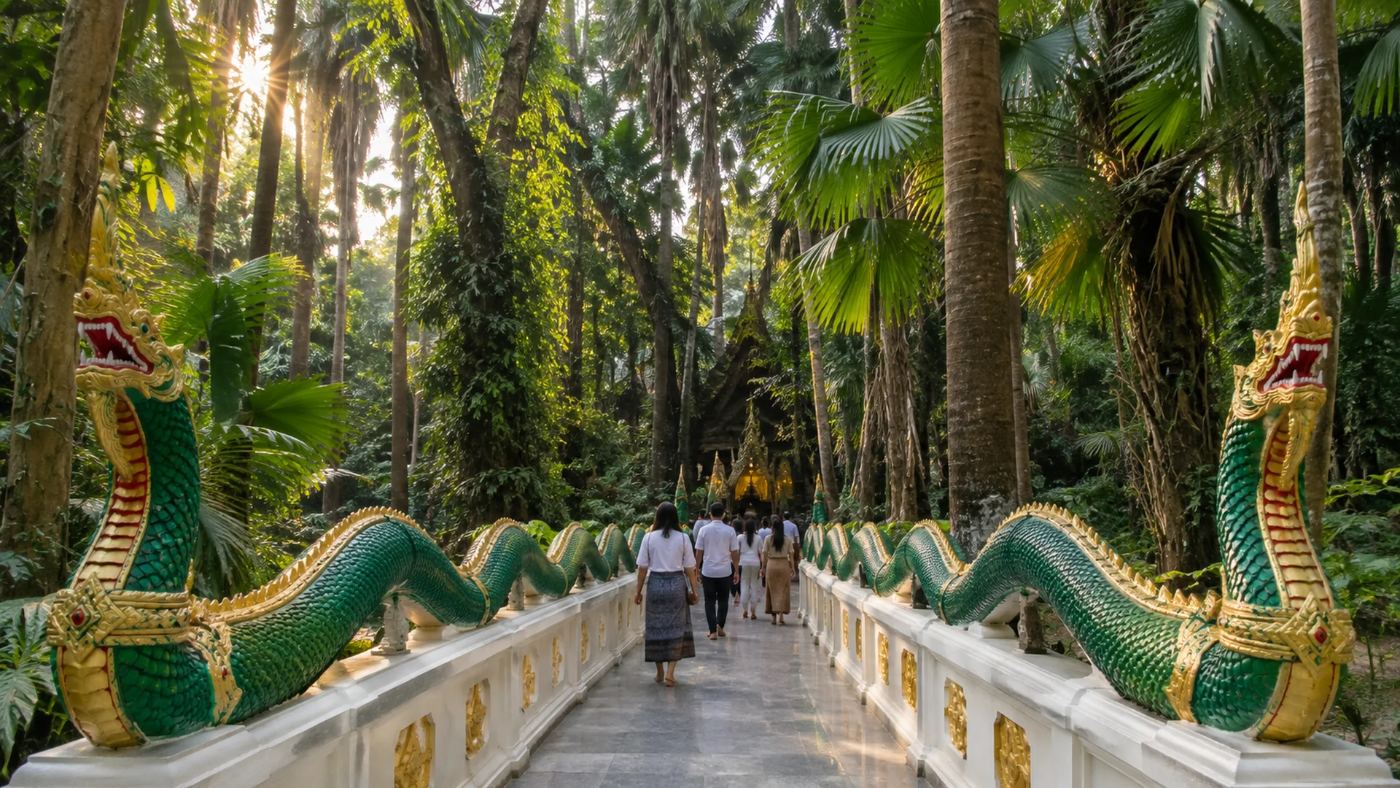
Hidden among the rice fields of Ban Dung district in Udon Thani is a dark, remarkably cool forest of towering palms, tangled roots and sacred water. To local people, this is not simply another temple. Kham Chanot is associated with one of the most enduring beliefs in northeastern Thailand: that the Naga, the great serpent beings of Buddhist and Mekong folklore, inhabit a hidden world beneath the earth and water.
The Tourism Authority of Thailand describes Kham Chanot, beside Wat Siri Suttho, as a sacred site associated with the legendary Naga King and a gateway to the underwater world in Isan and Lao belief. The forest contains a shrine to Pu Si Suttho and a sacred pond surrounded by distinctive Chanot palms.
For visitors exploring beyond central Udon Thani, Kham Chanot offers something genuinely different: part religious pilgrimage, part natural curiosity, and part living Isan legend.
A Sacred Forest in the Middle of the Countryside
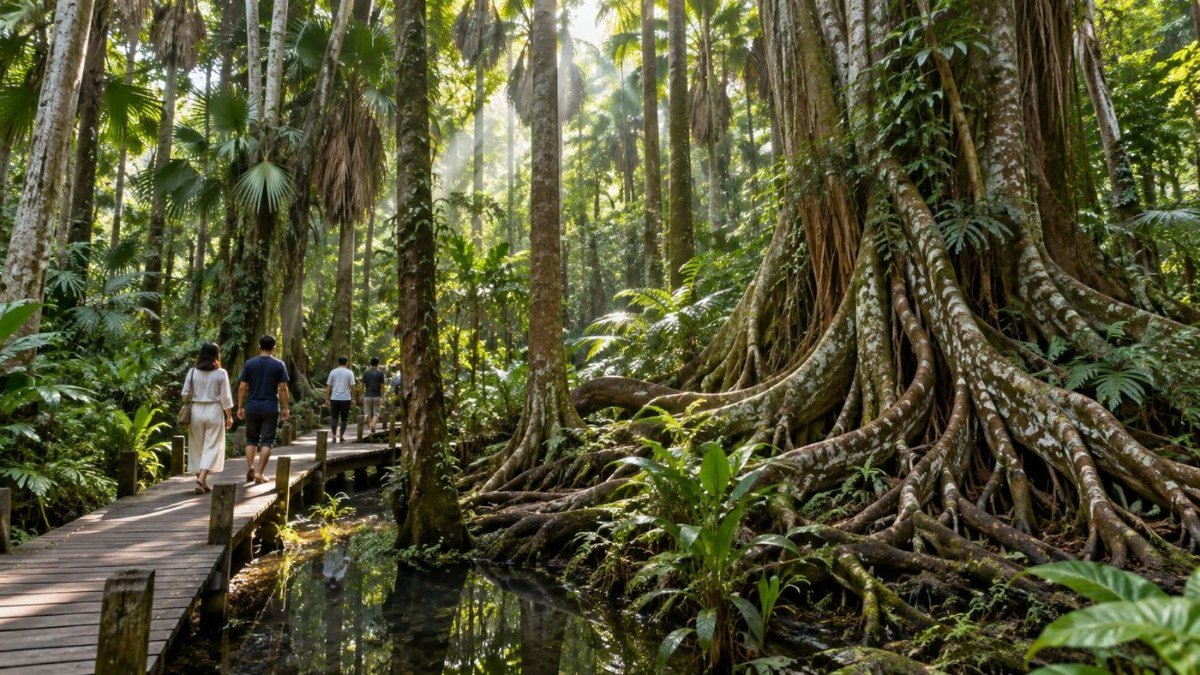
Kham Chanot lies in Ban Muang, Ban Dung district, roughly 100 kilometres from Udon Thani city. From the surrounding agricultural landscape, the dense grove seems almost out of place, rising suddenly from an otherwise open area of fields and water.
The name comes from the Chanot tree, a type of palm that dominates the forest. Its tall trunks and dense canopy create a noticeably shaded, humid environment inside. Scientific descriptions identify the tree as a palm species adapted to wet conditions, which helps explain why the grove thrives in this waterlogged landscape.
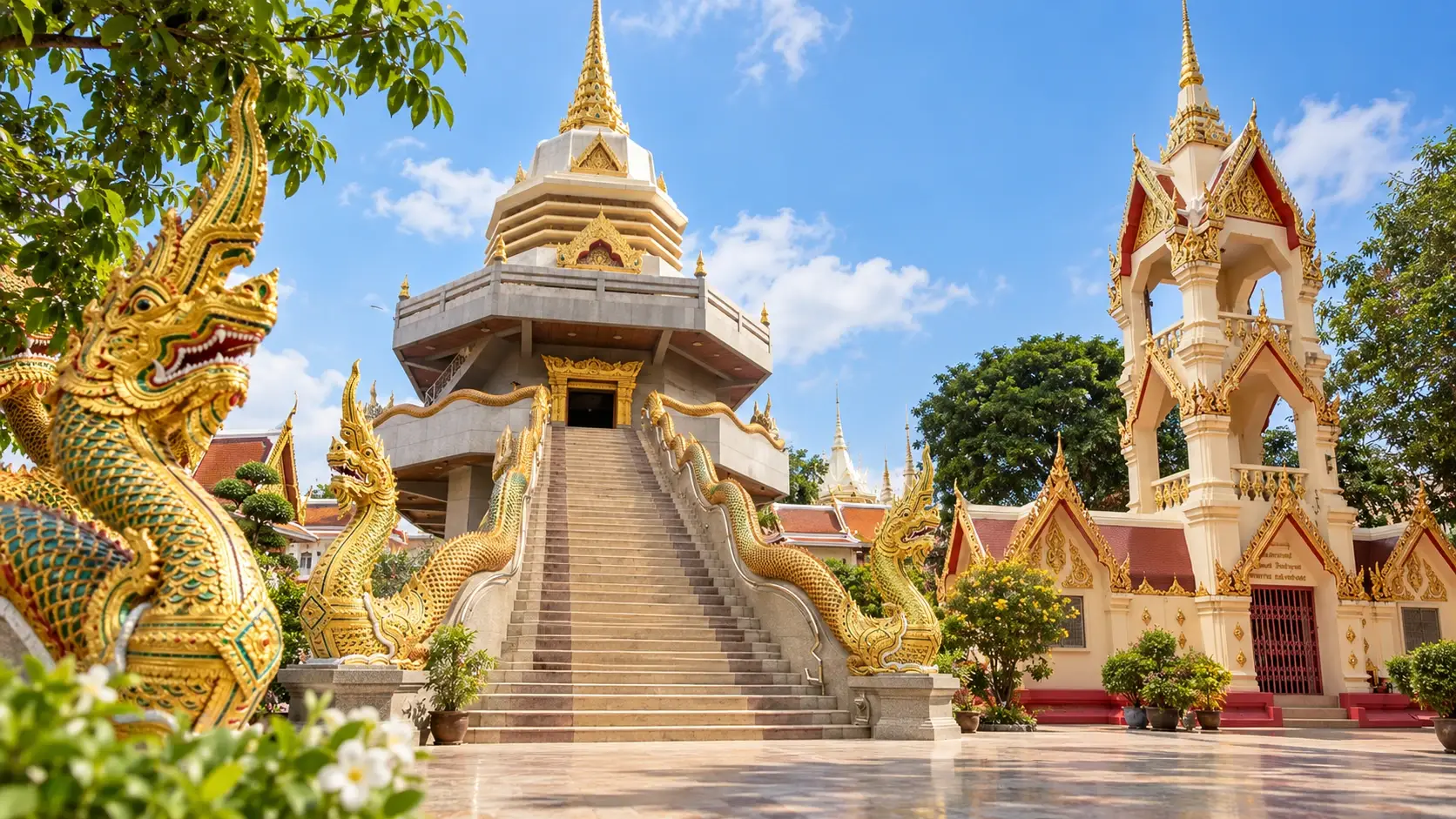
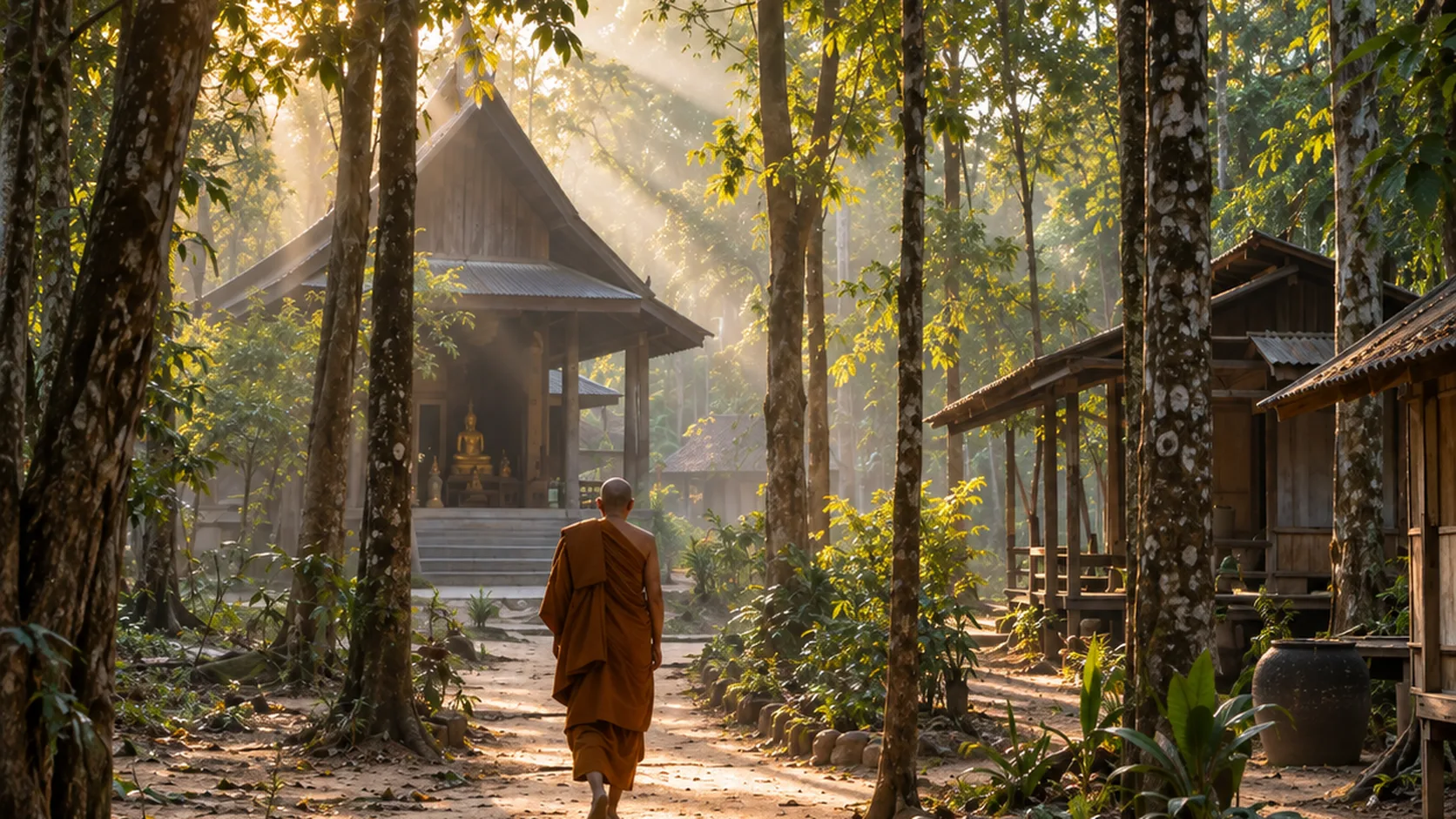
Crossing into the forest is part of the experience. The route passes Naga imagery before entering a much darker world beneath the trees. Bright sunlight gives way to shade, exposed roots spread across the ground and the atmosphere becomes noticeably cooler.
This contrast has helped give Kham Chanot its reputation as a place separated from the ordinary world.
The Legend of Pu Si Suttho and the Naga
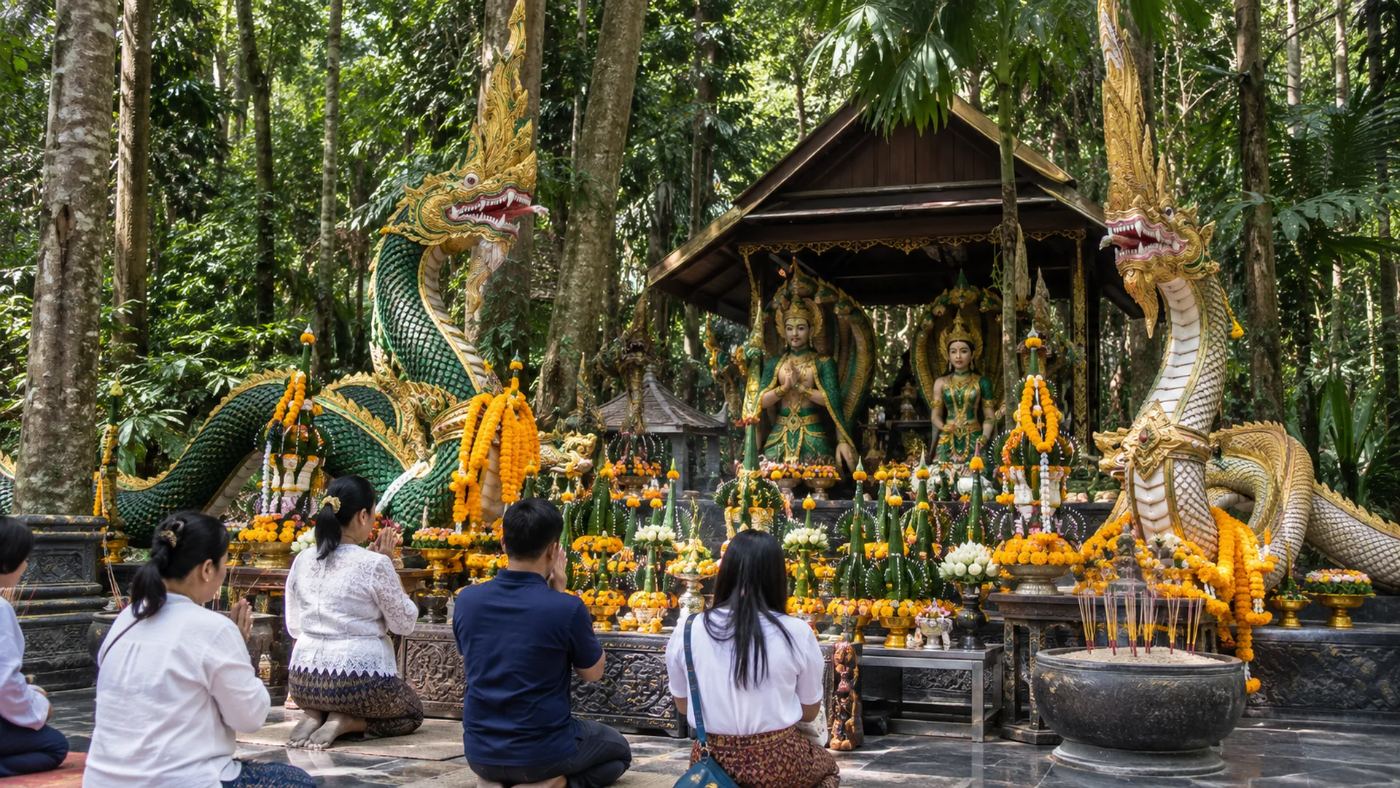
The most important legend connected with Kham Chanot concerns Pu Si Suttho, the Naga ruler believed by devotees to inhabit the area, together with Mae Ya Sri Pathumma.
Across Isan and neighbouring Laos, Naga stories have been told for centuries. The creatures are closely associated with rivers, rain, fertility, sacred water and the Mekong. At Kham Chanot, those beliefs have become attached to the landscape itself.
According to local tradition, the forest represents an entrance to Muang Badan, the mythical subterranean realm of the Naga. The site is therefore often described as a meeting point between the human world and the hidden world beneath it. Thailand's tourism authorities continue to describe Kham Chanot as a place associated with the residence of Pu Si Suttho and Mae Ya Sri Pathumma.
Whether you arrive as a believer or simply as a traveller interested in Isan culture, the important thing is that these traditions remain very real to many of the people visiting around you.
More Than Folklore
One reason Kham Chanot is so compelling is that the physical setting already feels unusual before any legends are added.
The grove occupies wet ground surrounded by water and has frequently been described locally as a floating island. During changes in water level, the unusual geology and saturated ground helped create stories that the forest could rise rather than disappear beneath floodwater.
There are scientific explanations for the wetland environment, vegetation and apparent movement of the land, but these do little to diminish the power of the story. If anything, Kham Chanot is most interesting when the natural landscape and the mythology are considered together.
This is a recurring theme throughout Isan. The land inspires the legend, and over generations the legend becomes part of how the land itself is understood.
The Sacred Well
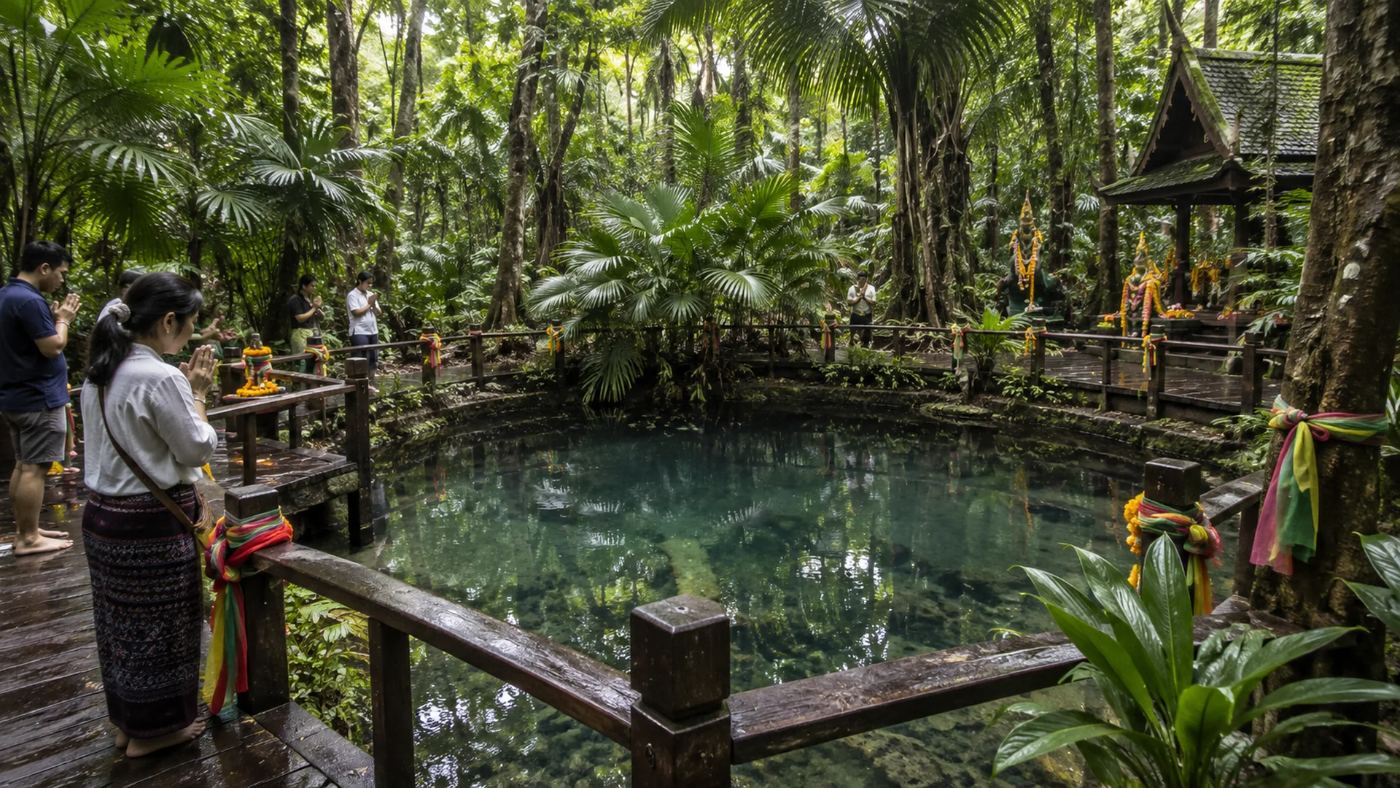
Inside Kham Chanot is a sacred water source traditionally associated with the Naga realm.
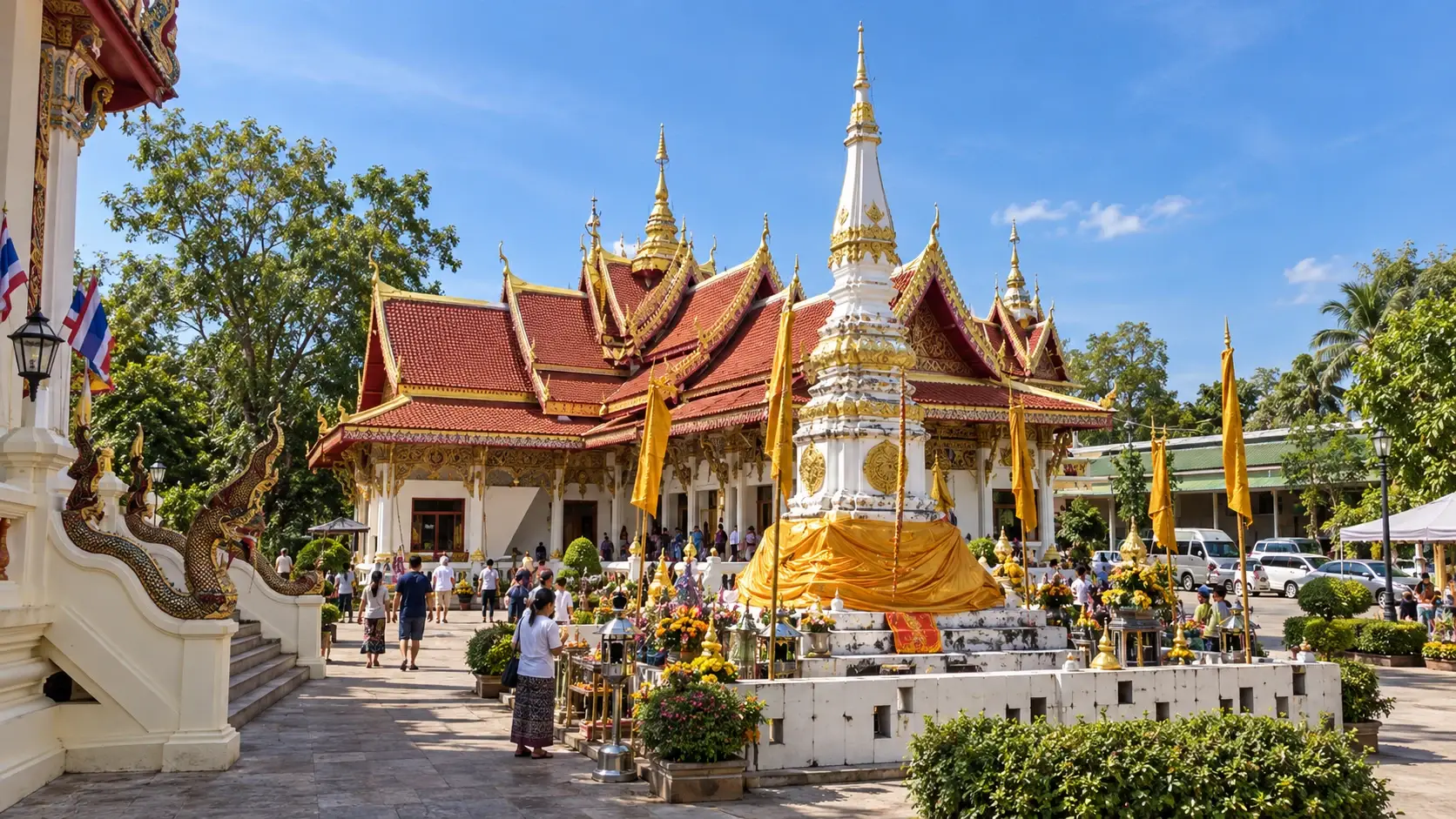
Visitors often stop here after paying their respects at the shrine. The well and surrounding forest form one of the spiritual centres of the site, but visitors should remember that this is an active place of worship rather than simply a tourist attraction.
Current Tourism Authority guidance specifically asks visitors not to throw coins into the sacred well. It also asks people not to light incense or candles within the forest, not to leave offerings behind, not to tie coloured fabric to the trees and not to rub powder onto trees in search of lottery numbers.
Those rules matter. Kham Chanot receives large numbers of visitors, and protecting the forest is essential if its unusual character is to survive.
Faith, Fortune and Thailand's Lottery Culture
Kham Chanot has also become closely associated in popular culture with luck, wishes and lottery numbers.
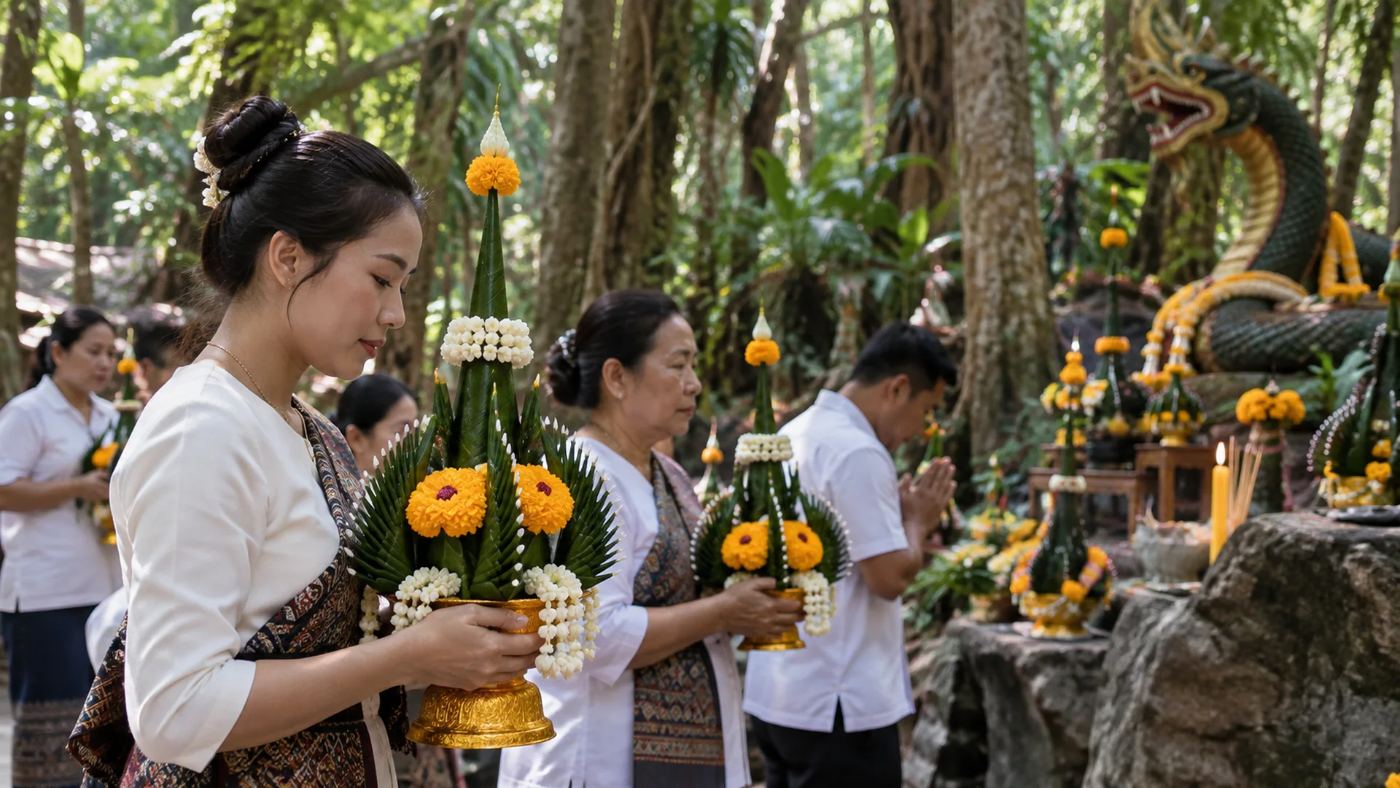
On busy days, visitors arrive carrying elaborate bai sri offerings, flowers and ceremonial objects. Some come to ask for success in business or family life. Others arrive after believing that a previous wish has been fulfilled.
This combination of Buddhism, older animist traditions, Naga mythology and modern popular belief may seem unusual to outsiders, but it is an important part of contemporary Thai religious culture.
Kham Chanot therefore reveals something much larger than a single legend. It demonstrates how ancient stories remain alive and continually adapt to modern Thailand.
The Famous "Ghost Cinema" Story
Kham Chanot also has a decidedly stranger legend.
One of Thailand's best-known supernatural stories tells of a travelling cinema group allegedly hired in 1989 to screen films at night near Kham Chanot. According to the tale, a silent audience dressed unusually appeared to watch the films, then vanished when the performance ended.
The story became known as "Phi Chang Nang", roughly the ghost-hired cinema story, and has since been repeated in television programmes, books and films. Thai media have connected the tale closely with the modern popular mythology surrounding Kham Chanot.
Whether supernatural event, embellished memory or brilliant folklore, it has become part of the site's identity.
And frankly, a mysterious forest believed to conceal the entrance to a Naga kingdom hardly needed another legend. Kham Chanot got one anyway.
Visiting Wat Kham Chanot
Kham Chanot is around a two-hour drive from central Udon Thani, depending on traffic and your starting point. The provincial tourism office places it approximately 101 kilometres from Udon Thani city and around 17 kilometres from Ban Dung.
Allow enough time to experience the forest rather than treating it as a quick photo stop. Early morning can be especially atmospheric and generally gives you a better chance of experiencing the site before the largest groups arrive.
Dress respectfully, keep voices low around worshippers and follow the signs governing offerings and behaviour inside the sacred forest.
You do not need to share the beliefs surrounding Kham Chanot to appreciate the place. What matters is recognising that for many visitors around you, this is sacred ground.
Why Kham Chanot Belongs on an Udon Thani Itinerary
Udon Thani is often introduced through Red Lotus Lake, Ban Chiang and its temples. Kham Chanot reveals another side of the province.
This is Isan storytelling made physical.
The Chanot palms are real. The wetland is real. The shrines, sacred water and generations of worship are real. Around those things has grown an extraordinary body of mythology involving serpent kings, hidden realms, fortune, ghosts and supernatural events.
That combination is precisely what makes Kham Chanot worth the journey.
Come for the famous Naga legend, but pay attention to the forest, the people making offerings and the stories that have survived around it. Kham Chanot is not simply somewhere to photograph.
It is one of the places where the mythology of Isan still feels alive, in the same way the Naga is honoured every year at the Naga Fireball Festival on the Mekong at Nong Khai.