Where is Udon Thani?
+
Udon Thani is a province and major city in Northeastern Thailand, the region known as Isan. The province combines a modern regional city with rice-growing countryside, forests, archaeological sites, temples, wetlands and traditional communities. Udon Thani is also well positioned for exploring nearby Nong Khai and the Mekong River region. The Tourism Authority of Thailand highlights Ban Chiang, Wat Pa Phu Kon, the Red Lotus Sea and traditional Pha Khid silk among the province's major attractions.
What is Udon Thani famous for?
+
Udon Thani is particularly known for the Red Lotus Sea at Nong Han Lake, Ban Chiang Archaeological Site, Phu Phrabat Historical Park, Wat Pa Phu Kon, forest Buddhism, Isan food and its strong local cultural traditions. What makes the province unusual is the variety. Within one trip you can visit prehistoric archaeological sites, Buddhist temples, spectacular wetlands, lively markets and a modern Thai city.
Is Udon Thani worth visiting?
+
Yes, particularly for travellers who want to experience a part of Thailand that is very different from Bangkok, Phuket, Pattaya or the southern islands. Udon Thani combines important historical sites, rural landscapes, distinctive Isan food, Buddhist culture and modern city life without being dominated by international mass tourism. It works especially well for visitors interested in culture, history, photography, food, nature and experiencing everyday Thailand.
Does Udon Thani have UNESCO World Heritage Sites?
+
Yes. Udon Thani province has two UNESCO World Heritage properties. Ban Chiang Archaeological Site was inscribed in 1992 and is considered one of Southeast Asia's most important prehistoric settlements. Phu Phrabat, formally listed as Phu Phrabat, a testimony to the Sīma stone tradition of the Dvaravati period, was inscribed in 2024. UNESCO describes it as preserving the world's largest collection of Dvaravati-period Sīma stones remaining in their original locations. That makes archaeology and ancient cultural history one of the strongest reasons to visit Udon Thani.
What is Ban Chiang and why is it important?
+
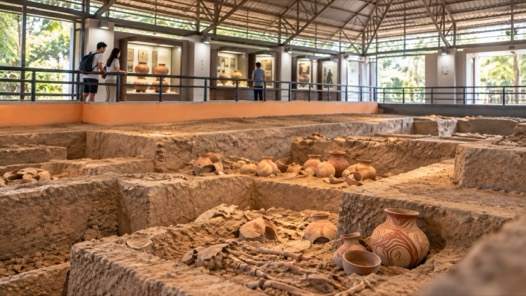
Ban Chiang is a prehistoric settlement and burial site in Udon Thani province. Archaeological evidence shows settled agricultural communities, ceramic production, animal domestication and metalworking developing there over a long period. UNESCO describes Ban Chiang as one of the most important prehistoric settlements discovered in Southeast Asia. Its distinctive red-painted pottery has become one of the best-known symbols of Udon Thani.
Was Ban Chiang the world's first Bronze Age civilisation?
+
This claim is sometimes repeated in older tourism material, but it is better not to use it. Dating of Ban Chiang has been revised substantially as archaeological techniques have improved. UNESCO's current assessment places its earliest occupation at around 1495 BC and emphasises its exceptional importance for understanding the development of farming, pottery and metal technology in Southeast Asia. For your website I would describe it as one of Southeast Asia's most important prehistoric archaeological sites, which is both impressive and accurate.
What is Phu Phrabat Historical Park?
+
Phu Phrabat is a remarkable landscape of huge naturally eroded sandstone formations, prehistoric rock paintings and ancient religious sites in western Udon Thani province. The area later developed into an important Buddhist sacred landscape. UNESCO says Phu Phrabat preserves the largest surviving collection of Dvaravati-period Sīma sacred boundary stones in their original locations. It became a UNESCO World Heritage Site in 2024.
What is the Red Lotus Sea?
+
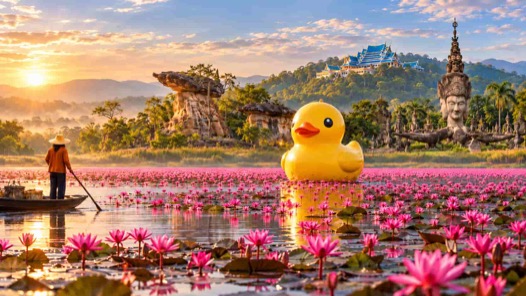
The Red Lotus Sea, or Talay Bua Daeng, is a seasonal natural spectacle on Nong Han Lake in Kumphawapi district. During the flowering season, vast areas of the lake become covered in pink-red tropical water lilies, creating the appearance of an enormous floating flower field. The Tourism Authority of Thailand says the main flowering period is generally November to February.
When is the best time to see the Red Lotus Lake?
+
The main season is approximately November through February, although the density of flowers varies naturally from year to year. Morning is the best time. TAT recommends roughly 06:00 to 11:00, before the heat of the day causes many flowers to begin closing. For photography, going close to sunrise can produce particularly beautiful light across the lake.
Do you need a boat to see the Red Lotus Sea?
+
Yes. The spectacular flower fields are out on the lake rather than immediately beside the shore. Visitors normally hire a local boat, with typical trips lasting around 45 to 90 minutes depending on the route and boat chosen.
What temples should I visit in Udon Thani?
+
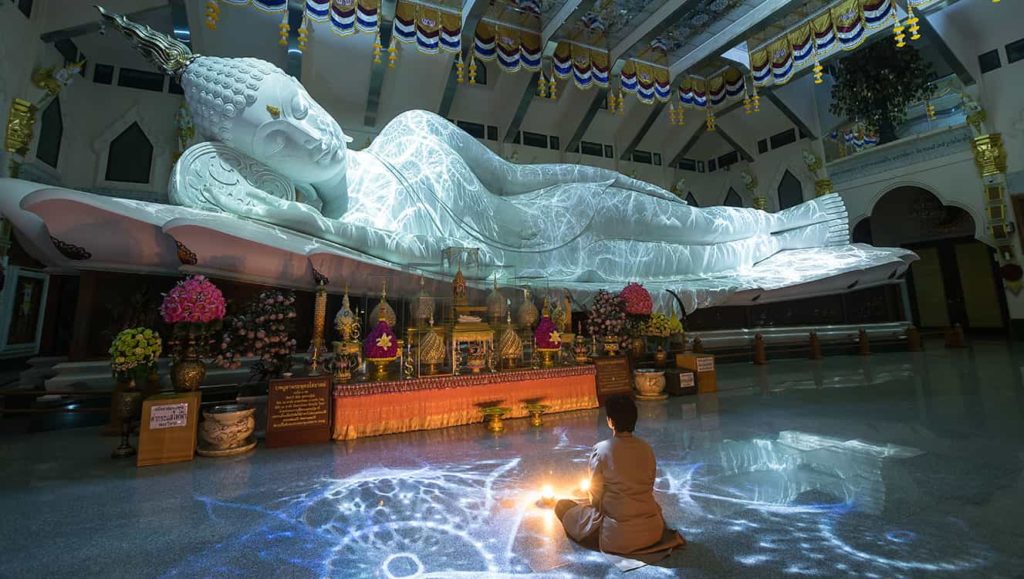
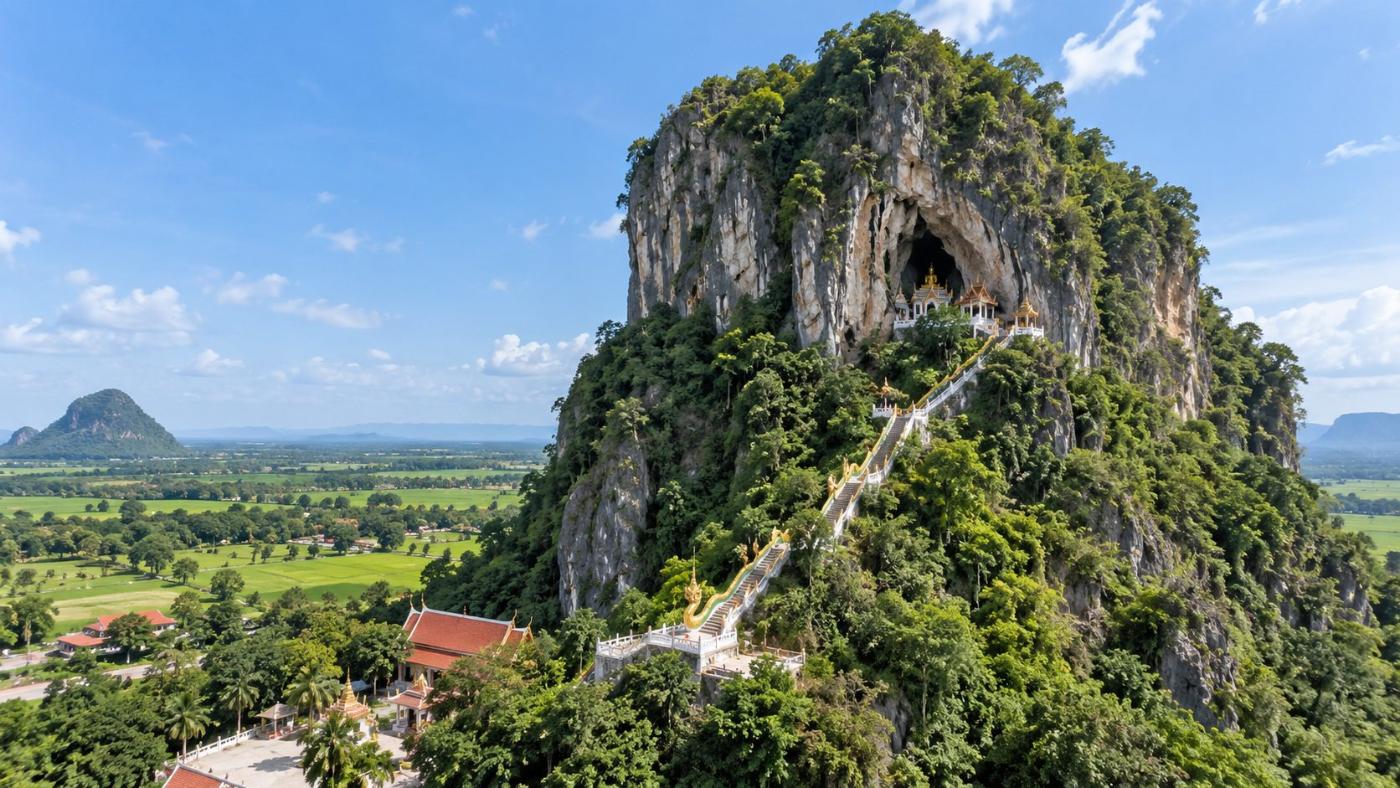
One of the most impressive is Wat Pa Phu Kon, a forest temple surrounded by hills and woodland. Its best-known feature is a monumental reclining Buddha made from white Carrara marble. Udon Thani also has important temples connected with the Thai Forest Tradition, as well as city temples, Chinese shrines and smaller rural monasteries that provide a very different experience from Thailand's heavily visited tourist temples.
What is Wat Kham Chanot?
+
Kham Chanot, at Wat Siri Suttho, is one of Udon Thani's most important sacred sites. It is strongly associated with local Naga beliefs and the legend of the serpent king Pu Si Suttho. The unusual grove of Chanot palms and its sacred pond contribute to the site's distinctive atmosphere. It remains an active pilgrimage destination rather than simply a tourist attraction, so visitors should behave respectfully.
Is Udon Thani good for nature lovers?
+
Yes. Beyond the city, much of the province consists of countryside, wetlands, forests and hills. Highlights include the Red Lotus Sea, forest landscapes surrounding Wat Pa Phu Kon, waterfalls and the dramatic sandstone landscape around Phu Phrabat. The Tourism Authority of Thailand describes the province as predominantly rice fields, forests and hills, with the Phu Phan mountain range forming an important part of the landscape.
When is the best time of year to visit Udon Thani?
+
For many international visitors, November to February is the most comfortable period because temperatures and humidity are generally lower. It also overlaps with the Red Lotus Sea flowering season, making December, January and February particularly attractive for sightseeing. TAT identifies November through February as Thailand's cooler travel season. Udon Thani can, however, be visited throughout the year.
How many days do I need in Udon Thani?
+
Two days will allow you to see a few major attractions, and TAT includes two Udon Thani sightseeing days in one of its regional itineraries. However, three to five days is much better if you want to combine Udon city with Ban Chiang, the Red Lotus Sea, temples and one of the more distant attractions such as Phu Phrabat or Wat Pa Phu Kon. Distances between rural attractions are greater than they initially appear, so trying to see everything in one or two days can turn a holiday into a series of long drives.
Is Udon Thani suitable for families?
+
Yes. Families can combine cultural attractions with outdoor experiences such as the Red Lotus Sea, parks, temples, archaeological sites and countryside excursions. Udon Thani city also has the shopping centres, cafés, restaurants and other conveniences expected of a major provincial city, making it relatively easy to travel with children.
Is Udon Thani good for food?
+
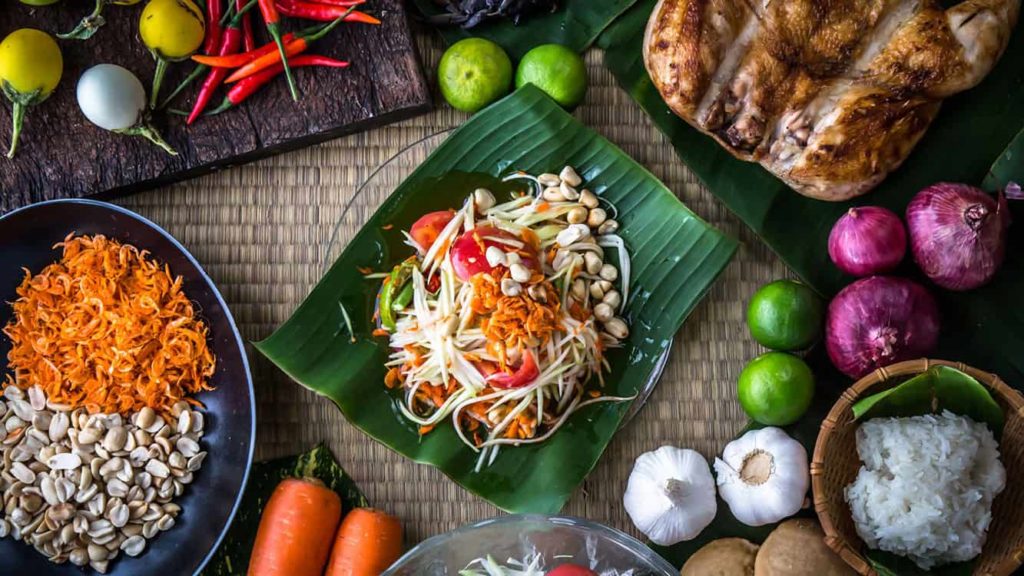
Very much so. Udon Thani is an excellent place to discover Isan cuisine, with dishes such as som tam, grilled chicken, larb, sticky rice, grilled meats, spicy salads and many regional specialities widely available. One advantage of visiting Isan is that much of the food culture remains part of everyday life rather than being produced specifically for tourists.
Is the food in Udon Thani very spicy?
+
It can be. Traditional Isan cuisine makes generous use of chilli, lime, herbs, fermented fish and strong savoury flavours. Restaurants will often reduce the chilli if asked. Saying "mai phet" means "not spicy", although visitors who are particularly sensitive to chilli may want to emphasise that clearly when ordering.
Is Udon Thani only interesting for history and temples?
+
No. That is one of the misconceptions your page should actively counter. Udon Thani city has modern shopping centres, coffee shops, restaurants, bars, markets and nightlife alongside its historic and cultural attractions. The real appeal is the contrast. You can spend the morning at a prehistoric World Heritage Site or forest monastery and be back in a modern restaurant or shopping centre that evening.
Can I visit Nong Khai and the Mekong from Udon Thani?
+
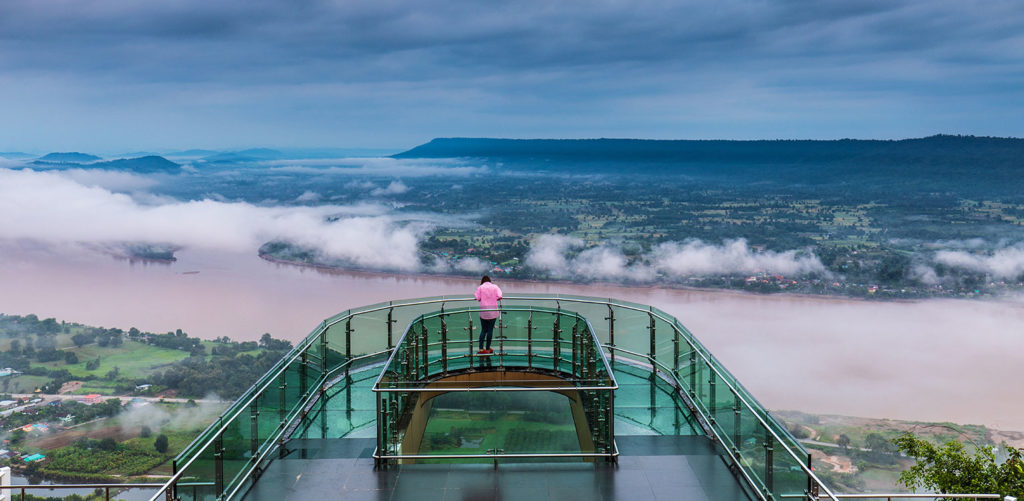
Yes. Udon Thani makes a practical base for exploring neighbouring Nong Khai Province and the Mekong River. Popular excursions can include Nong Khai city, Sala Keoku sculpture park, riverside areas, temples and viewpoints overlooking the Mekong. TAT itself combines Udon Thani and Nong Khai in regional itineraries.
How do I get to Udon Thani?
+
Udon Thani is one of the easier Isan destinations to reach. It has an airport and is also connected to Bangkok by rail, long-distance buses and road. TAT lists air, train and bus travel as the principal ways to reach the province. Once outside Udon Thani city, having private transport, arranging a driver or organising excursions can make visiting the more rural attractions considerably easier.
Do I need a car to explore Udon Thani?
+
Not necessarily for the city itself, but a car or driver is extremely useful if you want to explore the province properly. Attractions including Ban Chiang, the Red Lotus Sea, Phu Phrabat, Kham Chanot and Wat Pa Phu Kon are spread across a large area. Independent travellers can rent vehicles, while visitors who would rather not drive can arrange taxis or private drivers.
Is English widely spoken in Udon Thani?
+
English is commonly encountered in hotels, larger restaurants and tourism-related businesses, but it becomes less common as you travel into rural communities. That is part of Udon Thani's appeal for many travellers, because much of the province remains focused on ordinary Thai life rather than international tourism. A translation app and a few basic Thai phrases can be useful when exploring smaller villages or local restaurants.
Is Udon Thani crowded with tourists?
+
Generally, no. Major Thai pilgrimage sites such as Kham Chanot can become extremely busy during festivals, weekends and holidays, and the Red Lotus Sea attracts many visitors during peak flowering season. But compared with Thailand's major international tourism destinations, much of Udon Thani still receives relatively modest numbers of foreign visitors.
What makes Udon Thani different from other Thai destinations?
+
Udon Thani offers an unusual combination of ancient history, living spirituality, Isan culture, rural Thailand and a modern regional city. Within the same province you can explore two UNESCO World Heritage properties, take a boat through thousands of flowering water lilies, visit forest monasteries, hear centuries-old Naga legends, eat traditional Isan food and experience contemporary Thai city life. That mixture is the strongest reason to Discover Udon Thani rather than treating it simply as a stopping point on the way somewhere else.
Is Nakara Villas & Glamping a good base for exploring Udon Thani?
+
Nakara Villas & Glamping works particularly well for travellers who want to explore the wider Udon Thani province rather than only the city centre. Many of Udon Thani's most rewarding experiences are spread across the province, so choosing a peaceful base and planning individual day trips can make more sense than repeatedly changing hotels. We can help guests plan routes, decide which attractions work well together, understand realistic travelling times and choose the best time of day for experiences such as the Red Lotus Sea. After a day exploring Udon Thani, guests can return to peaceful villas and glamping accommodation, tropical gardens, our 45m² infinity pool and home-cooked food.