
Legends of the Naga
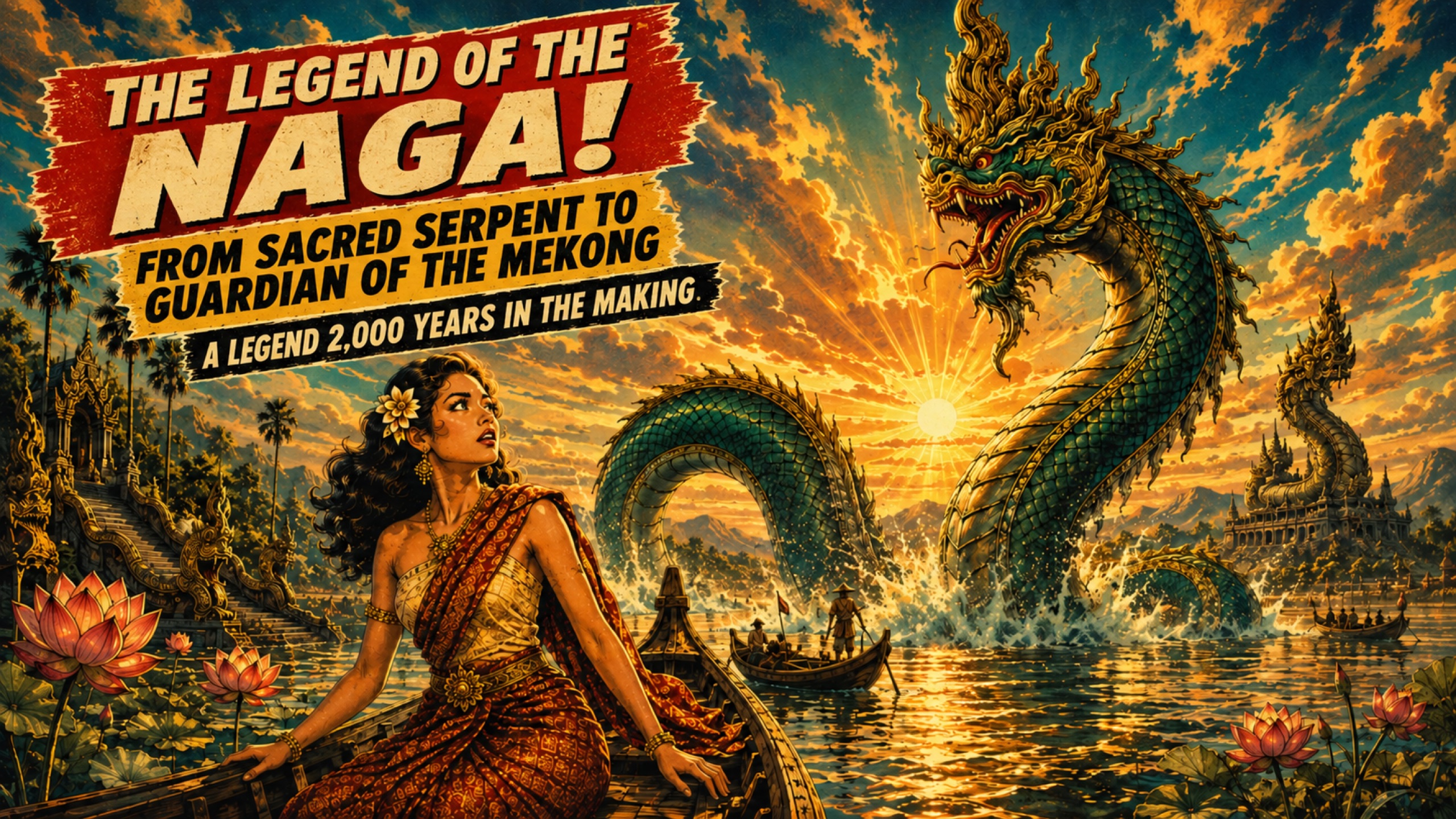
From ancient serpent spirits to Hindu gods, Buddhist protectors and guardians of the Mekong, discover how the Naga became one of Southeast Asia's most enduring supernatural beings.
Long before the borders of Thailand, Laos or Cambodia existed, people looked at rivers very differently.
A river brought life.
It watered crops, carried fish, connected settlements and allowed entire civilisations to grow.
But rivers also flooded without warning. People drowned in them. Storms transformed them. Powerful creatures disappeared beneath their surface.
It is not difficult to understand why ancient people imagined that such places contained beings greater than themselves.
And somewhere in that ancient relationship between people, snakes and water, we encounter the creatures that came to be known as the Nagas.
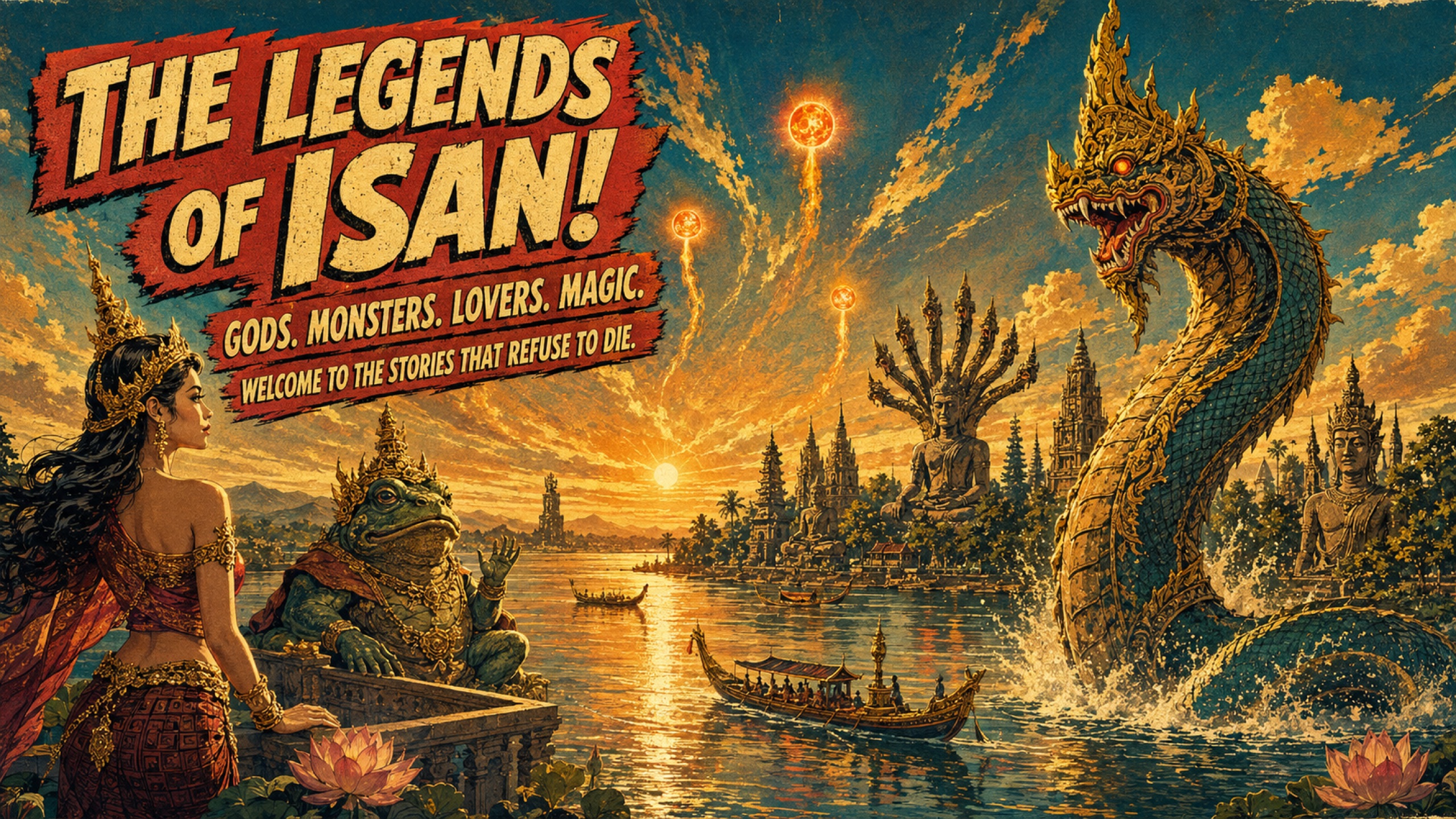
Today, Nagas appear everywhere across mainland Southeast Asia. They climb the stairways of Thai temples. They spread multiple heads above images of the Buddha. They decorate Cambodian ruins. They appear in Lao textiles. They inhabit stories about underground kingdoms and, along the Mekong, some people still believe they live beneath the river itself.
But there was no single moment when somebody "invented" the Naga.
Its story is far more interesting than that.
What Is a Naga?
The Sanskrit word nāga can refer to a serpent or cobra, but in mythology a Naga is much more than an ordinary snake.
Nagas are supernatural beings.
Depending upon the story, they may appear as enormous serpents, multi-headed cobras or beings capable of taking human form. There are Naga kings, queens and princesses, entire Naga families and kingdoms inhabited by them.
They are particularly associated with water, rainfall, fertility, treasure and protection.
But they are not simply benevolent.
Like the rivers with which they became associated, Nagas possess two sides. Water creates life but can also destroy it. Likewise, Nagas may protect people and bring abundance, but some stories portray them as dangerous, venomous or capable of unleashing floods.
The Metropolitan Museum of Art describes Nagas as serpent deities associated simultaneously with water and agricultural abundance and with destructive powers such as venom and flooding.
That contradiction is important.
The Naga is not simply an Asian dragon.
It represents power that humans must respect.
Before Hinduism and Buddhism: The Sacred Serpent
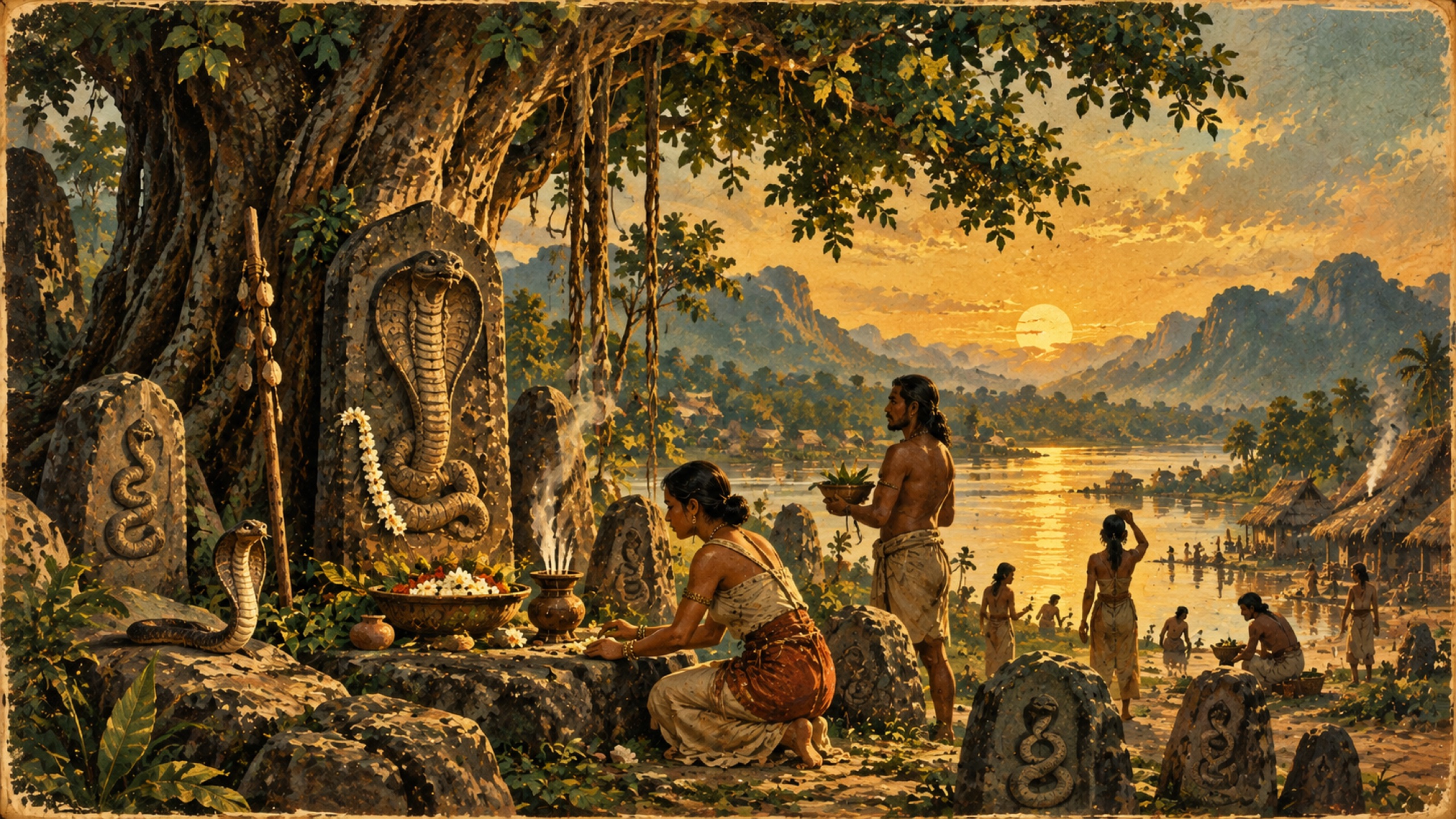
It would be convenient to say that Nagas began with Hinduism.
They did not.
Sacred serpent beliefs in South Asia appear to be considerably older than the religious traditions in which Nagas later became famous.
Ancient communities believed powerful spirits inhabited trees, rocks, rivers and other elements of the natural landscape. Sacred snakes formed part of this spiritual world.
The British Museum notes that nature spirits, including sacred snakes, were important to ancient Indian communities and that from around 200 BC onward, large stone sculptures and terracotta representations show how significant these beings had become. The Metropolitan Museum similarly records representations of Naga kings dating from at least the second century BC.
This does not mean the Naga suddenly appeared around 200 BC.
It means that by then the belief was established strongly enough to leave a substantial archaeological record.
And then something remarkable happened.
Instead of disappearing when major religions developed, the serpent spirits were absorbed into them.
Hinduism adopted Nagas.
Buddhism adopted Nagas.
Jain traditions also incorporated serpent deities.
Rather than destroying older beliefs, these religions often gave them new stories and new meanings.
That ability to change may be one of the great secrets behind the Naga's survival.
The Naga Enters Hindu Mythology
The Nagas found a spectacular home within Hindu mythology.
Some of the most important stories in Hindu tradition involve enormous cosmic serpents.
One is Shesha, also known as Ananta, the immense serpent associated with the god Vishnu.
In famous representations, Vishnu rests upon the coils of Shesha upon the cosmic ocean while the serpent's multiple hoods form a canopy above him.
This is not simply a giant snake acting as furniture.
The image places the serpent within the structure of the universe itself.
The Metropolitan Museum describes Shesha supporting Vishnu upon the cosmic ocean at the beginning of a new cosmic age.
The Naga has moved from riverbank spirit to cosmic being.
Vasuki and the Churning of the Ocean
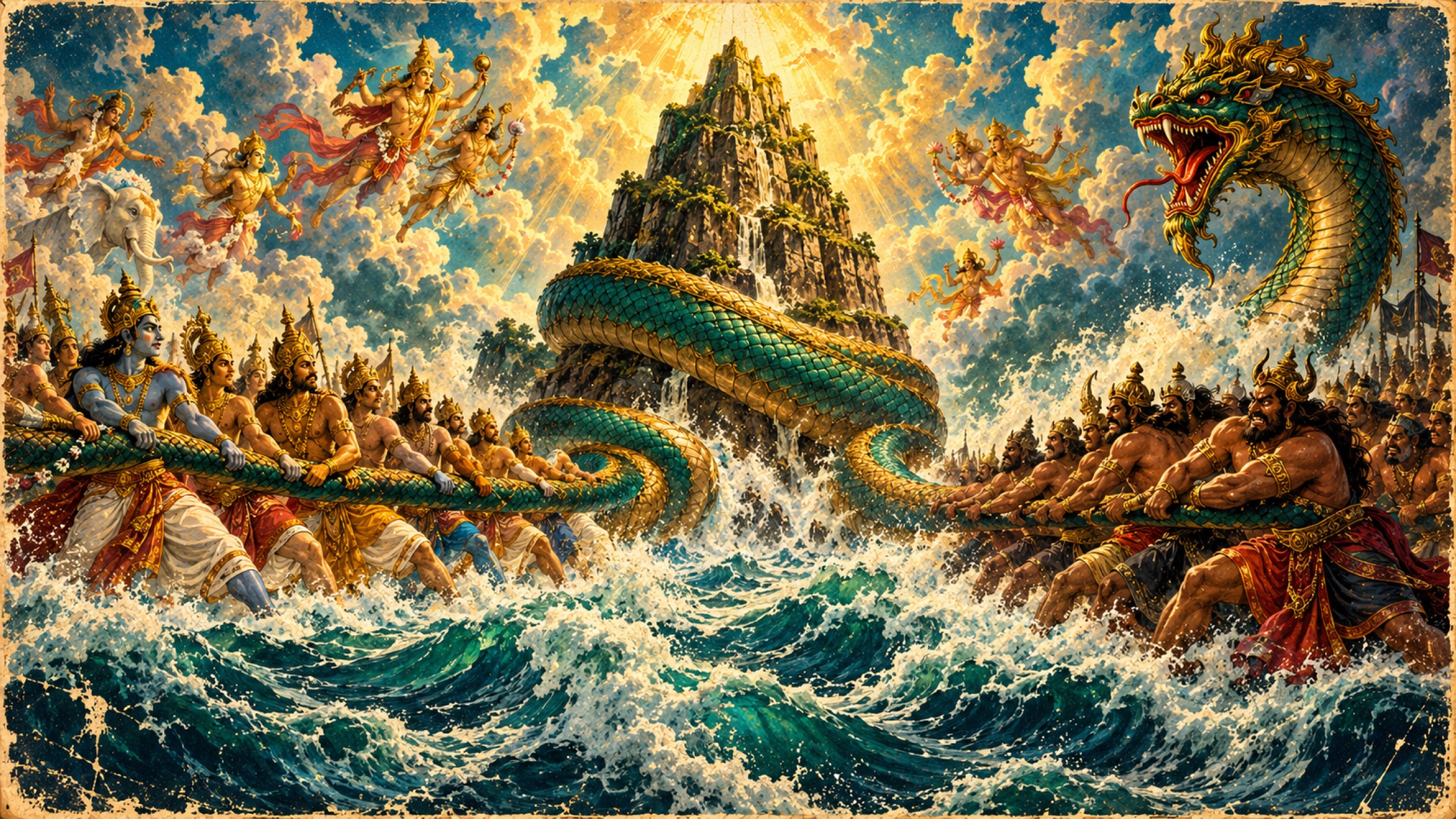
Another great Naga appears in one of Hindu mythology's most extraordinary stories.
The gods and their rivals seek amrita, the nectar of immortality hidden within the primordial ocean.
To recover it, they use a mountain as an enormous churning stick.
But something is needed to turn the mountain.
That something is the Naga king Vasuki.
Vasuki wraps his immense body around Mount Mandara while the opposing sides pull him backwards and forwards like a rope, churning the cosmic ocean and eventually bringing extraordinary treasures to the surface.
The story places a serpent at the centre of one of mythology's great acts of creation and transformation.
Once again we find the same themes.
Water.
Power.
Danger.
Creation.
Immortality.
The Naga does not merely inhabit the natural world.
It helps move the universe.
Nagas Were Not Always Serpents
One of the most interesting features of early Naga imagery is that Nagas could be represented as human beings with serpent characteristics.
A Naga king might appear almost entirely human but with cobra hoods spreading behind his head.
A Nagini, or female Naga, could appear as a woman whose serpent identity was revealed through a snake tail or cobra canopy.
The Metropolitan Museum has fifth-century sculptures depicting Naga kings and queens in precisely this humanised royal form.
This ability to move between serpent and human worlds becomes important throughout later Naga mythology.
Stories of Naga kings, princesses marrying human rulers and Nagas appearing disguised as people would become common across South and Southeast Asia.
They belonged beneath the water.
But they could enter our world.
Then Buddhism Met the Naga
Perhaps no story did more to transform the Naga's image than the story of Mucalinda.
According to Buddhist tradition, after the Buddha achieved enlightenment he remained in meditation.
During the weeks following his awakening, a violent storm arose.
The Naga king Mucalinda emerged.
He coiled his body beneath or around the Buddha and spread his great cobra hood above him, sheltering the meditating Buddha from the rain.
When the storm ended, Mucalinda withdrew.
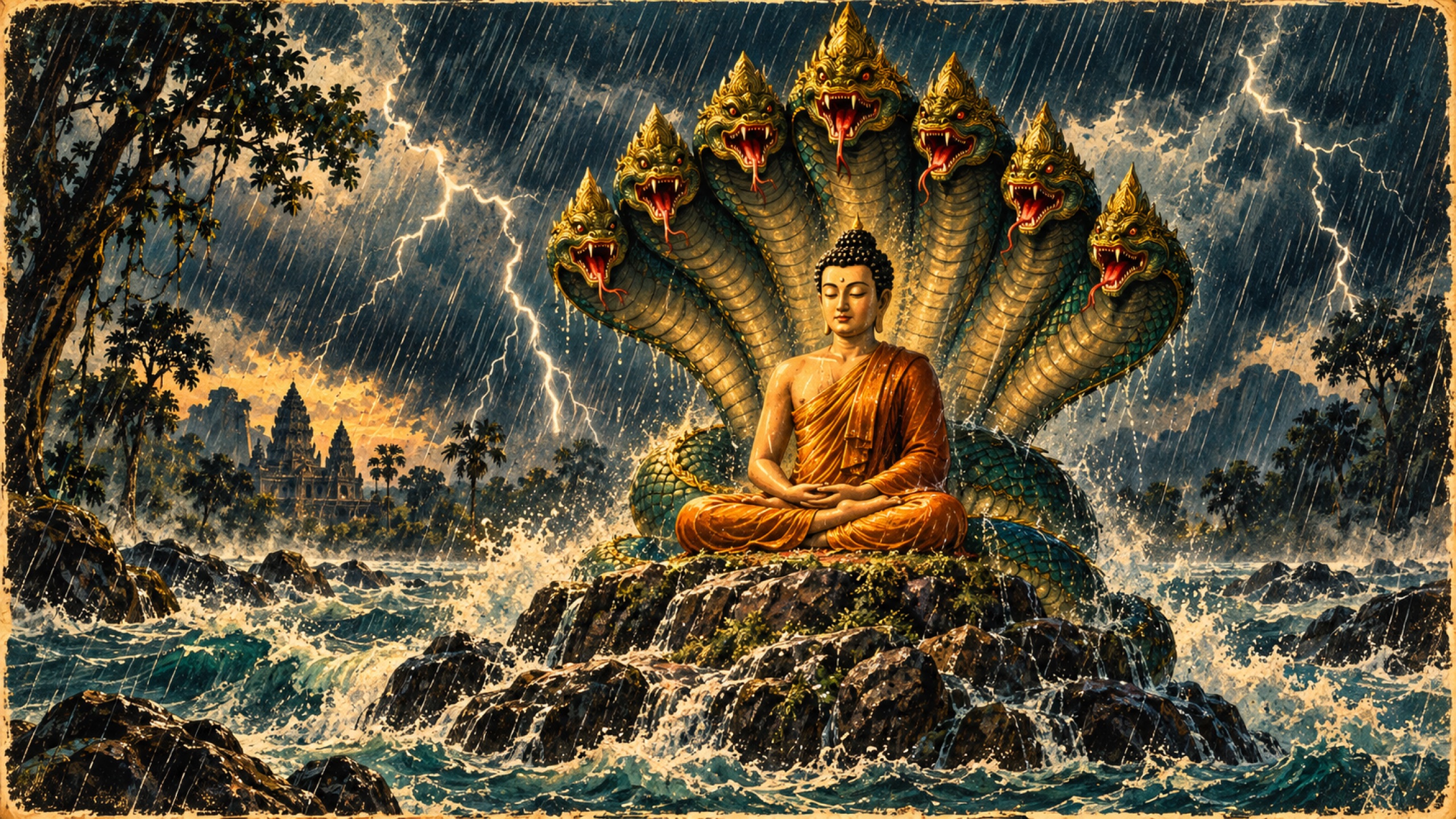
It is an extraordinarily powerful image.
A creature associated with the uncontrollable forces of nature has become a protector of enlightenment.
The story appears repeatedly in Buddhist art and travelled far beyond India. The Met notes that the image became especially significant in mainland Southeast Asia, where existing traditions surrounding water serpents may have helped make the story particularly resonant.
This helps explain something every traveller in Thailand eventually notices.
The Naga is everywhere around Buddhist temples.
It is not there accidentally.
From Ancient Spirit to Protector of Buddhism
Early Buddhism did not simply pretend that popular supernatural beliefs did not exist.
Instead, Buddhist stories frequently portray powerful local spirits encountering Buddhist teaching and eventually becoming protectors of it.
The Naga fits this pattern beautifully.
The Metropolitan Museum describes the Buddhist assimilation of Nagas as a recurring theme in early Buddhist literature. A powerful nature spirit connected with water becomes brought within the Buddhist religious universe.
This fundamentally changed the Naga's role.
It could still possess immense supernatural power.
But that power could now defend something sacred.
The serpent had become a guardian.
Why Do Nagas Guard Thai Temples?
Once you understand that transformation, the Nagas running beside temple staircases begin to make more sense.
Walk towards a temple in Thailand and you will often find elongated serpentine bodies forming the balustrades leading upwards.
They visually guard the route into sacred space.
The precise symbolism varies between regions, periods and traditions, so it is too simplistic to assign one universal meaning to every Naga staircase.
But protection, water, sacred boundaries and the movement between different realms are recurring themes.
Historical Thai examples demonstrate how deeply the image became incorporated into Buddhist architecture. The British Museum, for example, holds a 15th-century Thai gilded bronze balustrade terminal depicting five Nagas emerging from a makara, another mythical water creature.
Every time you walk between two Nagas into a temple, you are seeing the end result of an extraordinarily long cultural journey.
The Naga Moves into Southeast Asia
Indian religious ideas began travelling into Southeast Asia many centuries ago through trade, migration, intermarriage, priests, artisans and political relationships.
But Southeast Asian societies did not simply copy them.
They adapted them.
The British Museum describes the movement of Hindu and Buddhist ideas into Southeast Asia as a process in which imported religious concepts encountered and blended with existing traditions.
This was almost perfect territory for the Naga.
Southeast Asia already contained societies whose lives depended upon monsoons, rivers, wetlands and rice cultivation.
A supernatural serpent associated with rainfall, fertility and water did not arrive in an empty spiritual landscape.
It encountered local beliefs that could understand it immediately.
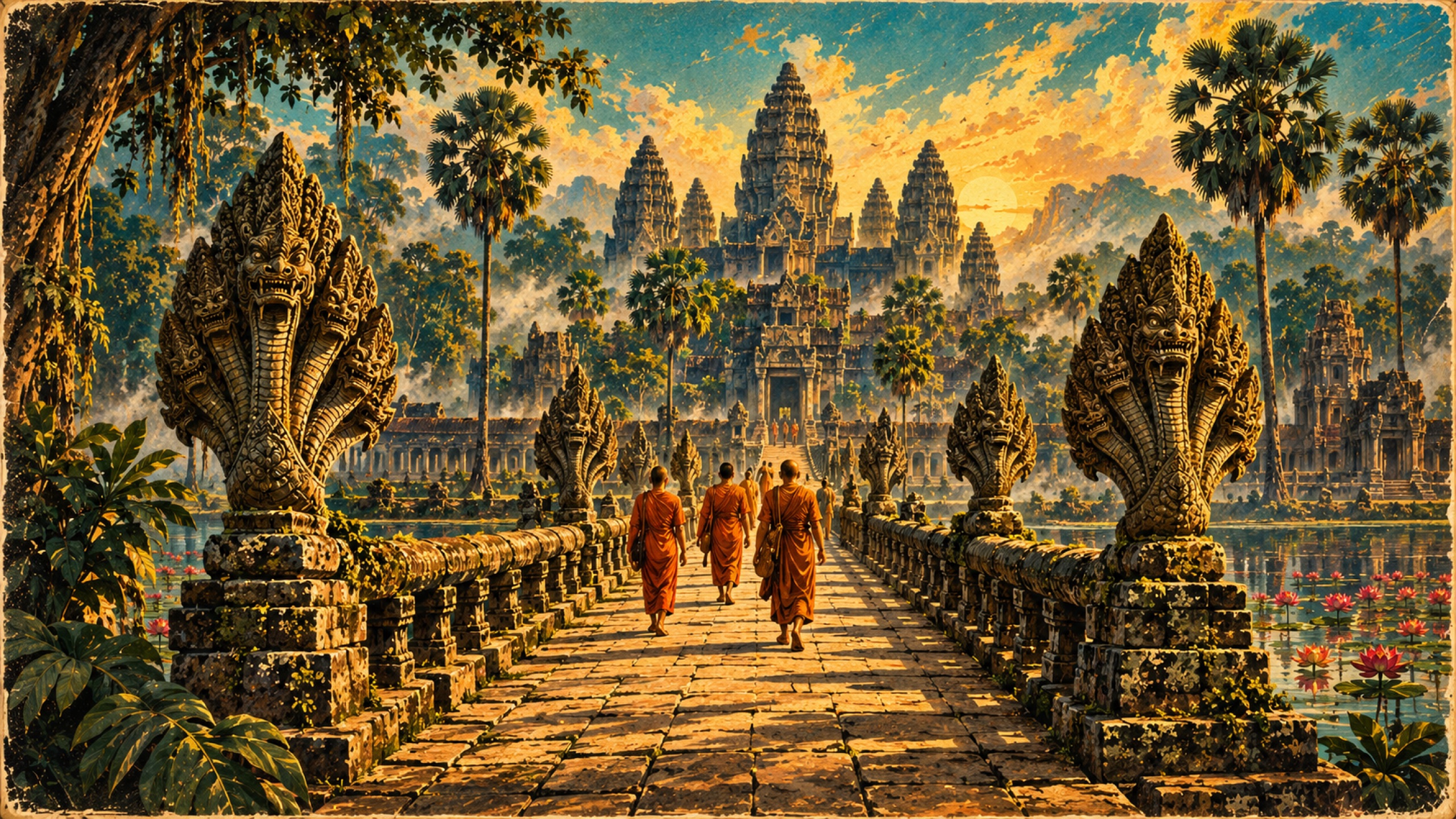
The Met's research into early Southeast Asian religion similarly describes indigenous nature-spirit traditions as a foundation onto which Indic religious ideas could be grafted.
The result was not simply the Indian Naga transplanted eastward.
It became a Southeast Asian Naga.
Cambodia and the Serpent Ancestor
Few places demonstrate the power of the Naga more spectacularly than Cambodia.
Multi-headed Nagas guard some of the great monuments of Khmer civilisation.
During the Angkor period, images of the Buddha protected by a seven-headed Naga became particularly important. The Met describes these works as a meeting between imported Indic religion and local serpent cults.
Nagas also became connected with ideas of ancestry and kingship.
Khmer tradition contains stories linking human rulers with Naga princesses and the supernatural world associated with them.
This introduces another enduring Naga theme.
The Naga is no longer simply protecting humanity.
Humanity itself can claim descent from the Naga.
Laos: The Naga as Ancestor and Protector
Move north toward Laos and the Naga becomes even more embedded in everyday cultural life.
In Lao tradition, Nagas are strongly associated with rivers, particularly the Mekong.
But the relationship goes beyond mythology.
For many Lao communities, Nagas are regarded as ancestral protectors.
This belief survives vividly in traditional textiles.
In 2023, UNESCO inscribed the traditional craft of Naga motif weaving in Lao communities on its Representative List of the Intangible Cultural Heritage of Humanity.
UNESCO records that Naga motifs can accompany people throughout life, appearing on cloth used for newborn children, clothing, ceremonies, weddings and even funerary garments. The motif represents protection, prosperity and ancestral connection.
Think about what that means.
The Naga has travelled from ancient mythology into fabric wrapped around a newborn baby.
This is not a dead religion displayed behind museum glass.
It is living culture.
The Naga Reaches the Mekong
And then we arrive in the world most relevant to northeastern Thailand.
The Mekong.
It is difficult to imagine a more natural landscape for Naga mythology.
The river is enormous.
It crosses countries and cultures.
It feeds fields.
It floods.
It changes colour and depth with the seasons.
It carries people, stories and religions along its banks.
Throughout parts of Laos and northeastern Thailand, Nagas became inhabitants and guardians of the river itself.
UNESCO's description of Luang Prabang even refers to the area around the Mekong and Nam Khan as the domain of the mythical Naga and records ceremonies associated with the spirits.
Across the river in Thailand, similar beliefs became woven deeply into the cultural landscape of Isan.
Nagas in Isan
Here in northeastern Thailand, or Isan, the Naga does not feel like a distant character from an ancient Indian epic.
It feels local.
Nagas guard temples.
They appear in murals and statues.
They are associated with sacred pools, forests and rivers.
Stories describe Naga cities beneath the earth and water.
The Thai Fine Arts Department describes Thai Naga belief as the product of both older indigenous beliefs and cultural influences received from India.
That sentence explains much of what makes Naga mythology so fascinating.
There is no clean dividing line between "Indian mythology" and "Thai folklore."
The tradition evolved through centuries of cultural exchange.
Nang Ai and the Red Lotus Lake
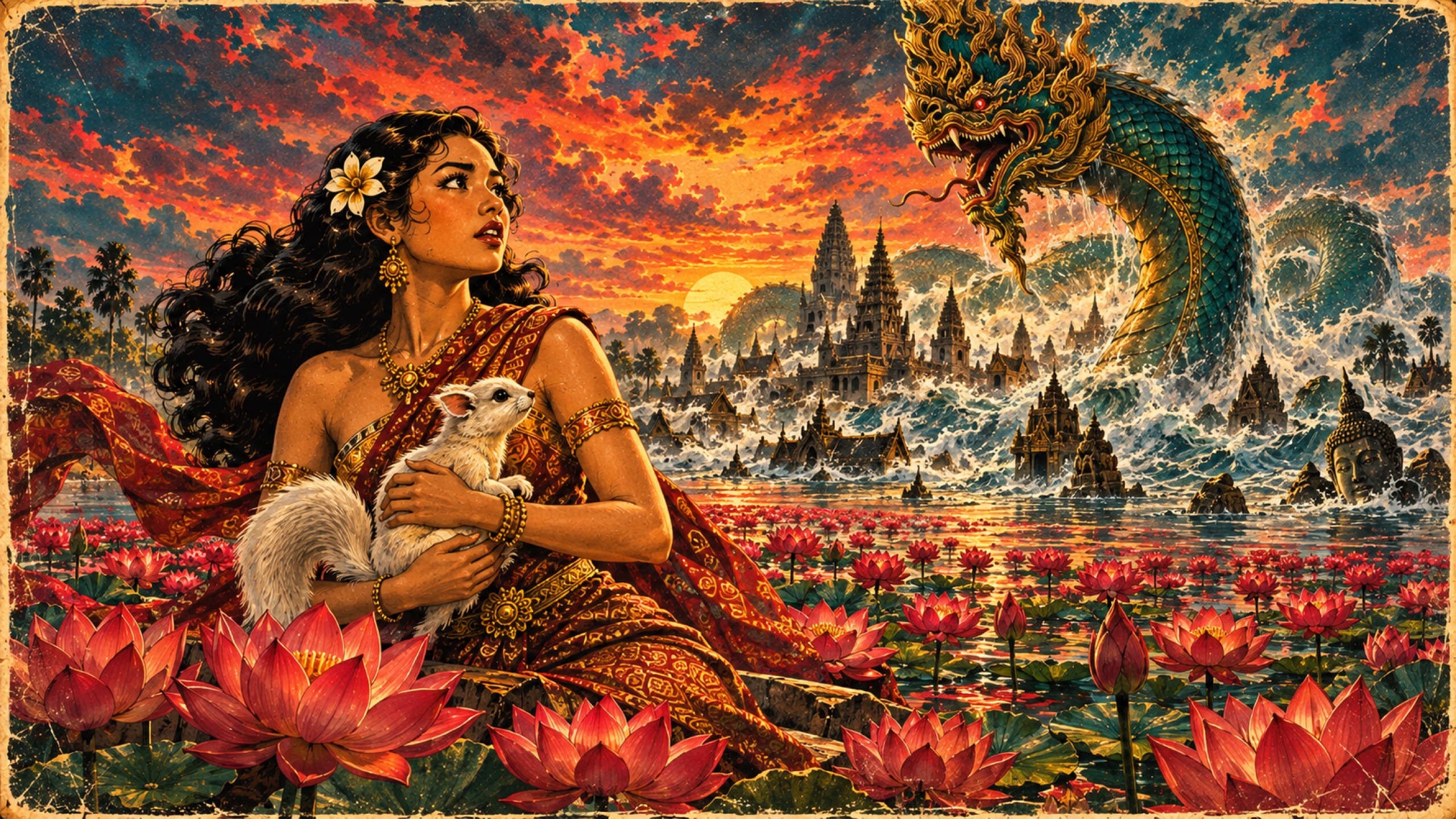
One of Isan's most haunting Naga legends is tied to a place visitors can still see today: Nong Han Kumphawapi, Udon Thani's famous Red Lotus Lake. In the old story of Pha Daeng and Nang Ai, the beautiful princess Nang Ai is loved both by the human prince Pha Daeng and by Phangkhi, the son of a Naga king. Phangkhi eventually disguises himself as a white squirrel, but is killed and his flesh is eaten by the people of the city. Enraged by the death of his son, the Naga king rises with his followers and destroys the kingdom, the land collapsing beneath the water to become the great lake. Like many ancient legends, versions differ, but the story gives the spectacular landscape another dimension: beneath today's peaceful water and thousands of pink-red blossoms lies one of Isan's great tales of love, jealousy, Nagas and a vanished city.
The Underground Kingdom of the Nagas
Across many traditions, Nagas do not simply live inside rivers.
They inhabit another realm.
Stories describe magnificent subterranean or underwater kingdoms sometimes collectively associated with Naga-loka, the realm of the Nagas.
These are not muddy holes occupied by giant snakes.
They are imagined as supernatural kingdoms filled with palaces, rulers and treasure.
This explains why many Naga stories involve entrances.
A cave.
A pool.
A river.
A strange forest.
A hole disappearing into the earth.
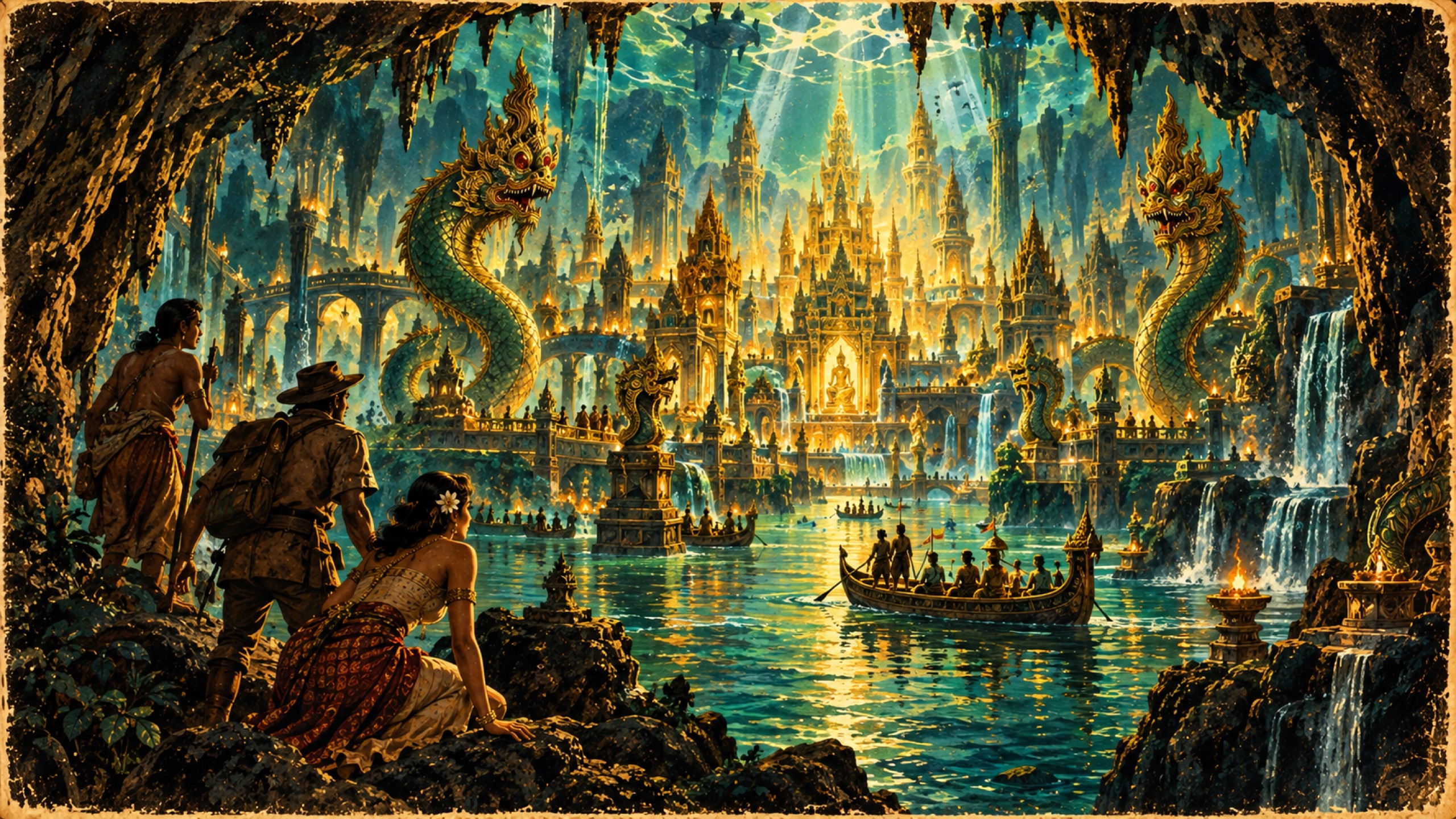
Such places can become thresholds between our world and theirs.
That idea is especially powerful around places such as Kham Chanot in Udon Thani, where local belief associates the sacred landscape with the Naga rulers Pu Si Suttho and Ya Si Pathumma.
For believers, the Naga world is close. Sometimes extraordinarily close.
Naga Kings and Naga Queens
Naga mythology is populated by individuals, not merely anonymous snake monsters.
There are Naga kings, known as Nagarajas, and female Nagas or Naginis.
Ancient art sometimes depicts them dressed like royalty, emphasising their status as rulers rather than animals.
This royal dimension survived as Naga traditions moved east.
Across Southeast Asia, stories developed around powerful Naga rulers, princesses and dynasties.
The idea fitted naturally with another old human obsession:
Where do our rulers come from?
Connecting a royal family or community to supernatural ancestors gave it a sacred origin.
And few ancestors were more impressive than the rulers of an invisible kingdom beneath the water.
Why Do Nagas Have So Many Heads?
Visitors often ask why some Nagas have one head while others have three, five, seven or more.
There is no single mathematical code that explains every depiction.
Different artistic and religious traditions developed different conventions.
Multi-headed cobra hoods are ancient features of Naga imagery, and the number can vary according to period, location and subject.
The famous image of Mucalinda sheltering the Buddha commonly uses seven heads in Southeast Asian art, although artistic traditions are not completely uniform.
Multiple heads also immediately communicate supernatural status.
This is not an ordinary cobra.
You are looking at a king among serpents.
The Naga and the Garuda
Every mythology needs conflict.
For Nagas, one of their great adversaries is Garuda, the immense bird-like being associated with Vishnu.
Indian mythology contains stories of hostility between Garuda and the Nagas.
Symbolically, it creates a powerful opposition.
Sky against water.
Bird against serpent.
Above against below.
Yet, like most mythology, the relationship is more complicated than a simple good-versus-evil battle.
Both Garuda and Nagas became important sacred beings.
And both travelled into the visual culture of Southeast Asia.
Today Thailand's national emblem itself features Garuda, while Nagas remain among the country's most familiar religious and mythological creatures.
Ancient enemies now inhabit the same cultural landscape.
The Mystery of the Naga Fireballs
Eventually every discussion of the Mekong Nagas reaches one extraordinary phenomenon.
The Naga Fireballs.
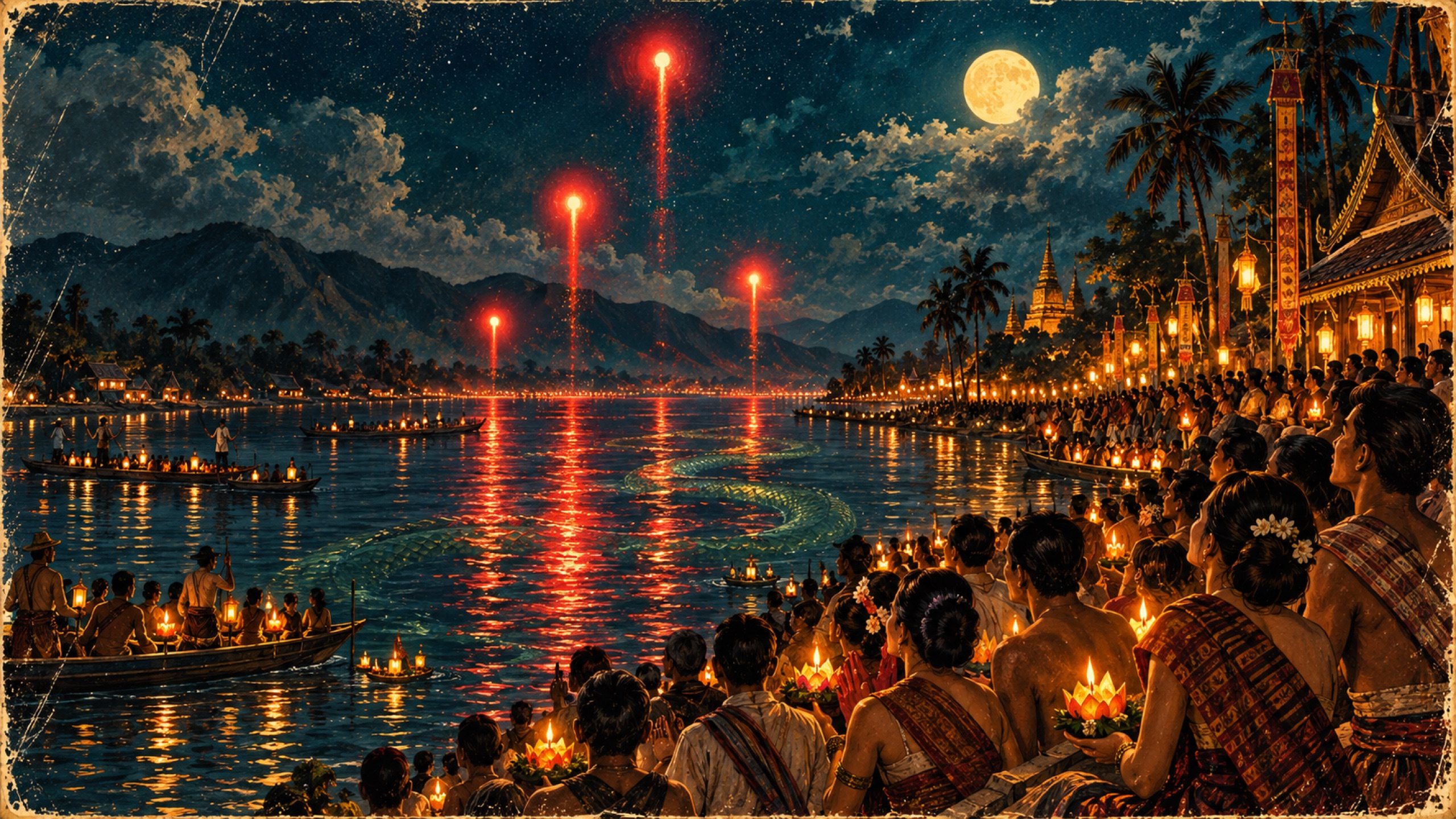
Around the end of Buddhist Lent, particularly along stretches of the Mekong in Nong Khai province, people gather to watch luminous reddish lights reportedly rise from the river and disappear into the sky.
Local tradition connects them with the Naga.
One belief holds that the Nagas release the lights in honour of the Buddha.
The Tourism Authority of Thailand records this interpretation while also describing the phenomenon as mysterious.
There have been many proposed explanations for what people see.
Natural gas.
Human activity.
Optical effects.
Other explanations.
The debate continues.
But from a cultural perspective, perhaps the more interesting question is not simply what creates the lights?
It is:
Why did people interpret them as the work of Nagas?
After following thousands of years of serpent mythology, the answer is easier to understand.
For communities living beside a river already believed to contain powerful supernatural beings, mysterious lights rising from that river fit naturally into an existing spiritual landscape.
Do People Still Believe in Nagas?
Yes.
But belief is not uniform.
Some people understand Nagas primarily as Buddhist symbols.
Some regard them as mythology.
Others believe they are real supernatural beings.
For others, Nagas represent ancestors, protection, prosperity or regional identity.
And many people comfortably hold several of those ideas simultaneously.
In Laos, UNESCO's recognition of Naga weaving shows how the symbol continues to accompany people through birth, marriage, religious ceremonies and death.
Along the Mekong, Naga festivals attract large crowds.
New Naga statues continue to be built.
Offerings continue to be made.
Stories continue to be told.
Whatever you believe about the creature itself, belief in the Naga is unquestionably alive.
Why Has the Naga Survived for So Long?
Perhaps because the Naga has never been only one thing.
It could be a dangerous snake.
Then a nature spirit.
Then a ruler of water.
Then a Hindu supernatural being.
Then a cosmic serpent.
Then a Buddhist protector.
Then an ancestor.
Then a guardian of temples.
Then the ruler of a hidden kingdom beneath the Mekong.
Every culture that encountered the Naga seems to have found room to make it its own.
The British Museum's research into the religions of ancient India describes precisely this kind of process: powerful nature spirits were incorporated into Hindu, Buddhist and Jain traditions rather than disappearing beneath them.
And when those ideas reached Southeast Asia, they met cultures with their own relationships with snakes, water, ancestors and spirits.
The result was not replacement.
It was layer upon layer of belief.
That is why the Naga remains so compelling.
When you look at one today, you may be looking simultaneously at something ancient, Hindu, Buddhist, animist, Thai, Lao and deeply local.
From Mythology to the Real Naga Country
Reading the stories is only half the experience.
Around Udon Thani and Nong Khai you can actually visit places where Naga traditions remain visible today.
Walk through the sacred forest at Kham Chanot.
Stand beside the Mekong in Nong Khai.
Explore the extraordinary sculptures of Sala Keoku.
Travel to Phon Phisai.
See Nagas protecting Buddhist temples.
And, if your timing is right, join thousands of people beside the river during the Naga Fireball period. That is why we created a separate guide:
Continue to: The Naga Trail, Where to Experience the Naga in Udon Thani and Nong Khai →
The mythology explains why the Naga matters.
The trail shows you where the story is still alive.
Discover Naga Country from Nakara Villas & Glamping
Nakara Villas & Glamping sits in the heart of a region where these stories still matter.
We are not a Naga-themed resort, nor are we directly beside every site mentioned in this article.
What we offer is something much more useful: a peaceful Udon Thani base from which you can explore the temples, sacred places, landscapes and Mekong communities where Naga traditions remain part of everyday culture.
Spend the day following legends through Udon Thani and Nong Khai, then return to tropical gardens, comfortable accommodation, home-cooked food and our 45m² infinity pool.
And if you want to explore the story for yourself, ask us.
We love helping guests discover the Isan that exists beyond the usual tourist trail.