
Bang Fai Phaya Nak on the Mekong at Nong Khai
There is a moment on the banks of the Mekong when thousands of people suddenly stop talking. For hours the riverfront has been anything but quiet — families have arrived with mats, food and drinks, temporary stalls sell grilled chicken, som tam and sausages, music competes with announcements, and motorbikes squeeze through gaps that appear physically too small for motorbikes. Across the water lie the dark hills and villages of Laos.
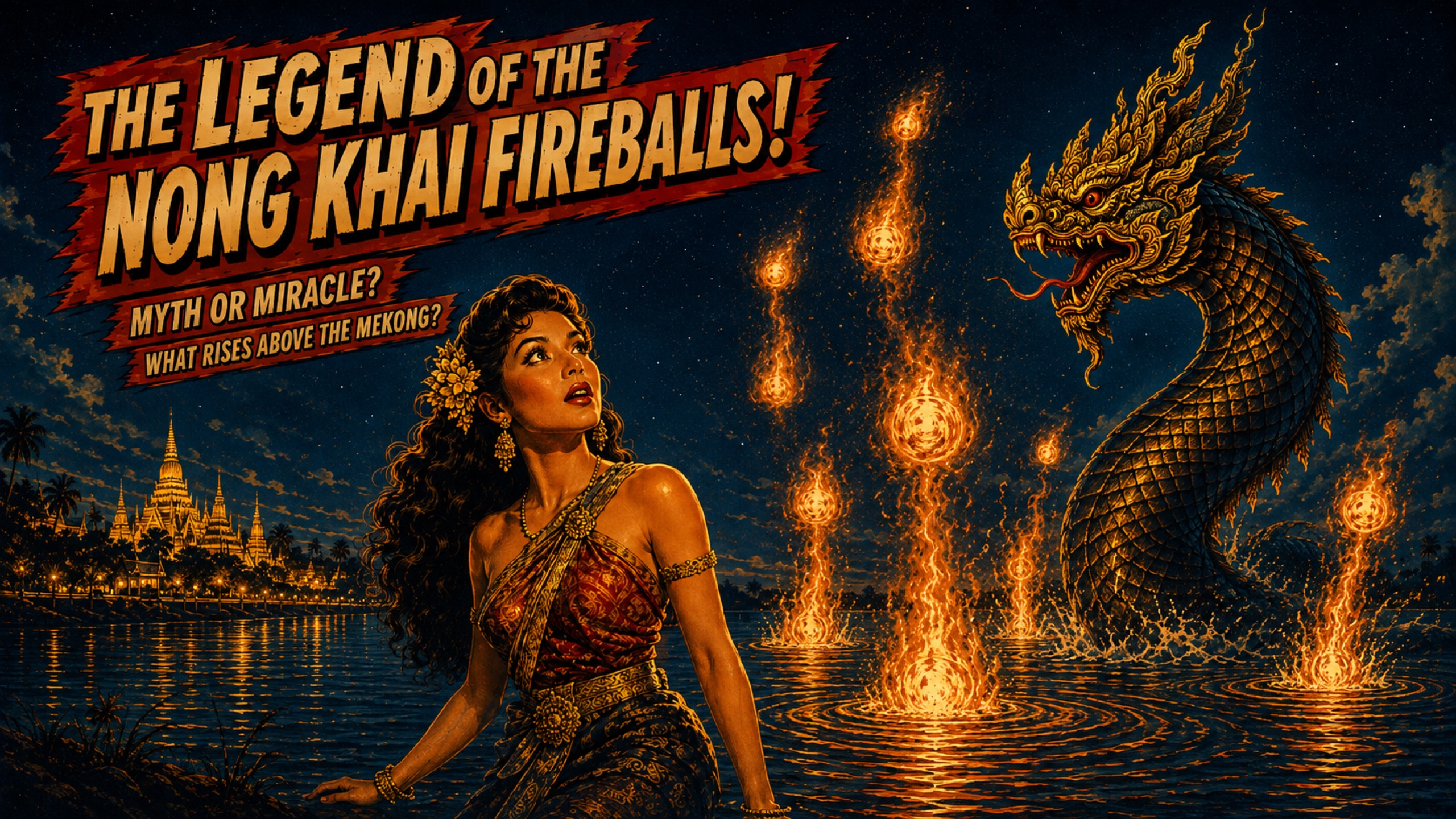
Then night settles over the Mekong. People begin watching the river. And somebody shouts. A small reddish light has appeared above the water. It rises straight upwards, with no obvious trail of smoke, often no sound. For a few seconds the glowing ball climbs into the darkness, then it disappears. A roar goes through the crowd. Then another fireball appears. And perhaps another.
This is Bang Fai Phaya Nak, the Naga Fireballs of the Mekong, one of the strangest annual spectacles in Thailand. They are most famously seen along the Mekong in Nong Khai province, particularly around Phon Phisai and nearby river communities, on the night marking the end of the Buddhist rains retreat, Wan Ok Phansa. For many local people there is no mystery at all: the fireballs come from the Naga.
First, You Need to Understand the Naga
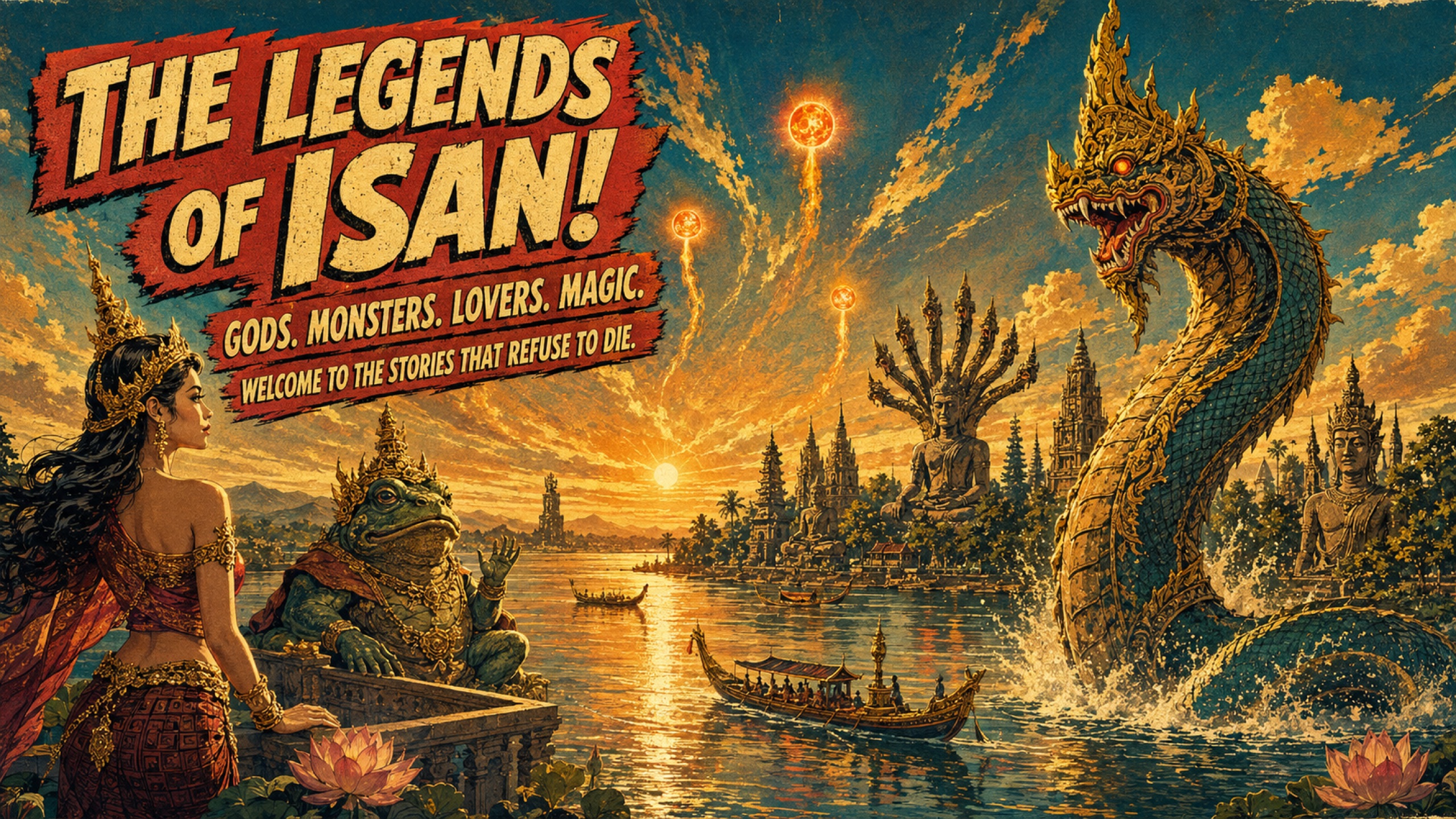
The Naga, or Phaya Nak, is one of the oldest supernatural beings found across South and Southeast Asia — powerful semi-divine serpent beings associated particularly with water, rain, fertility and the hidden worlds beneath the earth. But here beside the Mekong, the Naga became something more. It became local. The river is not simply somewhere the Nagas occasionally visit — this is their home. For more, see our full guide to the Nagas of Isan.

In Buddhist tradition, Nagas can also be protectors of the faith. One of Buddhism's best-known Naga stories concerns Mucalinda, the serpent king said to have protected the Buddha from a violent storm shortly after his enlightenment, coiling his body beneath him and spreading his great hood above him as shelter. By the time Buddhism became deeply established along the Mekong, two powerful ideas had already met: the Naga belonged to water, and the Naga revered the Buddha. All that was missing was one particular night.
The Buddha Returns From Heaven
According to Buddhist tradition, the Buddha once travelled to Tavatimsa Heaven, where he spent the rains retreat teaching the Dhamma. Then, as the retreat ended, he descended again to earth. This return became one of the great moments commemorated around Ok Phansa, with merit making ceremonies, temple events and illuminated boats across Thailand.

Along the Mekong another belief developed: the Nagas were watching too. These beings of the river, already regarded as devoted followers and protectors of Buddhism, rejoiced at the Buddha's return, and from beneath the Mekong they sent glowing balls of fire towards the heavens in homage. This is the traditional explanation for what people now gather in Nong Khai to see — not random supernatural fireworks, but offerings, acts of devotion, appearing on Ok Phansa because that is when the Buddha returned.
So What Actually Causes the Fireballs?
Ask ten people in Nong Khai what causes the Naga Fireballs and there is an excellent chance that somebody will become annoyed before the conversation is finished. One theory repeatedly suggested involves gases produced naturally in the riverbed — methane, phosphine or combinations of gases generated by decaying organic material, somehow accumulating beneath the Mekong before igniting as they reach the surface. It sounds plausible enough until you start asking why they would ignite, or why the phenomenon would concentrate so strongly around a particular lunar festival.
Then there is the considerably less romantic explanation: someone is firing them. In 2002 a Thai television investigation caused controversy by suggesting that at least some lights seen from the Thai riverbank were tracer rounds fired from the Lao side of the Mekong, an argument that has never entirely disappeared. Lao authorities have rejected the suggestion, saying strict policing made such activity extremely unlikely. Believers also point out that stories of strange lights on the Mekong existed long before television crews, modern tourism or a festival industry developed around them.

Perhaps the Mystery Is the Best Part
You do not actually need to believe that enormous supernatural serpents live beneath the Mekong to enjoy the Naga Fireballs, and you do not need to arrive determined to disprove them either. Go because thousands of people are gathering beside one of Asia's great rivers for a tradition that brings together folklore, Buddhism, family, food and mystery. Go because children are watching something their grandparents watched. And go because in a world where almost everything can be searched, photographed, measured and explained within thirty seconds, it is rather nice to sit beside a dark river and admit: I have absolutely no idea what that was.
How to See the Naga Fireballs
The key night is Wan Ok Phansa, the full moon ending of the Buddhist rains retreat. In 2026, Ok Phansa falls on Monday 26 October. Do not assume that the centre of Nong Khai city is necessarily the best place to see the phenomenon — many of the best known viewing areas lie farther east along the Mekong, particularly around Phon Phisai and Rattanawapi, and these communities become extremely busy. Arrive early: go during the afternoon, find your viewing area, explore the stalls, eat, and enjoy the festival building around you. Bring something to sit on, drinking water, mosquito repellent and patience — the river does not operate to a timetable.
For dates, viewing spots and full travel planning, see our Naga Fireball Festival visitor guide.
Where to Stay for the Naga Fireball Festival
Accommodation in Nong Khai and especially around the popular river viewing areas can fill extremely quickly, and the Tourism Authority of Thailand specifically advises visitors to book ahead. That makes Nakara Villas & Glamping in Udon Thani a useful alternative base — rather than fighting for one of the remaining rooms close to the packed riverfront, you can stay in peaceful countryside and make the journey to Nong Khai for the festival.
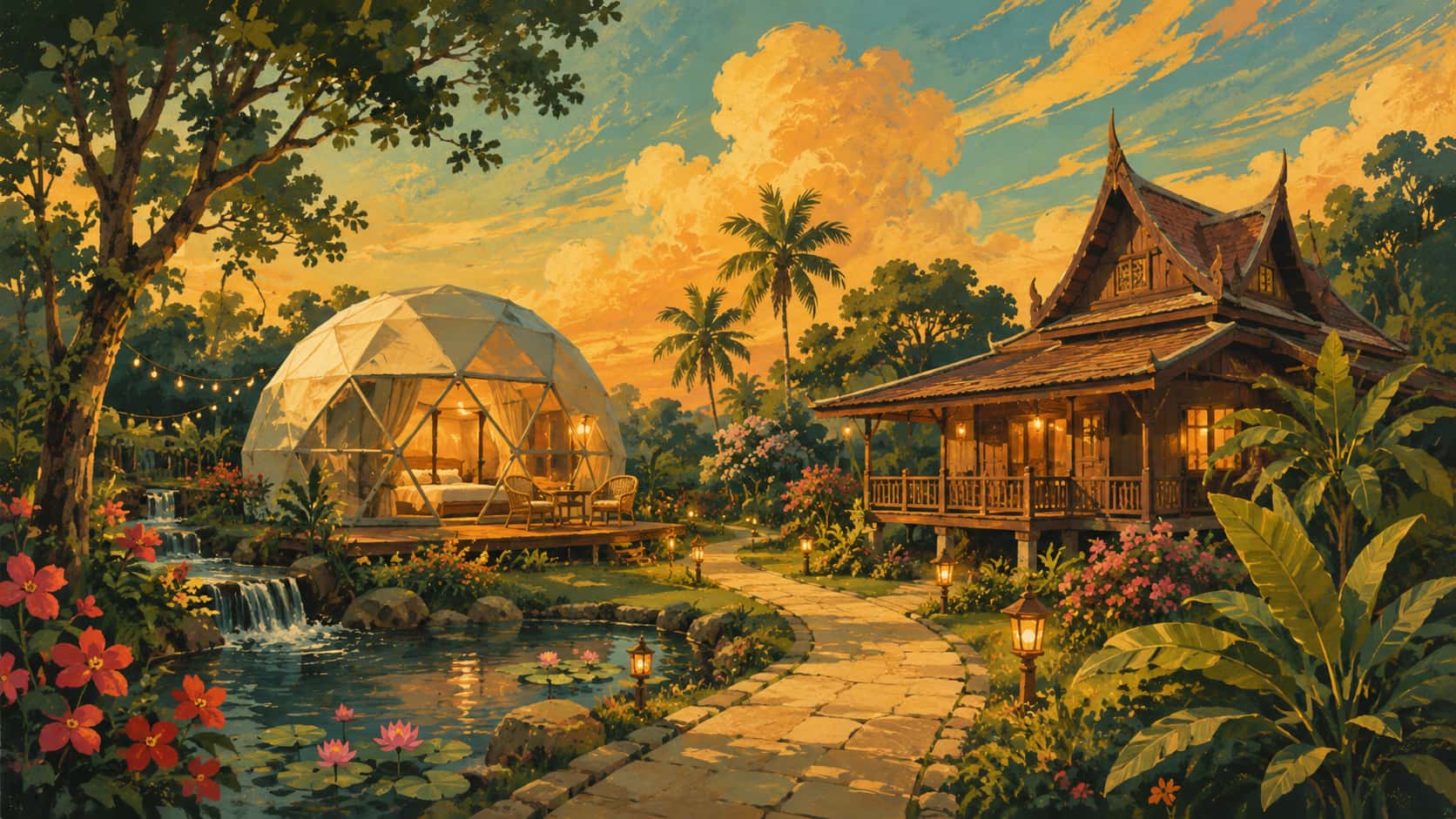
Better still, do not make the Fireball Festival a one night dash. Stay a few days, explore Nong Khai, visit Sala Keoku, see the enormous Mekong Nagas, and discover the landscapes and temples of Udon Thani. Then spend Ok Phansa evening beside the river waiting for something that may be natural, supernatural, human-made or perhaps a little more complicated than any of those explanations. Go to the Mekong on Ok Phansa night. Watch the river. And decide for yourself.