
Wat Pho Chai, Nong Khai: Home of the Sacred Luang Pho Phra Sai
One of the Spiritual Hearts of Nong Khai
Check Nakara Availability NowWat Pho Chai is far more than another beautiful Thai temple. For the people of Nong Khai, it is one of the spiritual hearts of the province and the home of Luang Pho Phra Sai, one of the most revered Buddha images in northeast Thailand.
Located in Nong Khai city, not far from the Mekong River and the border with Laos, the temple combines Buddhist faith, Lan Xang history, local legend and some wonderful examples of Isan religious art. Wat Pho Chai is officially a third-class royal temple and remains an important centre of Buddhist life in the province.
For visitors travelling from Udon Thani, it also fits naturally into a Nong Khai day trip alongside the Mekong riverfront, Tha Sadet Market and Sala Keoku.
The Sacred Buddha of Nong Khai
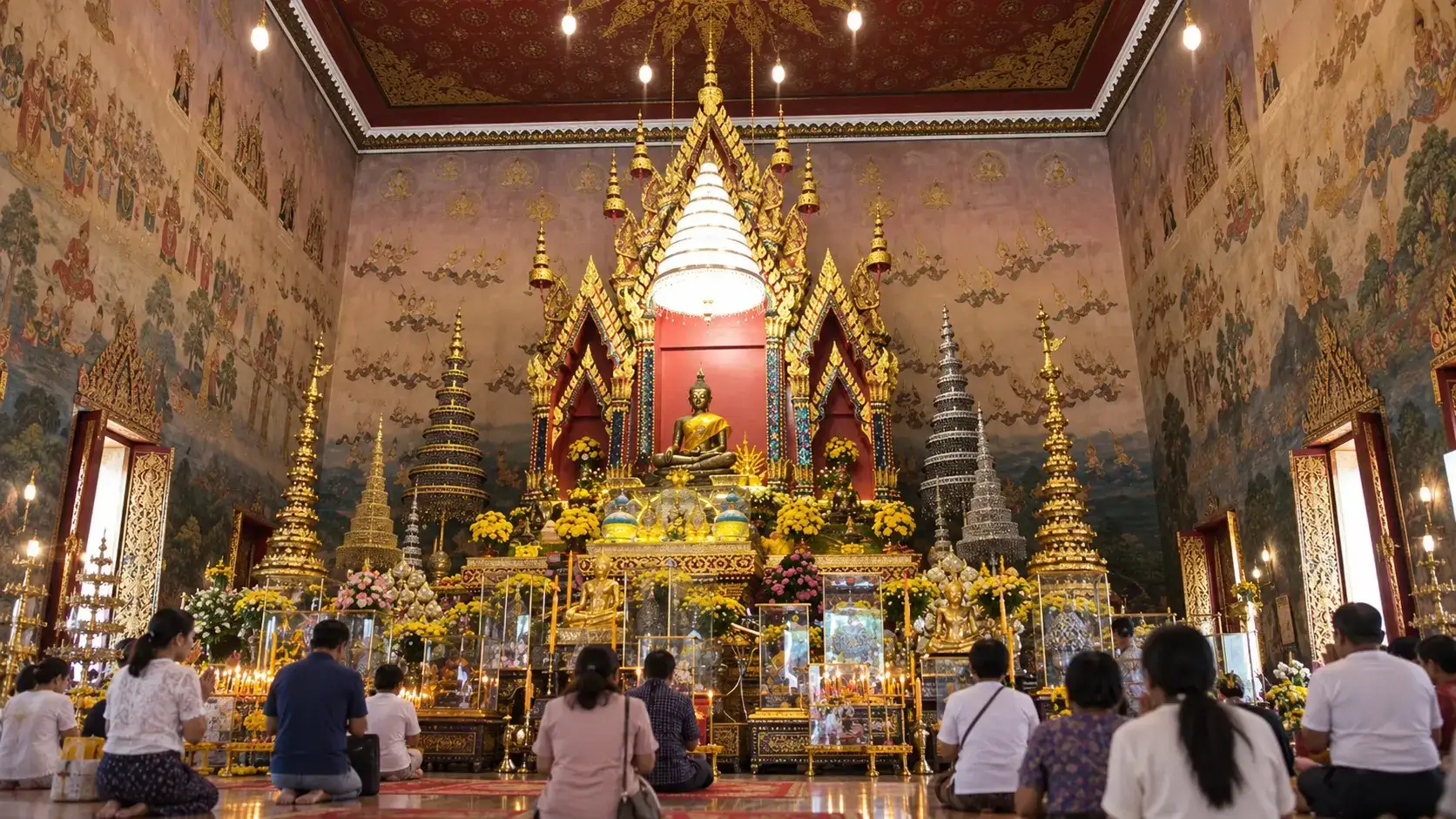
The main reason many Thai visitors come to Wat Pho Chai is to pay respect to Luang Pho Phra Sai, the golden Buddha image enshrined inside the ubosot.
The Tourism Authority of Thailand describes Luang Pho Phra Sai as a bronze Buddha image in the Mara Vijaya posture and one of Nong Khai's most important sacred images. It draws worshippers from Nong Khai and neighbouring provinces throughout the year.
For international visitors, understanding the importance of the Buddha image completely changes the experience. People are not simply entering an ornate temple to take photographs. They are entering one of the province's most important places of faith.
The Legend of Luang Pho Phra Sai
The story of Luang Pho Phra Sai connects Nong Khai directly with the old Lan Xang kingdom, which once stretched across much of modern Laos and northeast Thailand.
According to temple tradition, three Buddha images were created for three royal daughters of the Lan Xang king and became known as Phra Suk, Phra Soem and Phra Sai. The three images were later moved from Laos toward Siam.
The journey became the foundation of one of Nong Khai's best-known legends.
Tradition says Phra Suk was lost in the waters during the journey. Phra Soem eventually continued south and is today enshrined at Wat Pathum Wanaram in Bangkok. Phra Sai, however, remained in Nong Khai.
According to the temple's account, officials attempted to continue transporting Phra Sai toward Bangkok, but the cart carrying the Buddha would not move and eventually broke. This was interpreted as a sign that the Buddha wished to remain in Nong Khai. Luang Pho Phra Sai was therefore enshrined at Wat Pho Chai, where it remains today.
Whether visitors regard the story as miracle, legend or local history, it reveals how closely Nong Khai's identity is connected to the cultures on both sides of the Mekong.
Look Beyond the Buddha Image
Luang Pho Phra Sai may be the spiritual centrepiece, but Wat Pho Chai deserves more than a quick visit.
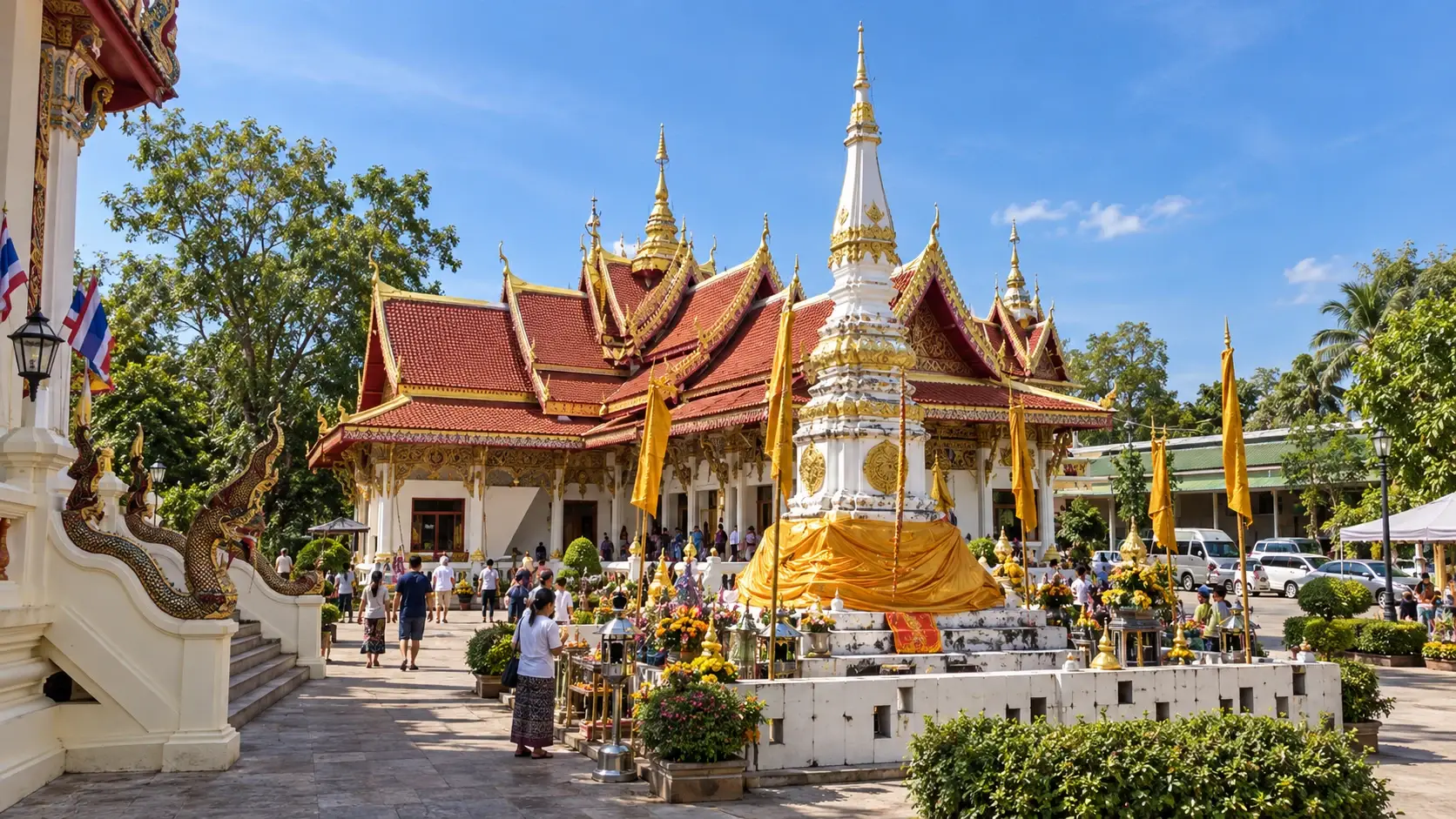
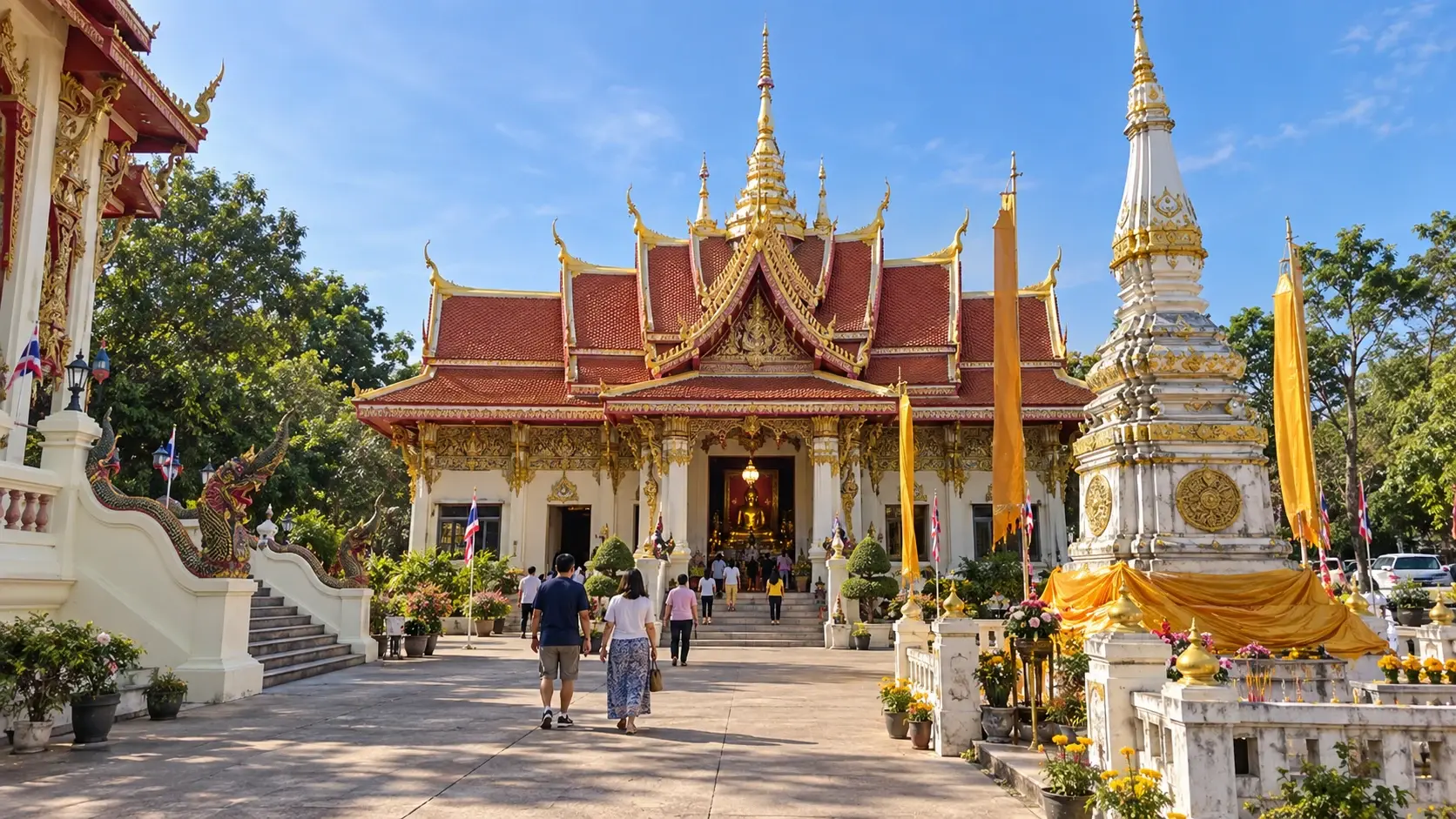
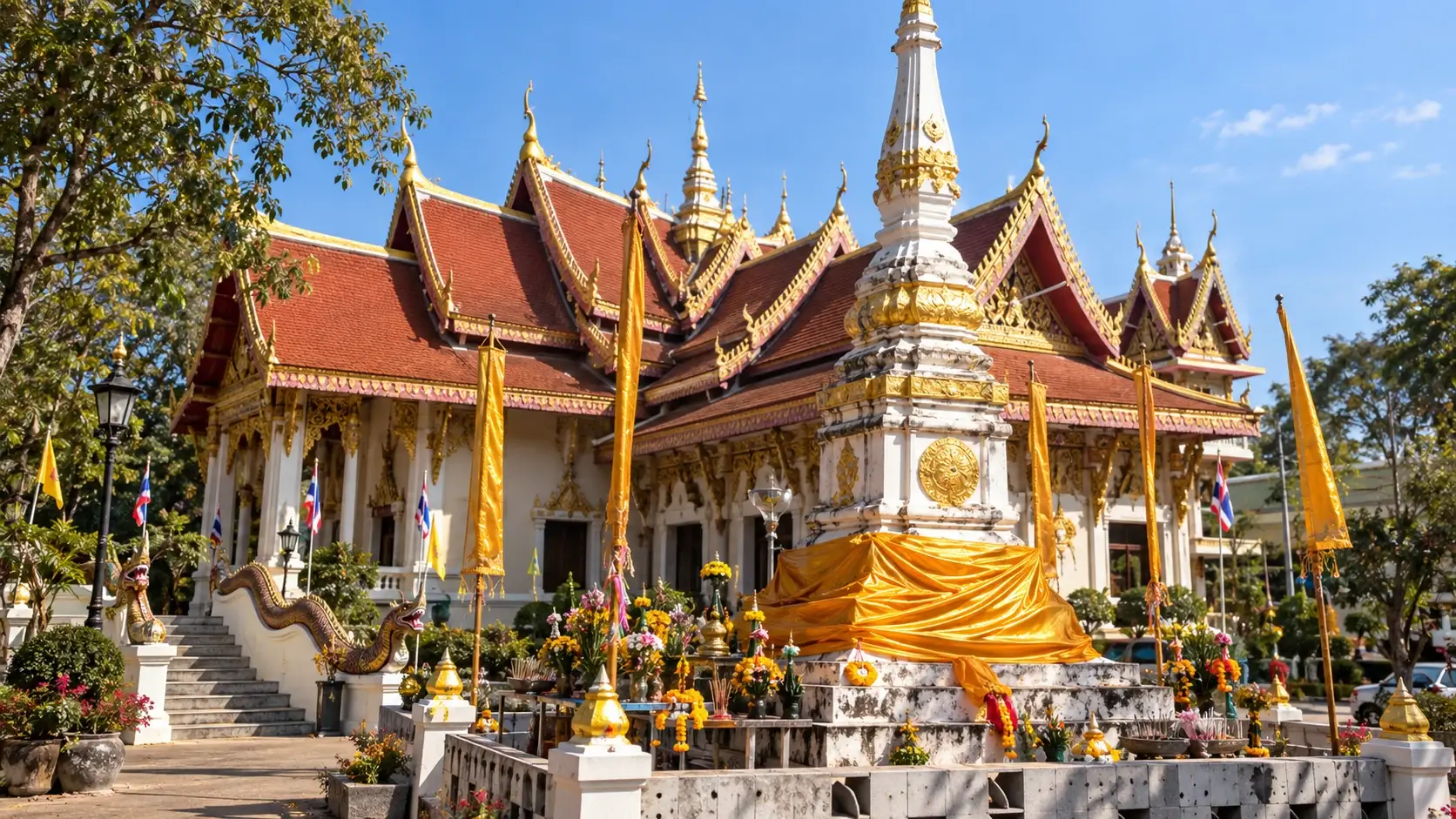
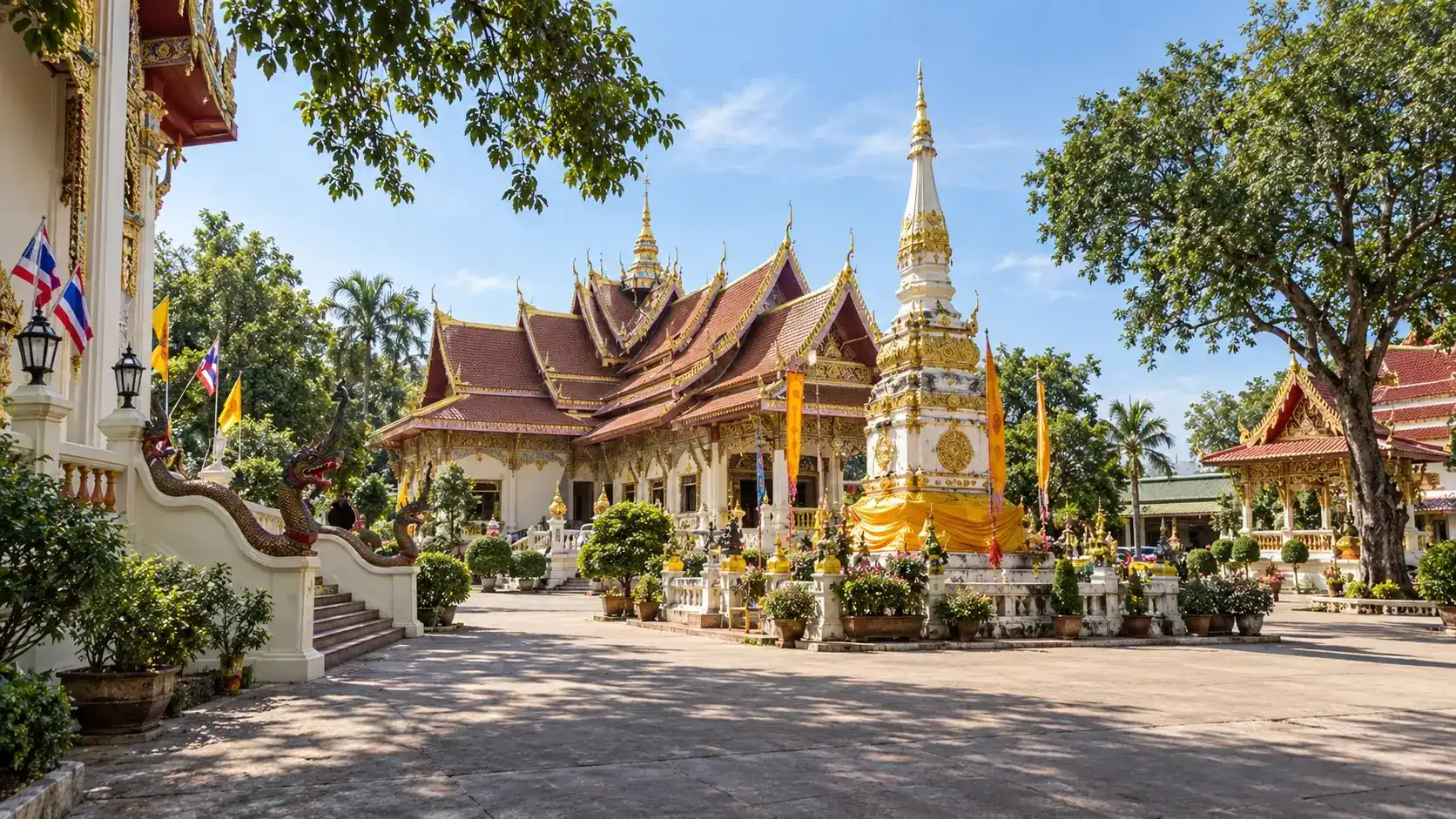
In front of the main ordination hall stands the distinctive white Phra That Yak, a relic stupa decorated with gold details. The Tourism Authority of Thailand identifies it as one of the notable features of the complex.
The temple architecture around it combines white walls, deep red tiled roofs and elaborate gold ornamentation typical of the religious buildings found throughout this part of Isan and the wider Mekong region.
Murals That Tell the Story of Isan
Don't leave immediately after seeing Luang Pho Phra Sai.
The walls inside the ubosot contain extensive murals illustrating Buddhist stories, local legends and the history of Phra Suk, Phra Soem and Phra Sai.
Particularly interesting for visitors wanting to understand Isan culture are scenes associated with Hiet Sip Song, the traditional cycle of twelve annual customs that historically shaped community and religious life across northeast Thailand and Laos.
This makes Wat Pho Chai particularly worthwhile because the temple tells several stories at once: the story of Buddhism, the story of Nong Khai and the story of the wider Mekong region.
A Temple Beside the Land of the Naga
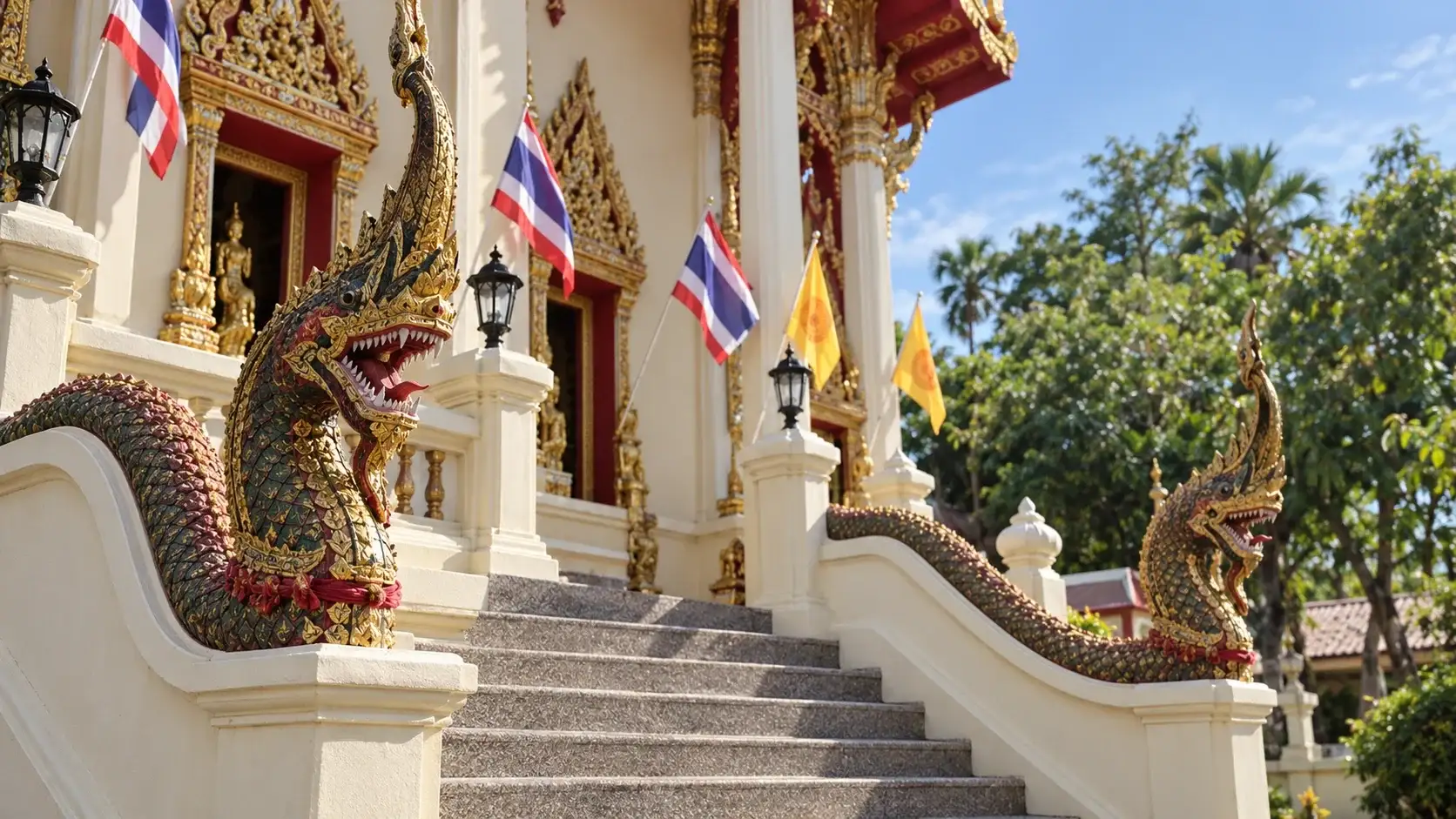
Nong Khai sits beside a stretch of the Mekong where stories of the Naga, the great serpent beings of Buddhist and Mekong mythology, remain deeply embedded in local culture.
That visual tradition appears throughout temples in the region, including serpent forms protecting staircases and entrances.
For visitors exploring Udon Thani and Nong Khai together, Wat Pho Chai provides another piece of the same cultural landscape found at places such as Kham Chanot and along the Mekong itself.
Songkran at Wat Pho Chai
The most extraordinary time to see Wat Pho Chai is during Songkran in April, when the annual bathing ceremony for Luang Pho Phra Sai becomes one of Nong Khai's major religious events.
During the festival, Luang Pho Phra Sai is ceremonially brought from the ubosot and taken in procession so local people can pay their respects and pour scented water over the image. The tradition continues to draw large numbers of worshippers, and the provincial Buddhist authorities documented the ceremony again in April 2025.
It is colourful, crowded and very different from visiting on an ordinary morning, but it offers visitors an opportunity to see that Wat Pho Chai is not simply a historic monument. It remains part of living Isan culture.
Is Wat Pho Chai Worth Visiting?
Absolutely, particularly if you are already travelling from Udon Thani to Nong Khai.
Wat Pho Chai isn't simply impressive because of its architecture. Its importance comes from the combination of Luang Pho Phra Sai, Lan Xang history, Mekong legends, Buddhist murals and continuing local faith.
Allow around 30 to 60 minutes for a normal visit rather than rushing through the grounds.
Dress respectfully, remove your shoes before entering the ubosot and remember that many of the people around you will be there to pray rather than sightsee.
The Tourism Authority of Thailand currently lists the temple as open daily from 6:00am to 7:00pm, although opening arrangements can change.
For anyone wanting to understand the culture of Nong Khai rather than merely see its sights, Wat Pho Chai should be near the top of the list.
