

The History of Udon Thani: From Ancient Isan to a Modern Thai City
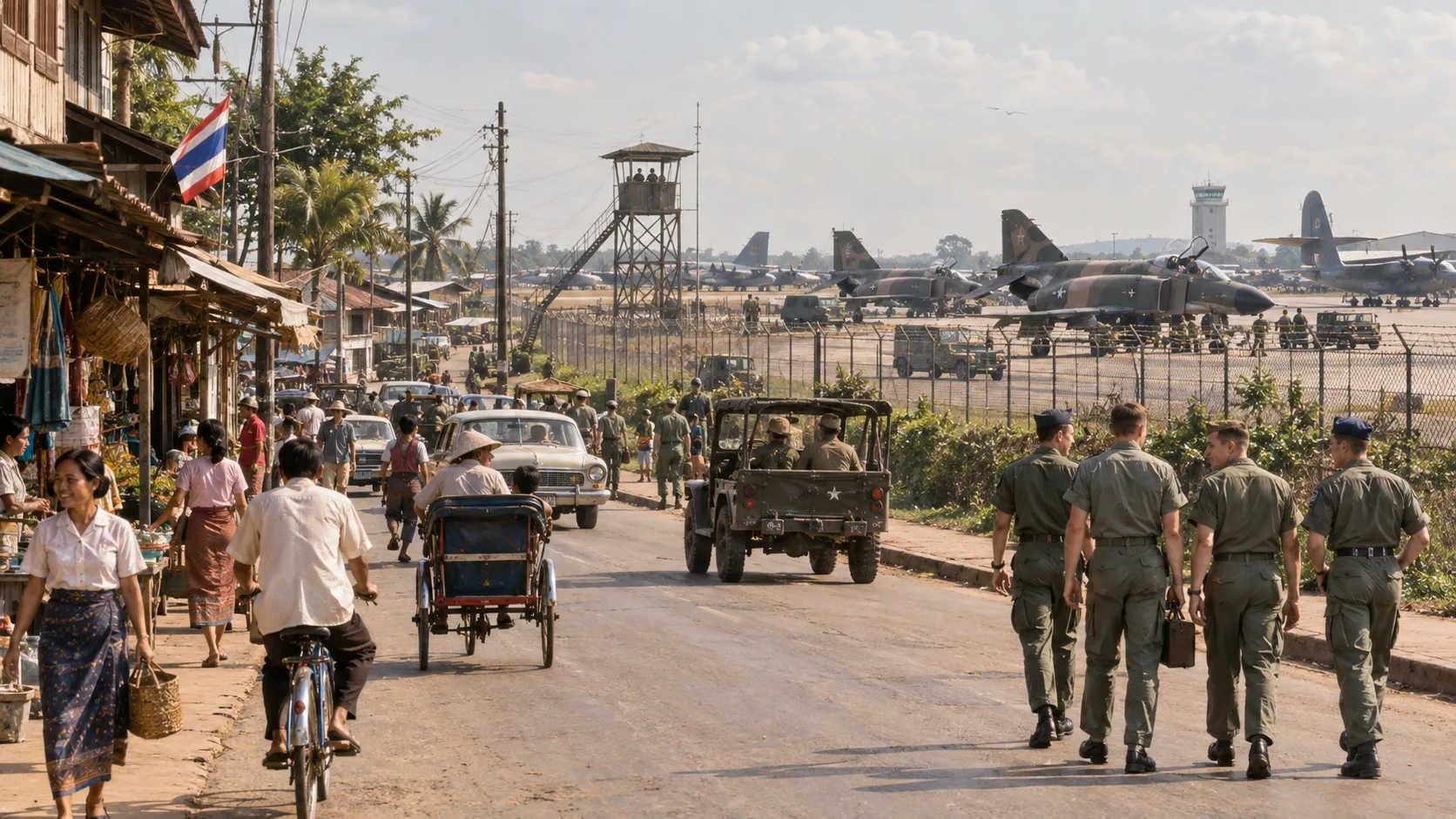
Modern Udon Thani can feel like a young city. Its wide roads, shopping centres, airport, busy markets and expanding suburbs give little indication that this corner of northeast Thailand has witnessed thousands of years of human history.
The story begins long before the city itself existed.
Within today's Udon Thani Province lie some of Southeast Asia's most important prehistoric remains. Centuries later the region became contested territory between Siam and the Lao kingdoms. In 1893, a military settlement at Ban Mak Khaeng developed into the city now known as Udon Thani.
Then came the railway, the Second World War and, most dramatically, the Vietnam War. American aircraft operated from Udon, Air America maintained a major presence here, and CIA operations connected with the secret war in neighbouring Laos were directed from facilities at Udorn. Decades later, the province would again become associated with allegations surrounding a secret CIA detention site.
It is a history far more complicated than the usual tourist story.
Before Udon Thani: The Prehistoric World of Ban Chiang
Thousands of years before the name Udon Thani existed, communities were already farming, making pottery and working metal on the Khorat Plateau.
The most famous evidence survives at Ban Chiang Archaeological Site, around 50 kilometres east of Udon Thani city. UNESCO describes Ban Chiang as one of the most important prehistoric settlements discovered in Southeast Asia and an important record of the development of agriculture, pottery and metalworking in the region.
The site became internationally famous after its archaeological importance was recognised in the 1960s. Excavations uncovered burials, bronze objects, tools and distinctive painted pottery, revealing communities that were far more technologically and socially developed than earlier historians had assumed.
Ban Chiang therefore changes the starting point of Udon Thani's story. The history of this region does not begin with Bangkok, modern Thailand or even recorded history. People had been living, farming and developing sophisticated communities here for millennia.

From Lao Heartland to the Siamese Frontier
For much of recorded history, the area around modern Udon Thani was culturally connected with the Lao-speaking world of the Mekong basin.
The border between modern Thailand and Laos did not exist in anything like its present form. Communities moved, traded and shared language, religion and culture across a landscape linked more naturally by rivers and local kingdoms than by modern national frontiers.
The region was also affected by the struggles between Siam and Vientiane. During the rebellion of King Anouvong of Vientiane in 1826–1828, fighting reached areas close to modern Udon Thani, including Nong Bua Lamphu.
The decisive change came later in the nineteenth century, as Siam attempted to strengthen its control over the northeast while French colonial power expanded through Indochina.
1893: The Birth of Modern Udon Thani
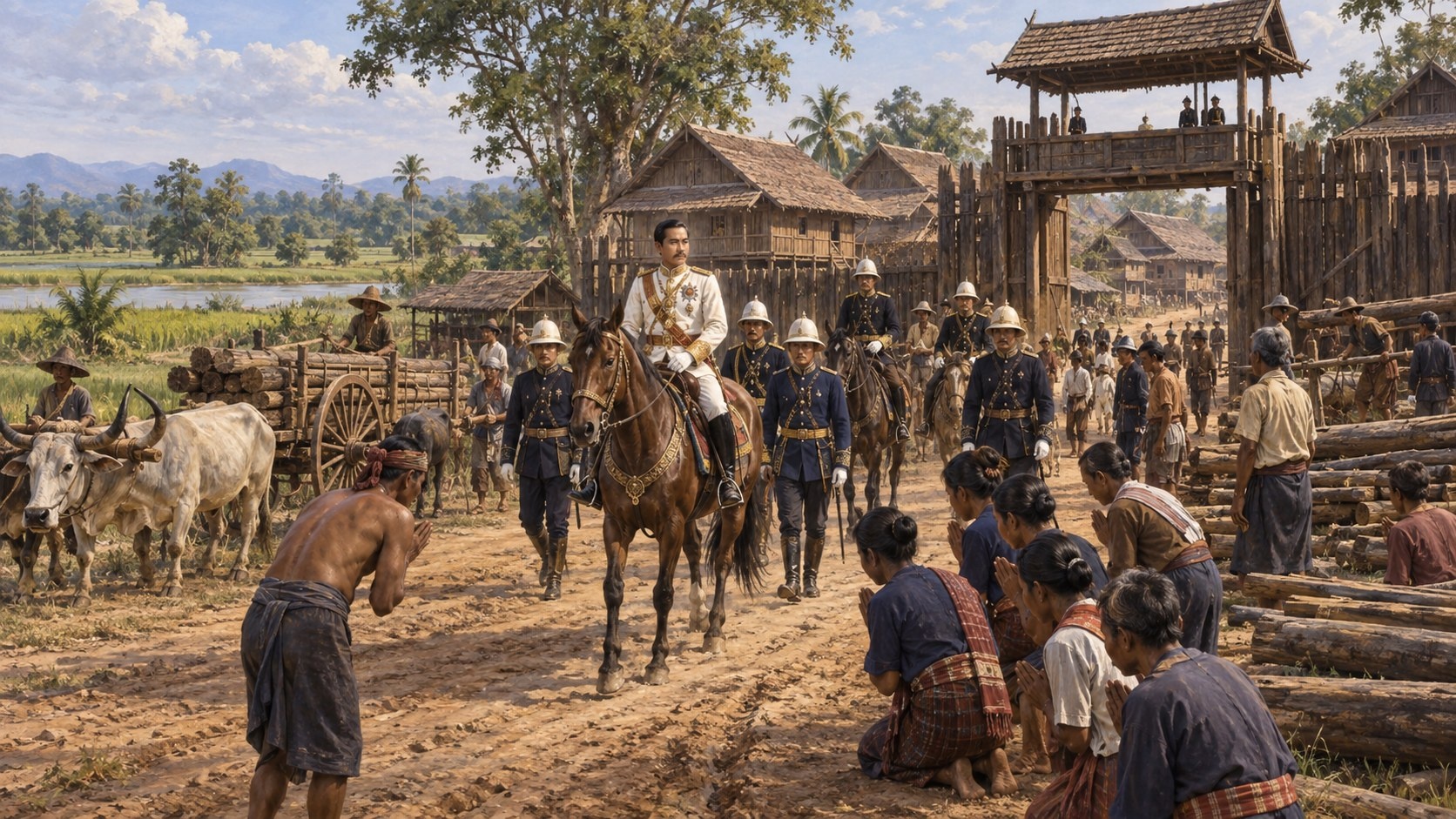
The modern city is generally traced to 1893 and to Prince Prachaksinlapakhom, usually known locally as Prince Prachak.
The settlement was then known as Ban Mak Khaeng. Prince Prachak established a military and administrative centre here as Siam reorganised its control over the northeast during a period of growing French pressure along the Mekong. The settlement gradually expanded into the administrative centre that became Udon Thani.
Prince Prachak remains one of the most visible historical figures in the city. His monument stands prominently in central Udon Thani, while Nong Prachak Park was later named in his honour.
The city therefore did not grow from an ancient royal capital in the way that Chiang Mai or Ayutthaya did. Udon Thani began its modern life largely as a strategic frontier and administrative town.
That military origin would prove strangely prophetic.
The Railway Changes Everything
For decades Udon remained relatively remote from Bangkok.
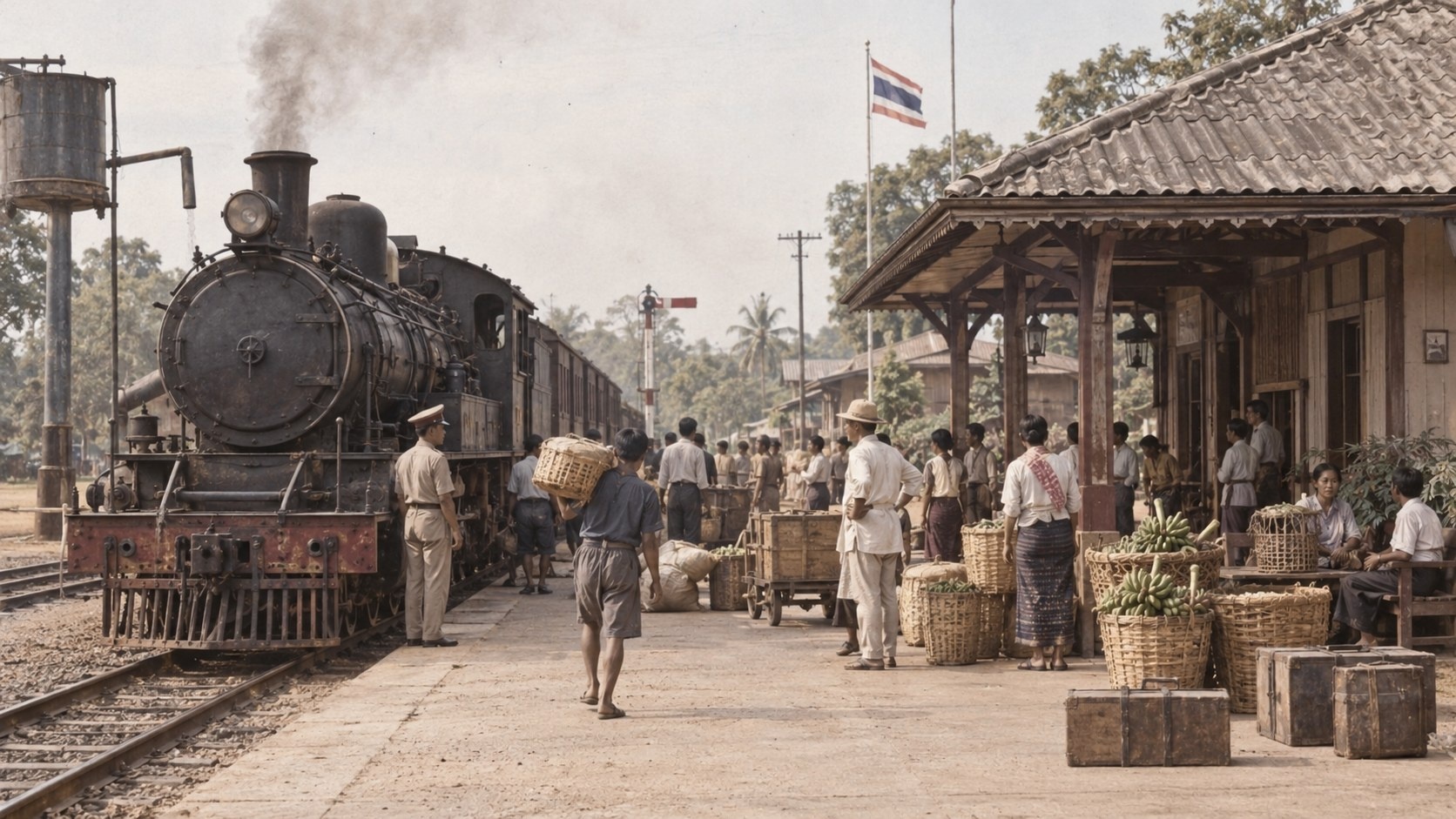
That began to change when the railway reached the city. Udon Thani railway station opened on 24 June 1941, extending the northeastern railway northwards from Khon Kaen.
The railway dramatically improved the movement of people, agricultural produce and manufactured goods between Udon Thani and central Thailand.
It also helped turn Udon from an administrative outpost into an increasingly important commercial centre for upper Isan.
The railway's arrival came during a turbulent moment. Thailand soon became entangled in the Second World War, while neighbouring French Indochina was occupied by Japan. After the war, the political geography of Southeast Asia changed rapidly.
Within little more than a decade, Laos, Cambodia and Vietnam would become central battlegrounds of the Cold War.
Udon Thani sat almost perfectly on the edge of that conflict.
Udon Thani and the Vietnam War
No period transformed modern Udon Thani more dramatically than the Vietnam War.
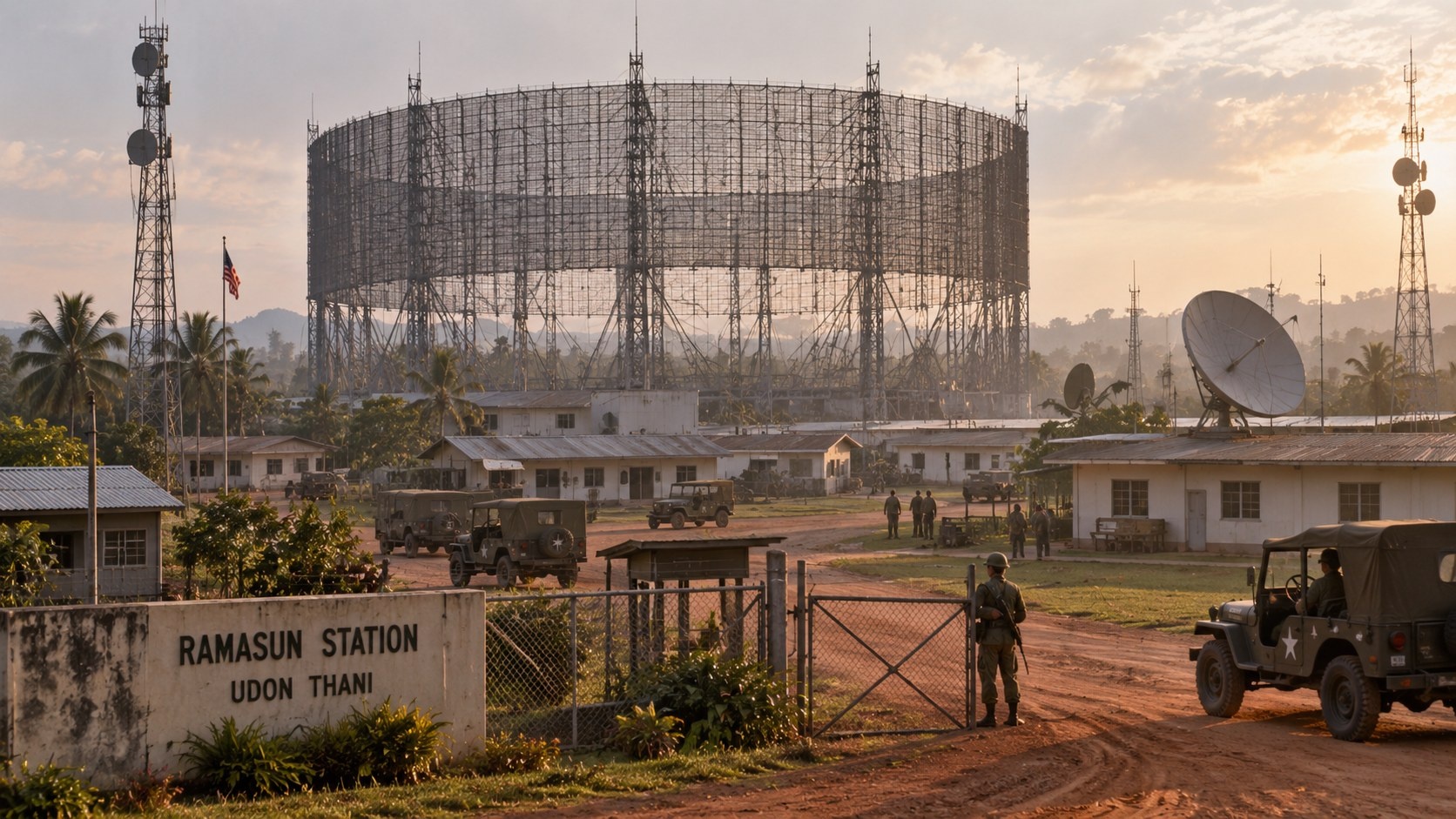
During the 1960s and early 1970s, Udorn Royal Thai Air Force Base became one of the most important American military facilities in Thailand. American reconnaissance, combat and support aircraft operated from the base during the conflicts in Vietnam and Laos. U.S. Air Force units were stationed at Udorn from the 1960s into the 1970s.
The effect on the city was enormous.
Thousands of military personnel, contractors and support staff created demand for hotels, restaurants, bars, entertainment, housing and transport. Udon's population and economy grew rapidly. A later World Bank review specifically noted the major effect American military bases had on the growth of cities including Udon Thani.
For older residents, the Udon of the Vietnam era was a very different place from the provincial city that had existed only a generation earlier.
Money poured into the local economy. English became commonly heard around areas frequented by American servicemen. New businesses appeared. Roads and infrastructure improved.
But Udon's role was not simply about American soldiers spending money in town.
A much more secret war was being run nearby.
Air America, the CIA and the Secret War in Laos
While the Vietnam War dominated international headlines, a covert conflict was taking place across the Mekong in Laos.
Udon Thani became one of its key operational centres.
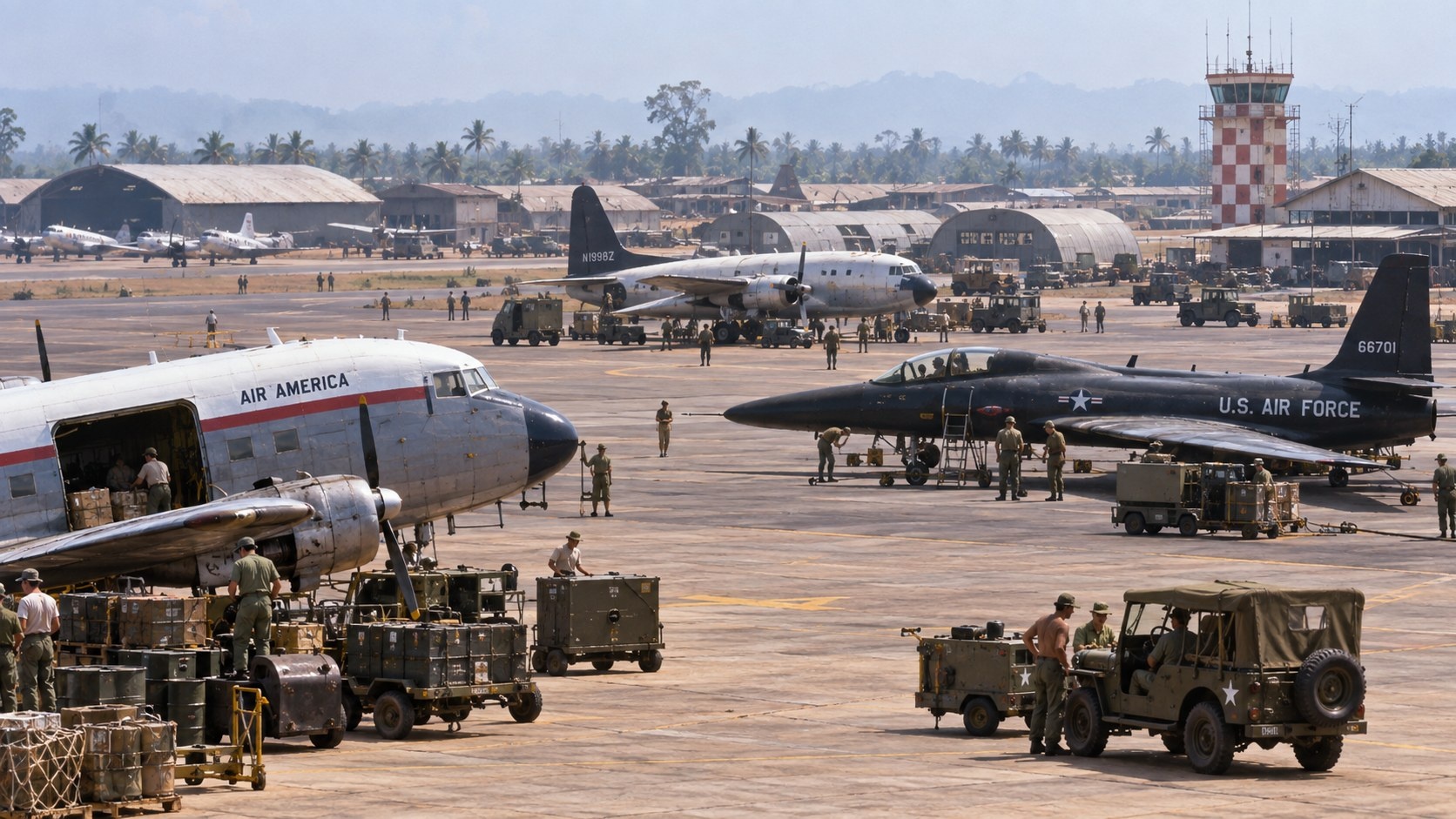
Air America, the airline closely connected to the CIA, maintained major operations at Udorn. CIA historical records state that Air America took over U.S. Marine Corps operations at Udorn in 1961 and later operated aircraft supporting activities across the region.
More significantly, CIA histories describe Udorn as the headquarters from which important aspects of the war in Laos were supervised. The 4802nd Joint Liaison Detachment, located beside the Air America area at Udorn Royal Thai Air Force Base, served as a CIA command centre for military operations in Laos.
Aircraft crossed the Mekong carrying supplies, intelligence personnel and support for anti-communist forces. U.S. Air Force operations from Udorn also supported missions over Laos.
For decades much of this activity was barely visible in the official story of Udon Thani.
Today, declassified records reveal just how central the city was to one of the Cold War's most secretive conflicts.
The CIA Black Site Allegations
Udon Thani's association with American intelligence did not necessarily end with the Cold War.
After the attacks of 11 September 2001, Thailand was used by the CIA as the location of a secret detention facility known in official documents as Detention Site Green.
Its exact location has never been publicly established beyond dispute.
A Council of Europe investigation noted public allegations that the site was located in the Udon Thani area near the former air base, while Thailand denied that such a facility existed.
Later reporting has also linked the site to Udon Thani, including possible locations at or around the air base and other former American facilities in the province. The U.S. government has never publicly confirmed the exact location.
The facility became infamous because detainees including Abu Zubaydah were subjected to interrogation techniques that included waterboarding and confinement in small boxes. The detention programme later became the subject of major investigations in the United States.
This part of Udon Thani's story needs careful wording. It would be wrong to present a particular building in the province as a proven CIA prison when the precise location remains officially unresolved.
But it would be equally misleading to ignore the allegations altogether.
Udon Thani's long history as a centre of American military and intelligence activity is one reason the province continues to appear in investigations of the CIA's post-9/11 detention programme.
After the Americans Left
American forces departed during the 1970s, but the city they helped transform did not shrink back into the quiet provincial town that had existed before them.
Udon had become a regional centre.
Its improved infrastructure, commercial networks and transport connections helped it develop into one of the principal cities of northeast Thailand.
The opening of the Thai–Lao Friendship Bridge at Nong Khai in 1994 strengthened Udon Thani's role as a gateway to Vientiane and Laos. Academic research from Chulalongkorn University described Udon's increasing importance as a centre for trade, services and distribution across the upper northeast.
Today visitors encounter the results everywhere.
The old military town has become a city of shopping centres, universities, hospitals, cafés, markets, hotels and expanding suburbs. Udon Thani International Airport occupies part of the same aviation landscape that played such an important role during the Cold War.
Yet pieces of the older city remain.
Prince Prachak still watches over the city that grew from his nineteenth-century settlement. Trains still arrive close to the centre. American-era buildings and memories survive. Ban Chiang reaches thousands of years further into the past.
And beyond the modern streets lie landscapes whose history crosses the boundaries of Thailand, Laos, colonial Indochina and the Cold War.
Why Udon Thani's History Matters
Udon Thani is often treated simply as a convenient stop on the way to Laos or as a base for exploring Red Lotus Lake and the archaeological sites of Isan.
Its history suggests something far more interesting.
This is a place where prehistoric Southeast Asian civilisation, Lao culture, Siamese expansion, European colonialism, the Second World War, the Vietnam War, American intelligence operations and modern Thailand all overlap.
Some chapters are inspiring.
Others are uncomfortable.
Both belong to the story.
Understanding that history makes modern Udon Thani much easier to understand, because beneath the traffic, malls and new developments is a city that has spent more than a century sitting at the crossroads of some of the biggest forces shaping mainland Southeast Asia.
See also: things to do in Udon Thani and the Udon Thani International Horticultural Expo 2026.