
Wat Pa Ban Tat: Inside Luangta Maha Bua's Forest Temple
One of Udon Thani's Most Important Spiritual Places
Check Nakara Availability NowThere are more immediately spectacular temples in Udon Thani.
There are temples covered in gold, temples perched on hillsides and temples designed to stop visitors in their tracks.
Wat Pa Ban Tat is different.
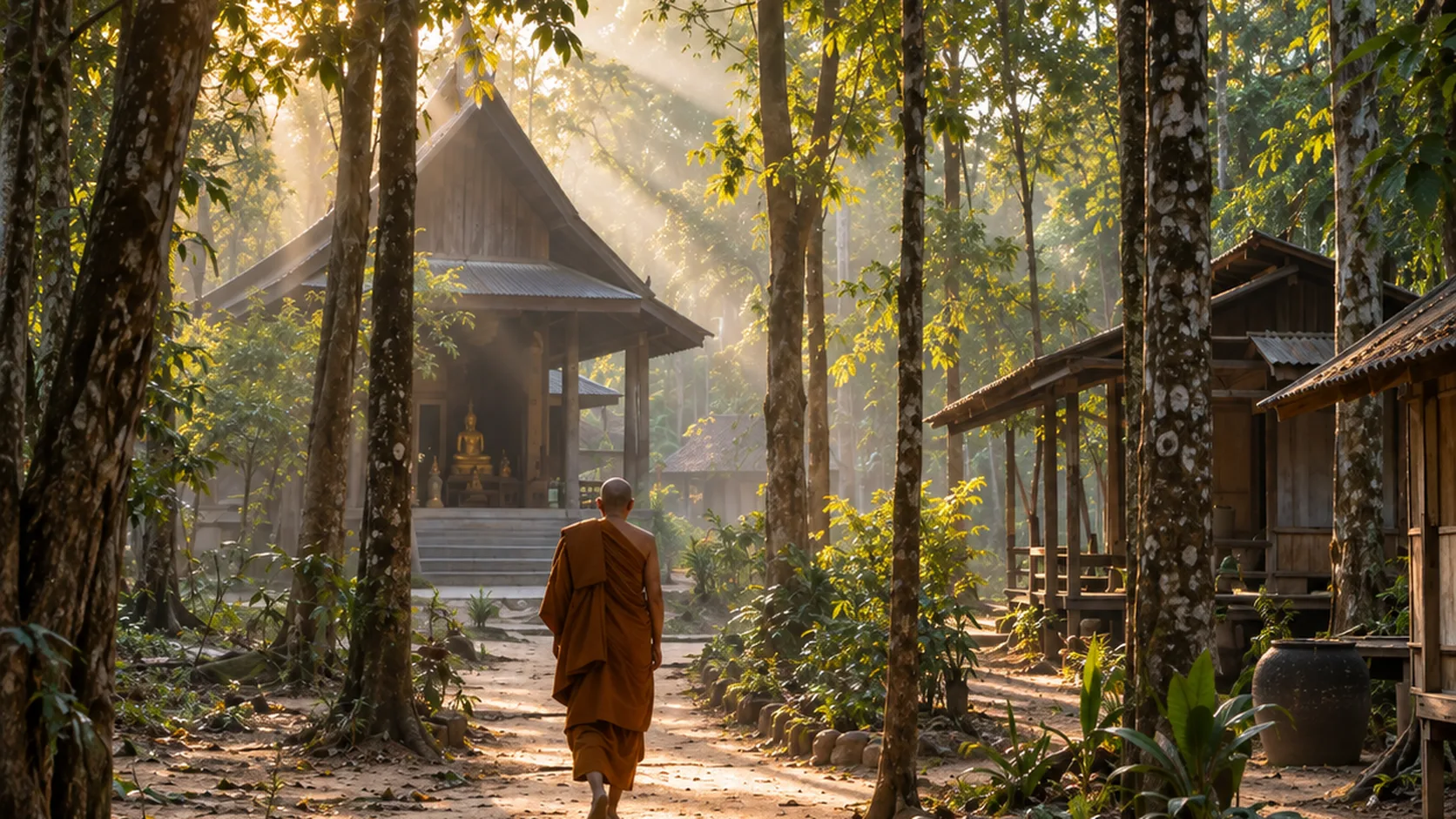
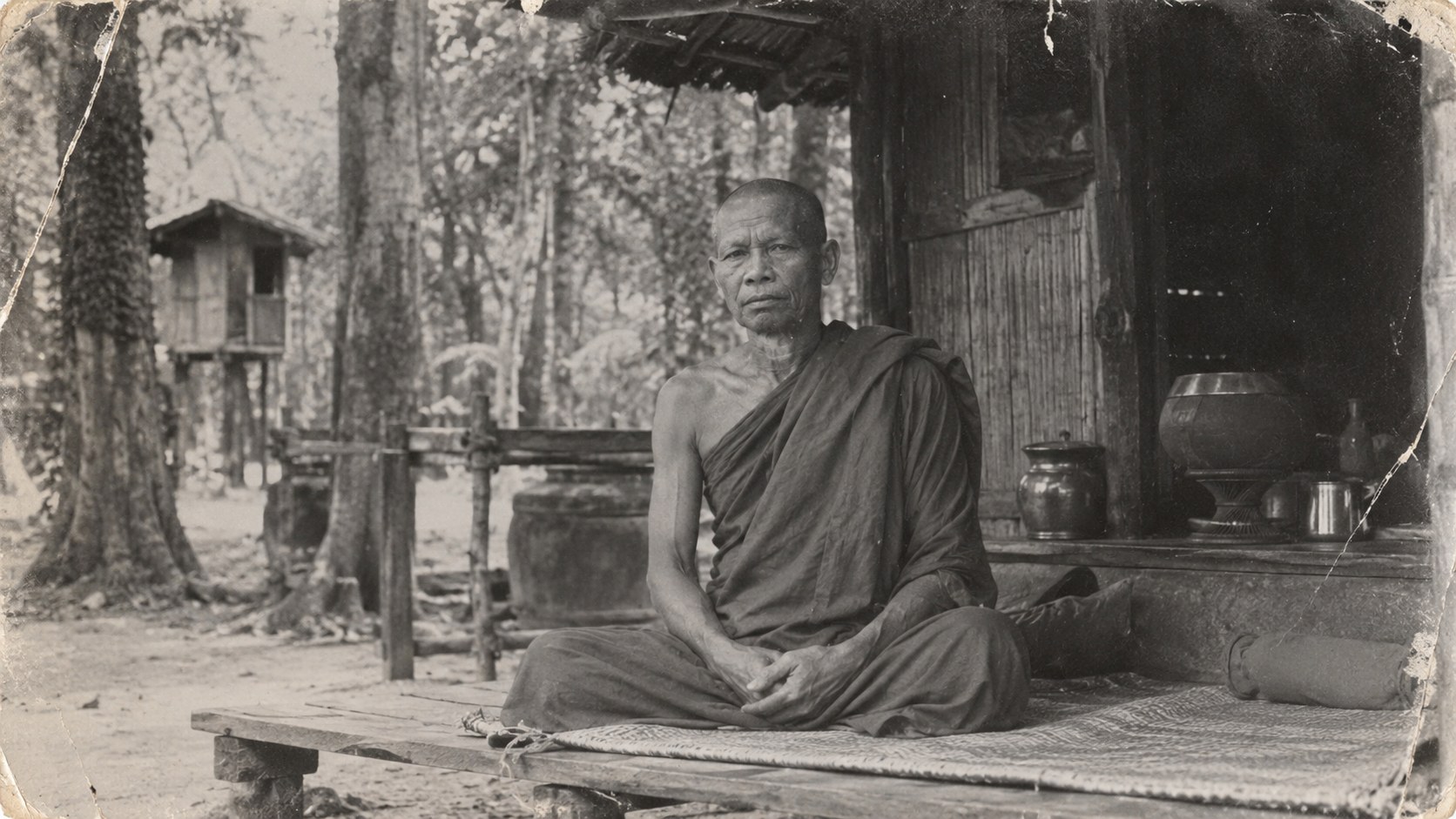
Come here for the original monastery and you enter a world of trees, sandy paths, simple monastic buildings and profound quiet. Monks still live and practise here according to the traditions of the Thai forest monasteries.
Then, close by, you encounter something completely different: the magnificent Dhamma Chedi Museum of Phra Dhamma Visutthimongkol, created in memory of one of modern Thailand's most influential meditation masters, Luangta Maha Bua Ñāṇasampanno.
The contrast is remarkable.
One side expresses the deliberate simplicity of a monk who believed that a monastery should exist primarily for training the mind. The other preserves his life, teachings and legacy through one of the most impressive modern religious complexes in Udon Thani.
To understand Wat Pa Ban Tat, it helps to experience both.
A Forest Monastery Built for Meditation
Wat Pa Ban Tat, also written Wat Pa Baan Taad, lies in Ban Tat in Udon Thani Province.
Today the temple is closely associated with Luangta Maha Bua, a leading figure in Thailand's Forest Tradition and a disciple of the legendary meditation master Ajahn Mun Bhuridatta.
The story of the monastery begins not with plans to create an important religious landmark, but with something much more personal.
In 1950, while staying at Huai Sai in what is now Mukdahan Province, Ajahn Maha Bua learned that his mother was unwell. He returned to his home area near Udon Thani to care for her.
Local villagers and relatives subsequently asked him to remain and establish a monastery in the forest near the village.
He eventually accepted.
Construction of Wat Pa Ban Tat began in November 1955.
From the beginning, however, this was not intended to become an ornate showpiece.
It was created as a place to practise.
That distinction remains fundamental to understanding the temple today.
The Thai Forest Tradition
For international visitors unfamiliar with Thai Buddhism, the term Thai Forest Tradition can be slightly misleading.
It does not simply mean that monks happen to live among trees.
The tradition developed around a return to strict monastic discipline, meditation, simplicity and direct personal practice. Monks often sought quiet forests and remote locations where distractions could be reduced and attention turned inward.
One of the most important figures in its modern development was Ajahn Mun Bhuridatta, whose disciples helped carry the tradition across northeastern Thailand and eventually far beyond it.
Luangta Maha Bua became one of those important disciples.
At Wat Pa Ban Tat, meditation was not an optional extra attached to the life of the monastery. It was the reason the monastery existed.
Luangta Maha Bua repeatedly stressed that Wat Pa Ban Tat was a meditation monastery, a place primarily concerned with what he described as developing the mind.
That philosophy explains why the original Wat Pa Ban Tat can initially seem surprisingly understated.
There is a purpose to the simplicity.

What Visiting the Original Wat Pa Ban Tat Feels Like
This is where Wat Pa Ban Tat differs from many temples visited on a conventional sightseeing tour.
The forest itself is part of the experience.
Thailand's Tourism Authority describes the monastery as occupying dense forest and supporting considerable wildlife. Beneath the canopy, paths lead between simple buildings and areas used by the monastic community.
There is less emphasis on decoration and much more emphasis on atmosphere.
You hear birds.
Leaves move overhead.
Monks quietly continue their daily routines.
There are places to sit rather than attractions demanding to be photographed.
For visitors used to Thailand's grand royal temples, that restraint can initially feel almost surprising. But spend a little time here and it begins to make sense.
The absence of spectacle is part of the point.
Wat Pa Ban Tat was created for meditation, not tourism.
Visitors are welcome, but we are entering a working Buddhist monastery rather than an attraction constructed for us.
That is precisely what makes the experience special.
Who Was Luangta Maha Bua?
Understanding the importance of Wat Pa Ban Tat also means understanding the extraordinary influence of the monk who made it his home.
Luangta Maha Bua Ñāṇasampanno studied and practised under Ajahn Mun Bhuridatta and became renowned for his uncompromising approach to meditation, monastic discipline and the search for liberation described within Buddhist teaching.
Over the decades, Wat Pa Ban Tat attracted monks, serious meditation practitioners and lay followers.
His influence eventually extended far beyond the monastery.
One of the most unusual chapters came during the aftermath of the 1997 Asian financial crisis, known in Thailand as the Tom Yum Kung crisis.
Luangta Maha Bua launched what became known as the Help the Nation project, encouraging people to donate foreign currency and, particularly, gold to strengthen Thailand's national reserves.
This was no symbolic collection.
The Bank of Thailand records more than 13 tonnes of donated gold, together with millions of US dollars, accumulated through the project and subsequent related donations.
It is an extraordinary chapter in modern Thai history: a forest monk from Udon Thani mobilising ordinary people around the country to contribute directly to the national reserve.
It also helps explain why Luangta Maha Bua occupies a place in Thai public memory that extends far beyond conventional religious circles.
The Dhamma Chedi Museum of Luangta Maha Bua
After the death of Luangta Maha Bua in 2011, his disciples sought a way to preserve both his physical relics and the story of his teachings and life.
The result is the Dhamma Chedi Museum of Phra Dhamma Visutthimongkol, located at Wat Pa Ban Tat.
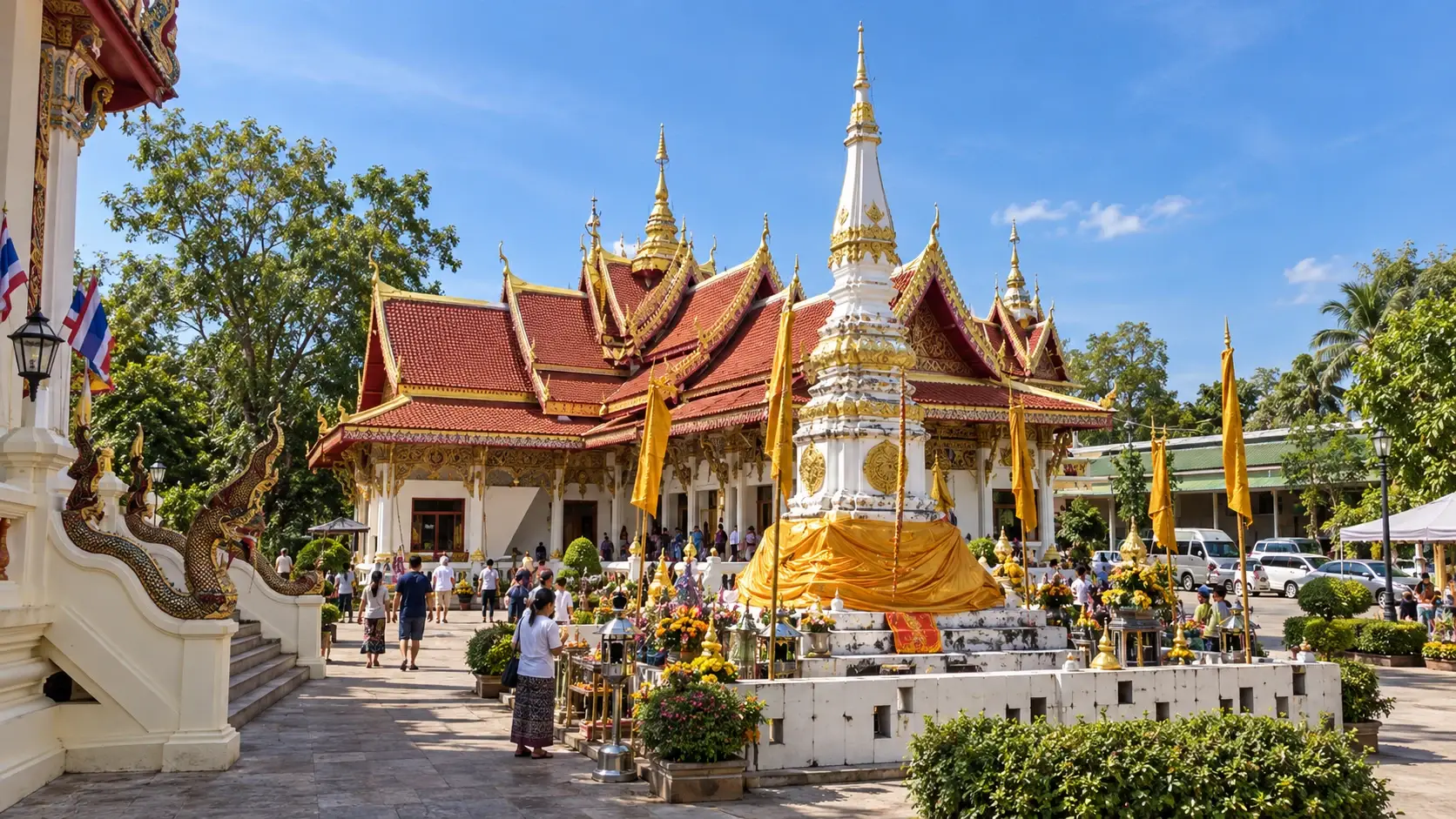
If the original monastery represents restraint, the Dhamma Chedi complex provides the architectural counterpoint.
It is large, highly finished and immediately impressive.
Yet its purpose remains closely tied to the same story.
The complex was created as a memorial, a place for Buddhist devotion and a centre for preserving Luangta Maha Bua's teachings and personal history for future generations.
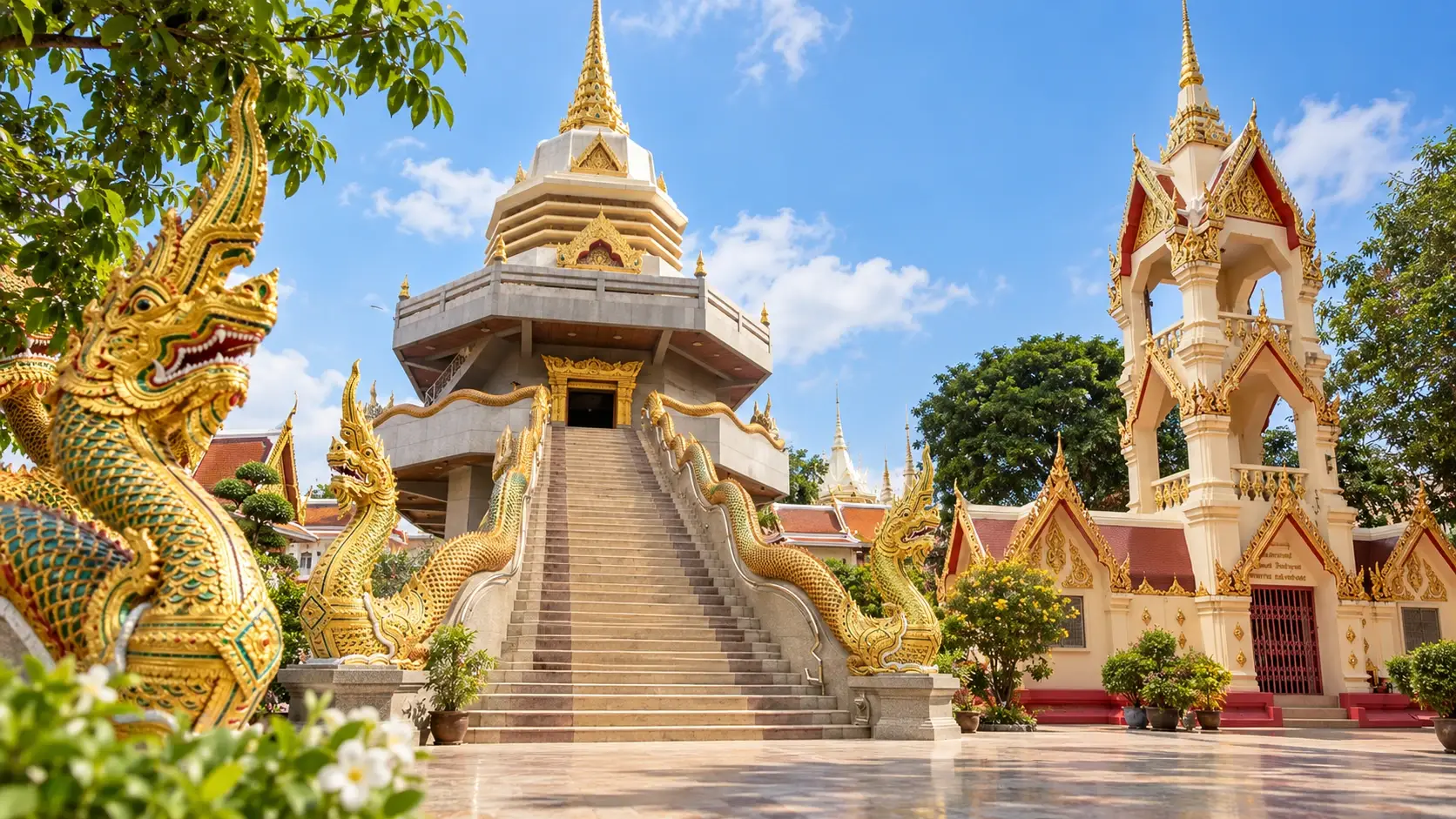
Its design combines elements of Thai and Lan Xang architecture, reflecting the cultural traditions of northeastern Thailand and the wider Mekong region.
Three major components form the complex:
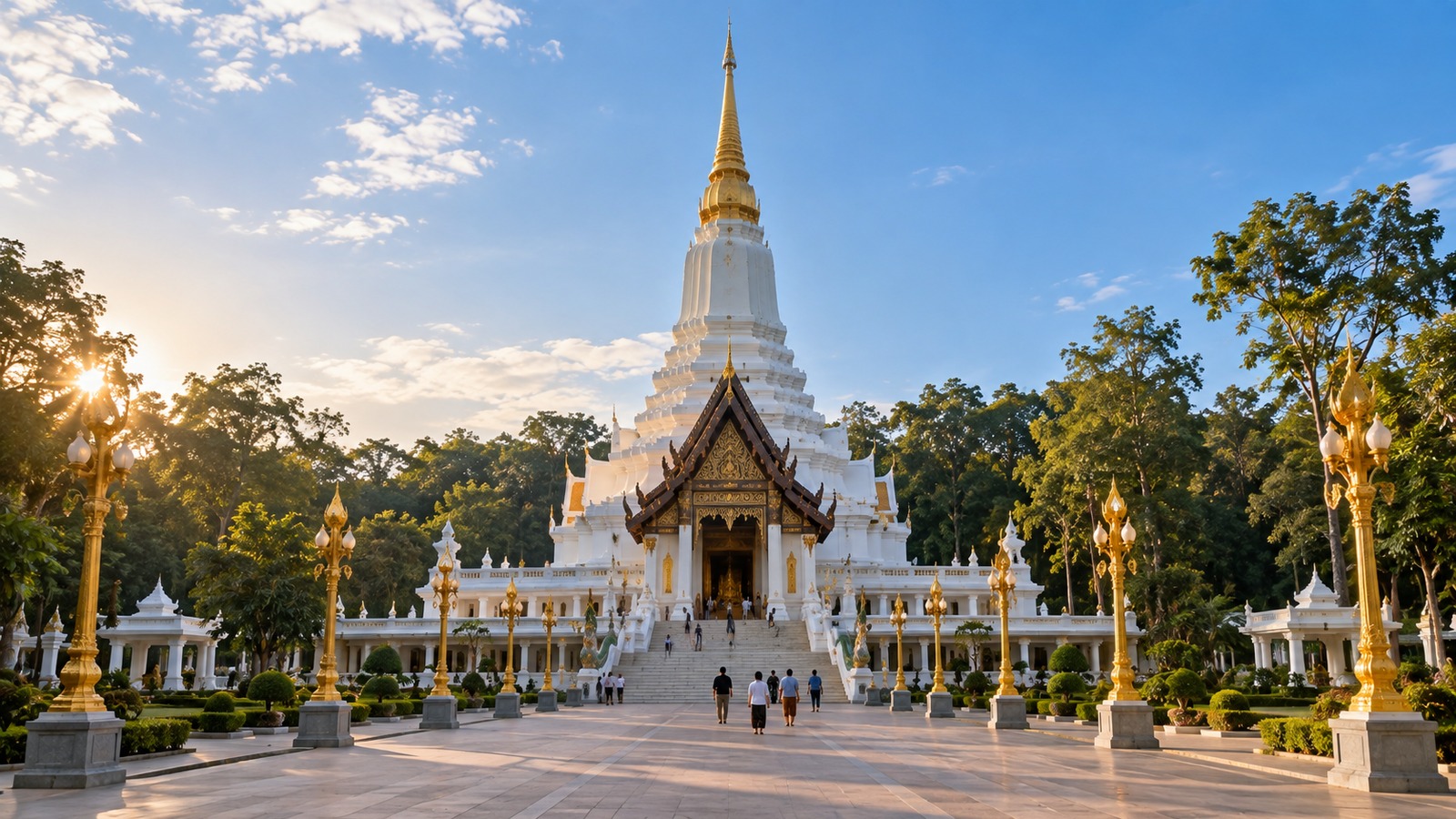
The Phra That Chedi
The great chedi is the visual centrepiece.
Within it are enshrined sacred Buddhist relics, relics associated with revered arahants and relics of Luangta Maha Bua himself.
The white structure rises above the surrounding forest, its upper sections culminating in a golden spire.
Seen against Udon Thani's blue skies and surrounding greenery, it has become one of the province's most distinctive contemporary religious landmarks.
The Vihara
The vihara forms another major element of the complex.
Inside is the principal Buddha image, together with representations connected with the lineage of revered Thai forest masters including Ajahn Sao Kantasilo, Ajahn Mun Bhuridatta and Luangta Maha Bua.
This is an important detail.
The museum is not simply telling the biography of a single monk. It places Luangta Maha Bua within the wider spiritual lineage from which his practice developed.
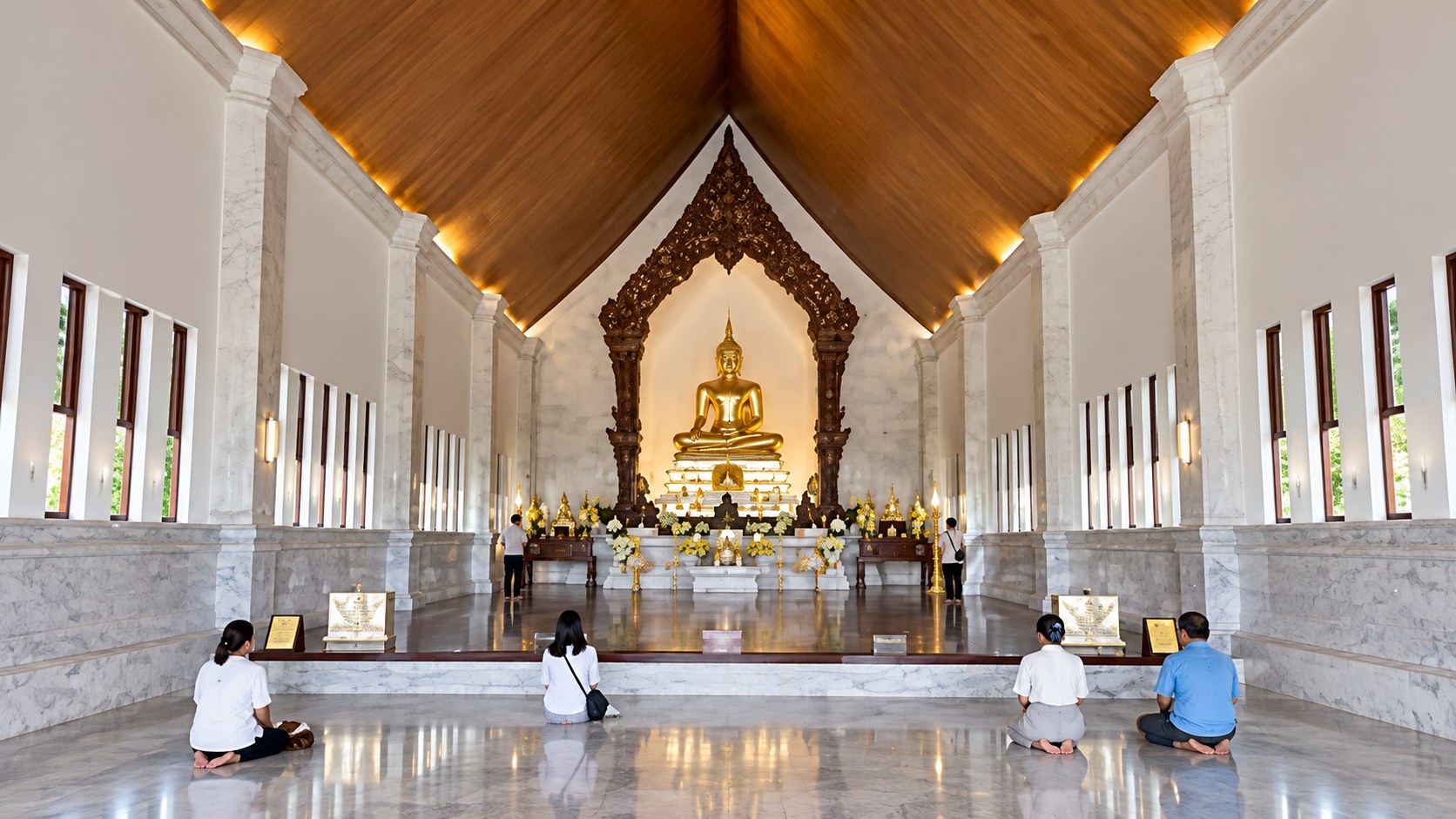
The Museum
The museum itself tells his story through a series of exhibition spaces devoted to his life, Buddhist practice, teachings and wider contribution to Thai society.
Personal monastic items, biographical material and Dhamma teachings help transform a name visitors may have heard elsewhere in Udon Thani into a much more understandable human story.
Even visitors with little previous knowledge of Thai Buddhism can come away with a clearer sense of why this monk became so widely respected.
Two Very Different Sides of the Same Story
This is why we recommend allowing enough time to see more than the monumental museum complex.
If you only visit the Dhamma Chedi, you see the legacy.
If you also experience the quieter original monastery, you begin to understand the life that created that legacy.
The contrast is powerful.
One is polished stone, formal architecture, carefully curated exhibits and a soaring chedi.
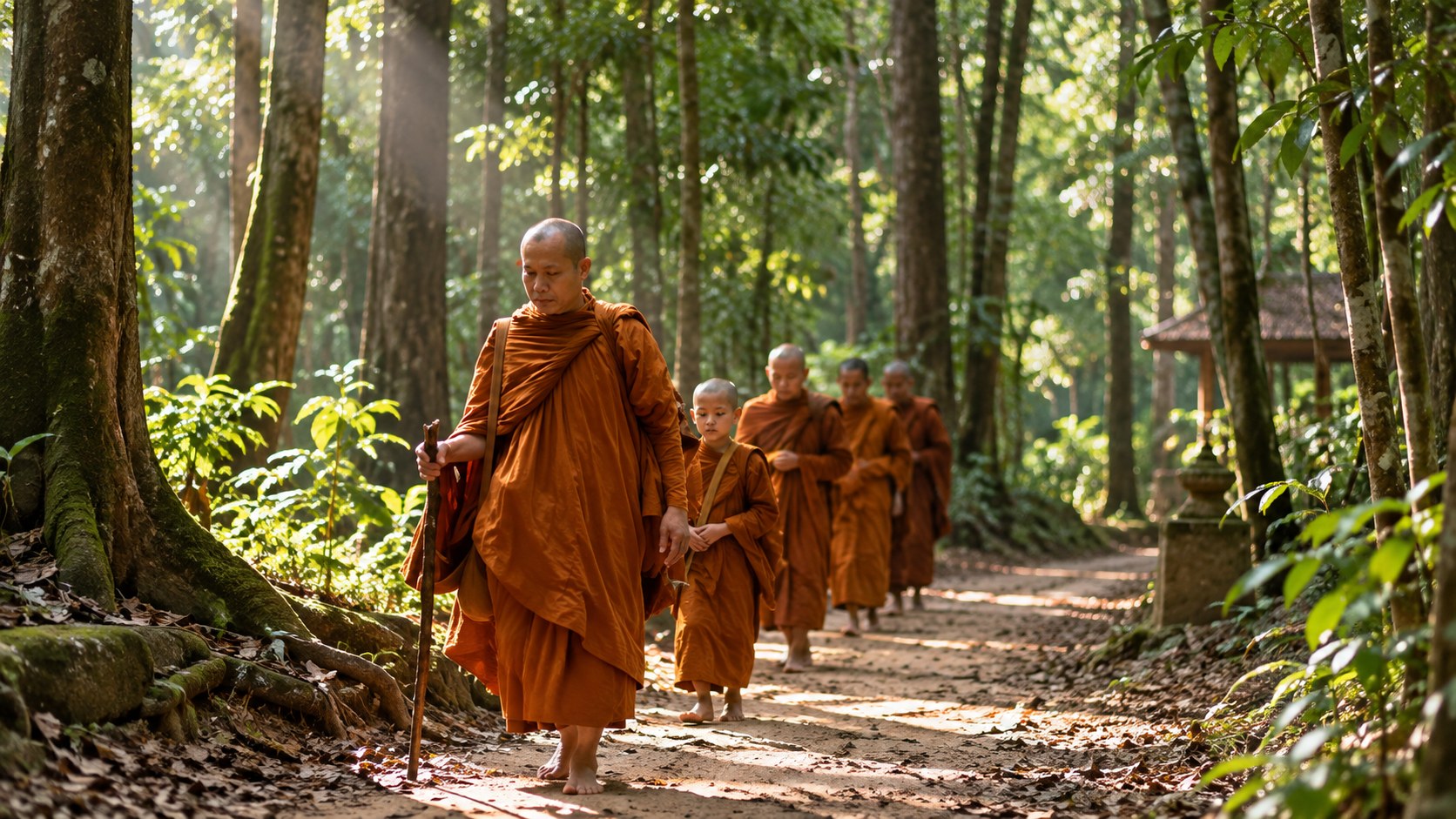
The other is forest shade, meditation paths and simple structures intended for people trying to live with as few distractions as possible.
Together they explain Wat Pa Ban Tat better than either could alone.
Meditation at Wat Pa Ban Tat
Meditation remains central to Wat Pa Ban Tat.
The monastery describes its practice as following the teachings of Luangta Maha Bua, with emphasis on mindfulness, monastic discipline and the ascetic practices associated with the Thai Forest Tradition.
The daily rhythm begins long before most tourists arrive.
Morning chanting and meditation begin before dawn. Monks traditionally go on alms round early in the morning, followed by communal activities, study and periods of sitting and walking meditation.
Visitors should therefore resist treating the monastery as a conventional sightseeing stop.
Walk slowly.
Keep conversations quiet.
Give monks and practitioners space.
And occasionally put the camera away altogether.
There are places that become more interesting the more photographs you take.
Wat Pa Ban Tat may be one of those places that becomes more interesting when you stop taking them.
How to Visit Wat Pa Ban Tat Respectfully
Wat Pa Ban Tat welcomes visitors, but it remains an active monastery and place of Buddhist practice.
Dress accordingly.
Shoulders and knees should be covered and clothing should be respectful rather than beachwear. Shoes should be removed where signs or local practice require it.
Avoid loud conversations, particularly around meditation areas.
Never interrupt monks for photographs and do not photograph people engaged in prayer or meditation without permission.
Women should also remember the usual etiquette surrounding Theravada Buddhist monks and avoid direct physical contact with them.
The monastery's published visitor hours are currently 6:00 AM to 6:00 PM daily.
The Dhamma Chedi Museum operates its own visiting arrangements and provincial information lists general museum access from approximately 8:30 AM to 4:30 PM. Because exhibition schedules and access arrangements can change, visitors particularly interested in entering the museum should check the current arrangements before travelling.
There is no need to rush.
This is one attraction where an extra half hour sitting beneath a tree may prove more memorable than trying to squeeze another stop into your itinerary.
When Is the Best Time to Visit Wat Pa Ban Tat?
For atmosphere, early morning is difficult to beat.
The temperature is cooler, the forest is quieter and the morning light filtering through the trees creates the environment in which a forest monastery makes the most sense.
Early visitors may also gain a better appreciation of the monastery's daily rhythm rather than arriving simply during the middle of the sightseeing day.
If your priority is the Dhamma Chedi Museum, however, plan around its later opening schedule.
Thailand's cool season, roughly November through February, offers particularly comfortable conditions for walking around the grounds, although Wat Pa Ban Tat can be visited throughout the year.
During the rainy season, the surrounding forest becomes exceptionally green, adding another character entirely to the experience.

Is Wat Pa Ban Tat Worth Visiting?
Absolutely, particularly if you want to understand Udon Thani beyond its conventional tourist attractions.
Wat Pa Ban Tat is not simply another temple to add to a checklist.
It connects several important strands of northeastern Thailand's story: the Thai Forest Tradition, the continuing culture of meditation in Isan, the influence of Ajahn Mun and his disciples, modern Thai history and the remarkable public legacy of Luangta Maha Bua.
You can appreciate the architecture without being Buddhist.
You can enjoy the forest without meditating.
You can explore the museum without knowing anything beforehand about Luangta Maha Bua.
But understanding even a little of the history transforms the visit.
Suddenly the simple forest buildings do not look unfinished or unimportant.
They make perfect sense.
Exploring Udon Thani from Nakara Villas & Glamping
Wat Pa Ban Tat is exactly the kind of place that makes exploring Udon Thani so rewarding.
The province is far more than a stop between Bangkok and Laos. Ancient archaeological sites, forest monasteries, extraordinary modern temples, wetlands, local legends and the culture of Isan are spread across the wider region.
Nakara Villas & Glamping makes a peaceful base from which to explore that side of Udon Thani.
Spend the day discovering places such as Wat Pa Ban Tat, then return to tropical gardens, a swim in our 45m² infinity pool, home-cooked food and the relaxed family hospitality that makes Isan special.
Because sometimes the best way to understand northeastern Thailand is not to rush from attraction to attraction.
It is to slow down.
And few places communicate that idea better than Wat Pa Ban Tat.