Ho Chi Minh and his Time in Udon Thani
The Little-Known Isan Story Behind the Vietnam War
Check Nakara Availability NowToday, the Ho Chi Minh Historical Park sits in the countryside around 10 kilometres west of central Udon Thani.
It is peaceful, modest and easy to overlook.
That makes what happened here almost difficult to imagine.
In 1928, a 38-year-old Vietnamese revolutionary arrived in Udon Thani. He was travelling under different names, living quietly among Vietnamese expatriates and working to organise resistance to French colonial rule in Indochina.
The world would later know him as Ho Chi Minh.
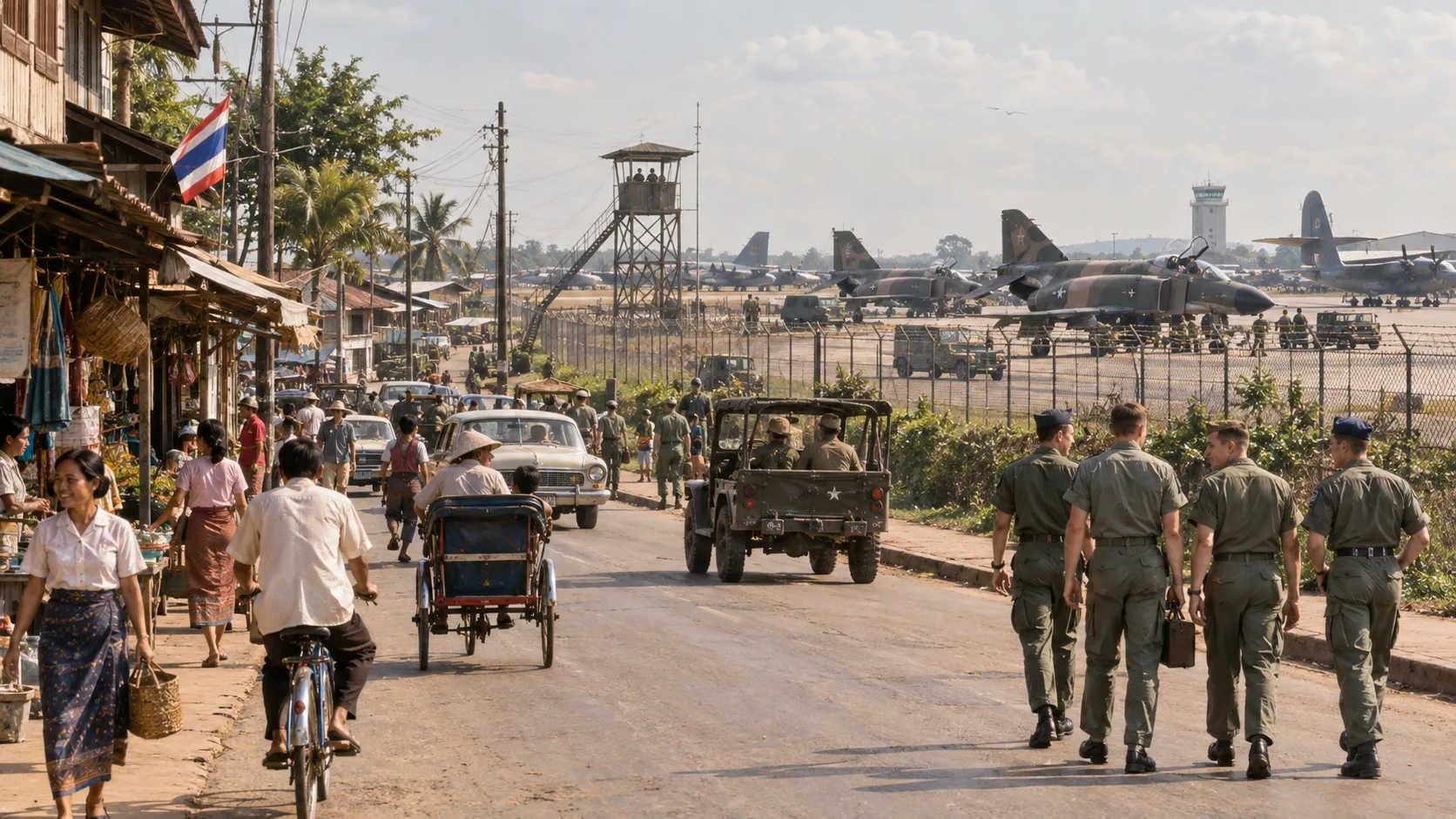
Four decades afterwards, Udon Thani would again become entangled in Vietnam's history, but from the other side. American fighter and reconnaissance aircraft operated from nearby Udorn Royal Thai Air Force Base during the Vietnam War, while the CIA used Udon as an important base for operations in neighbouring Laos.
Few places in Thailand illustrate the twists of twentieth-century Southeast Asian history quite like this.

Why Was Ho Chi Minh in Udon Thani?
When Nguyễn Ái Quốc arrived in Thailand in 1928, Vietnam was part of French Indochina.
He had already spent years abroad. His travels had taken him through Europe, the Soviet Union and China as he became increasingly involved in Vietnamese nationalism and communist revolutionary politics.
Thailand, then still known internationally as Siam, offered something particularly useful: established Vietnamese communities living relatively close to French-controlled Indochina.
Udon Thani was one of the most important.
Historical research into the Vietnamese nationalist movement in northeast Thailand shows that Vietnamese migration into Udon had been taking place for decades. Geography mattered. Isan lay close to Laos and Vietnam, allowing people, news and political ideas to travel across borders far more easily than a modern map might suggest.
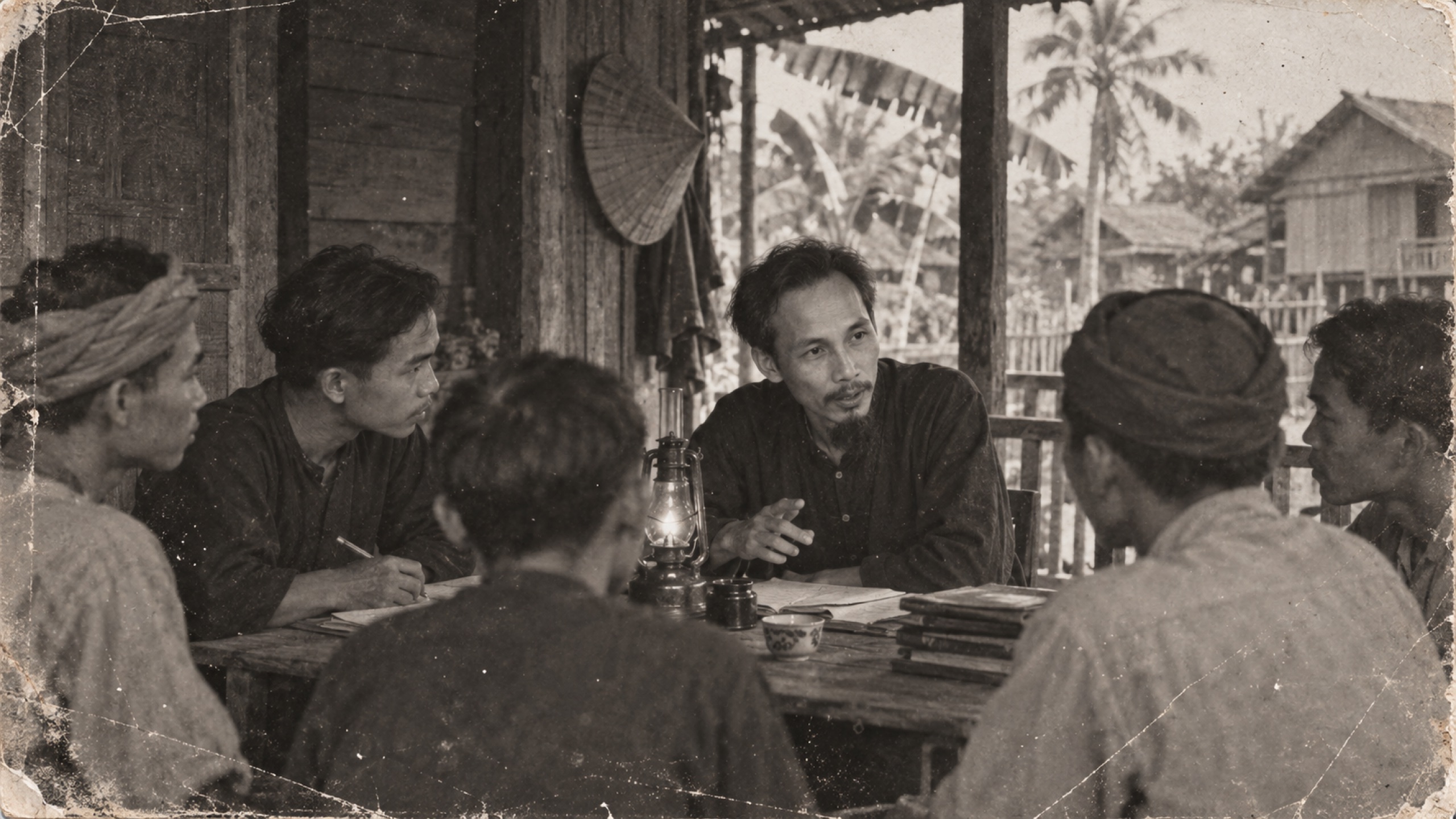
Nguyễn Ái Quốc arrived in Udon around the beginning of August 1928 and adopted the name Chín, becoming known locally as Thầu Chín.
He was not living like a future president.
He lived simply, worked alongside local people, farmed and helped strengthen organisations within the Vietnamese community. Historical accounts describe him conducting political education and encouraging expatriate Vietnamese to support the independence movement.

What Visitors See Today
The historical site deliberately avoids grandeur.
One of its most important elements is a reconstructed rural dwelling representing the type of house in which Ho Chi Minh lived and worked during his time here.
The three-room reconstruction includes simple furniture and working and sleeping areas. Other reconstructed elements recall everyday rural life, including agricultural areas, rice storage and livestock facilities.
That simplicity is important.
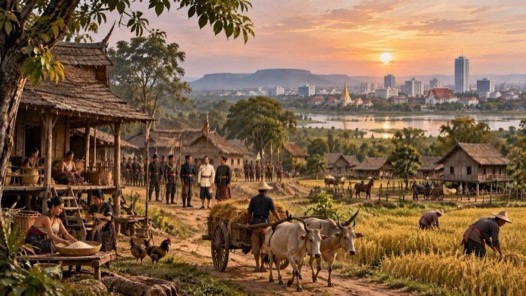
It is much easier to understand this period of history when you realise that political movements which would eventually reshape Southeast Asia were sometimes being organised not in government buildings or military headquarters, but in ordinary villages like this one.

The Vietnamese Community of Isan
The park also tells a bigger story about Udon Thani itself.
Vietnamese people have lived in northeastern Thailand for generations, and Udon became one of Thailand's most significant Vietnamese communities.
Their history has not always been straightforward. Across different periods they have been migrants, traders, refugees, political activists and eventually Thai citizens whose families became deeply integrated into local society.
Academic research describes Udon's Vietnamese community as an important cross-border network that was involved in Vietnamese nationalist activity long before the modern relationship between Thailand and Vietnam developed.
That legacy remains visible today in Udon's food, businesses, families and cultural connections with Vietnam.
The historical park therefore tells more than the biography of one famous man. It reveals something about why Isan has always been more connected to the wider Mekong region than many visitors realise.

From Thầu Chín to Ho Chi Minh
The young organiser who passed through Udon Thani would eventually become one of the defining political figures of twentieth-century Asia.
Vietnam declared independence from France in 1945 under Ho Chi Minh's leadership. French efforts to regain control led eventually to the First Indochina War and France's defeat at Dien Bien Phu in 1954.
Vietnam was subsequently divided between a communist North and anti-communist South.
The conflict that followed increasingly drew in the United States.
And this is where Udon Thani reappears in the story.

The Extraordinary Udon Thani Connection
Drive back towards modern Udon today and it is difficult to imagine what the city became during the 1960s and early 1970s. Udorn Royal Thai Air Force Base was transformed into an important US military installation.
The 432nd Tactical Reconnaissance Wing was established at Udorn in 1966. Its role initially concentrated heavily on aerial reconnaissance, but the mission expanded to include fighters, combat air patrols and strike operations. By July 1972, official US Air Force records list 105 F-4 fighters and 20 RF-4 reconnaissance aircraft at Udorn.
Aircraft operating from the base participated in missions over North Vietnam. There was another largely invisible side to Udon's wartime importance: the CIA's own history of its operations in Laos states that the principal headquarters supervising the covert war there was located at Udorn, beside the Air America ramp.
So within one lifetime, Udon had moved through an extraordinary historical circle. In the late 1920s, Ho Chi Minh helped organise Vietnamese resistance from the countryside outside the city. In the 1960s and 1970s, American aircraft and intelligence operations based in Udon were fighting the communist forces he led.
That does not mean that the Vietnam War somehow "started in Udon Thani". History is far more complicated than that. But it does mean that this seemingly quiet Isan city occupied a remarkable position on both sides of one of Asia's defining twentieth-century struggles.

Why Visit Ho Chi Minh Historical Park?
This is not one of Udon Thani's biggest attractions. It may be one of its most thought-provoking.
The reconstructed house, museum photographs, documents and memorial displays make much more sense once you understand the wider story surrounding them.
For Vietnamese visitors the location naturally carries enormous national significance. For international travellers, however, its value is slightly different: it provides an unexpected doorway into the history of Isan.
You begin with a modest house in a rural village. You discover a Vietnamese revolutionary living under an assumed name. You uncover a sizeable Vietnamese community stretching back generations.
And then the story leads you forward forty years to fighter aircraft, CIA operations and the Vietnam War. That is a remarkable amount of twentieth-century history hidden within a few kilometres of modern Udon Thani.
Why Stay at Nakara Villas & Glamping for Your Ho Chi Minh Historical Park Visit?
Nakara Villas & Glamping makes a relaxing base for discovering the fascinating twentieth-century history of Udon Thani. A visit to Ho Chi Minh Historical Park combines particularly well with Udon Thani City Museum, where you can explore the wider story of the province, including its Vietnamese community, rapid twentieth-century development and the later American military era. Together, the two sites reveal a remarkable side of Udon Thani that many visitors never discover, before returning to Nakara for a swim, dinner and a peaceful evening in the gardens.