
How Isan Helped Keep Thailand's Forest Meditation Tradition Alive
When people think about meditation, they often picture a quiet room, a mindfulness app, or a short breathing exercise at the end of a stressful day. What many do not realise is that meditation has a far older, stricter and more demanding history, and part of that story runs through Isan, including Udon Thani.
To be clear, meditation was not invented in Udon Thani. Its deepest roots lie in ancient India, where contemplative traditions developed over many centuries before being shaped further by Buddhism. But while Udon Thani cannot claim to be the birthplace of meditation, it can credibly claim something else, something both more modest and more meaningful.
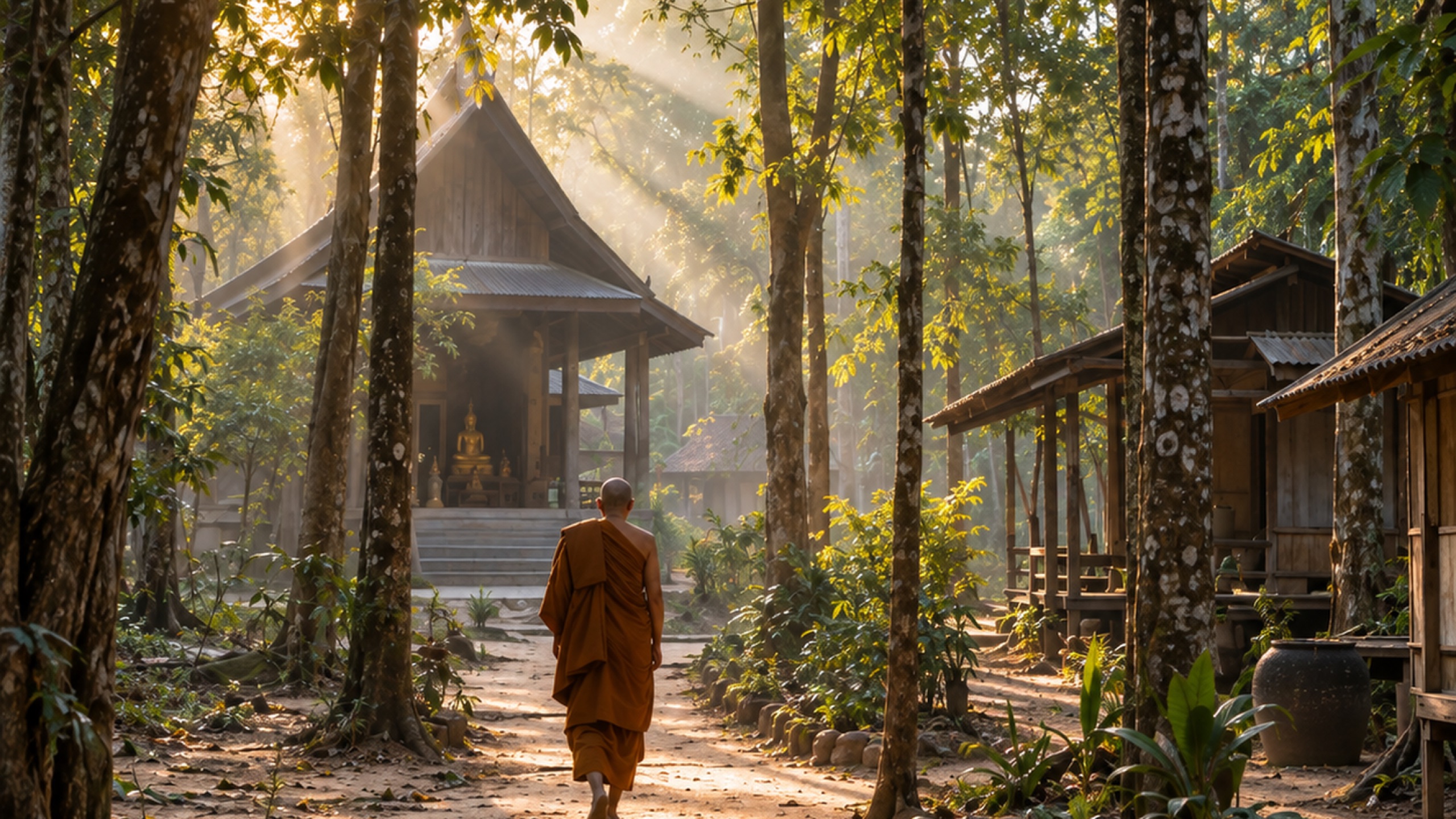
Udon Thani became one of the important places where Thailand's forest meditation tradition was preserved, practised and passed on.
That matters because the Thai Forest Tradition is one of the most influential meditation movements in modern Buddhist history. It helped revive a more austere and intensive style of practice, one centred on silence, discipline, renunciation, mindfulness and insight. In the 20th century, the forests and monasteries of Isan became central to that revival, and Udon Thani played a real part in it.
What is meditation, and how is the Thai Forest Tradition different from "modern meditation"?
Today, the word "meditation" is used very broadly. It might mean a ten-minute breathing session, a guided relaxation video, or a secular mindfulness class. Those practices can be valuable, but they are not the same as the traditional training followed by Thailand's forest monks.
In the Thai Forest Tradition, meditation is part of a complete path of life. It is tied to ethical discipline, simplicity, restraint, solitude, careful attention to the mind, and in the case of monks, the full rigour of monastic training. The aim is not simply stress relief. It is profound inner transformation.
This is why the forest tradition feels so compelling. It is less about wellness, and more about truth. Less about a break from life, and more about seeing life clearly.
For travellers interested in the roots of meditation, Udon Thani offers something unusually valuable, the chance to explore places connected to a living tradition, not just a trend.
How the Thai Forest Tradition emerged in Isan
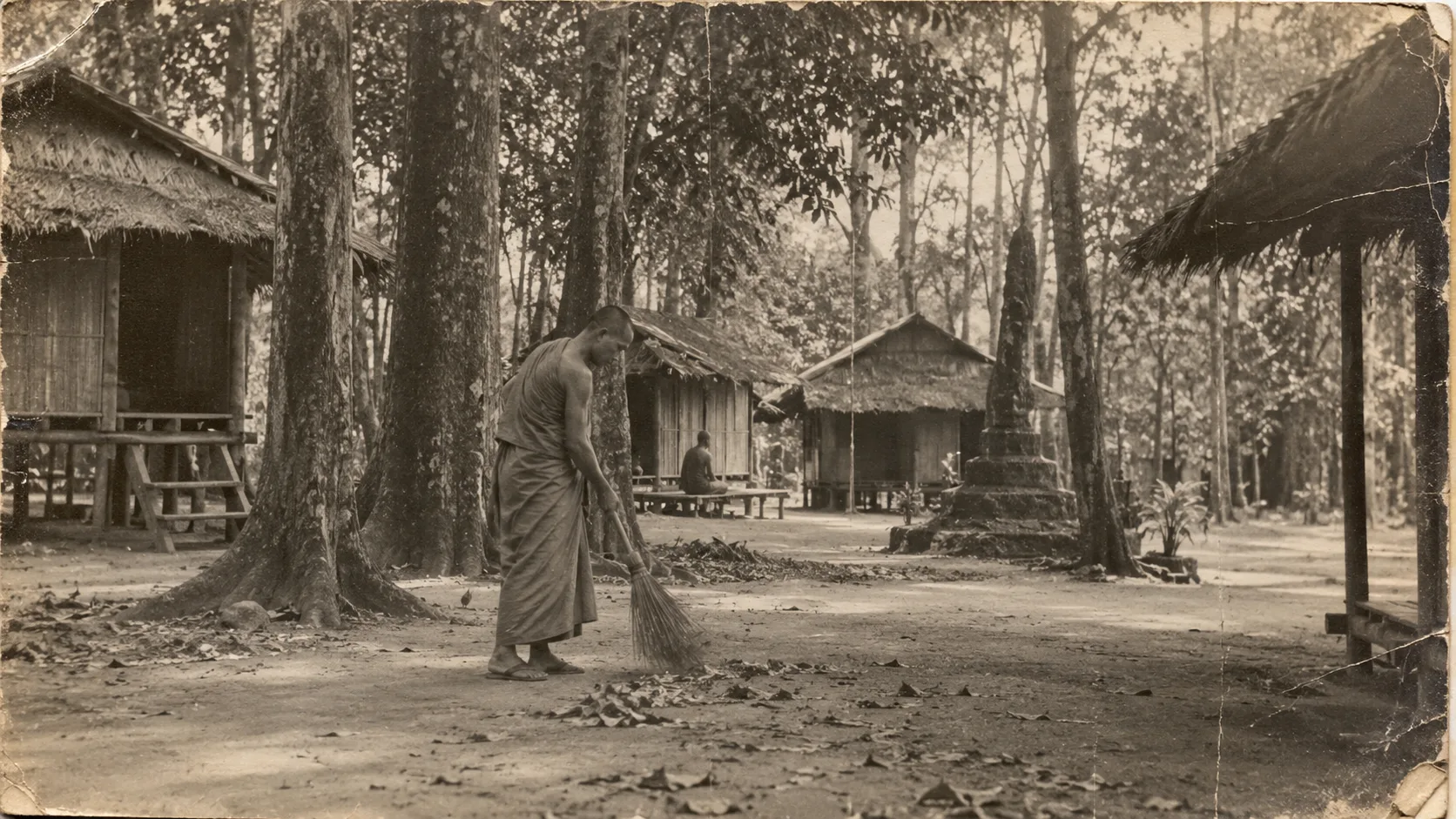
By the late 19th and early 20th centuries, much Buddhist monastic life in Thailand had become increasingly institutional, settled and scholarly. Meditation had not vanished, but the stricter and more wandering ascetic tradition associated with the early Buddhist ideal was less prominent than before.
In response, a movement emerged in northeastern Thailand, known today as the Thai Forest Tradition.
Its great pioneers included Ajahn Sao Kantasilo and Ajahn Mun Bhuridatto, monks who returned to a tougher way of life rooted in forests, caves, mountains and deep personal practice. They stressed simplicity, discipline and direct meditative experience. Their influence spread across Isan, including provinces such as Ubon Ratchathani, Sakon Nakhon, Nong Khai, Loei and Udon Thani.
So if we are being historically accurate, the right claim is this:
Udon Thani did not invent meditation, and it did not single-handedly "save" it. But it did become one of the places where an important ancient meditation tradition was kept alive and renewed.
Ajahn Mun and Udon Thani
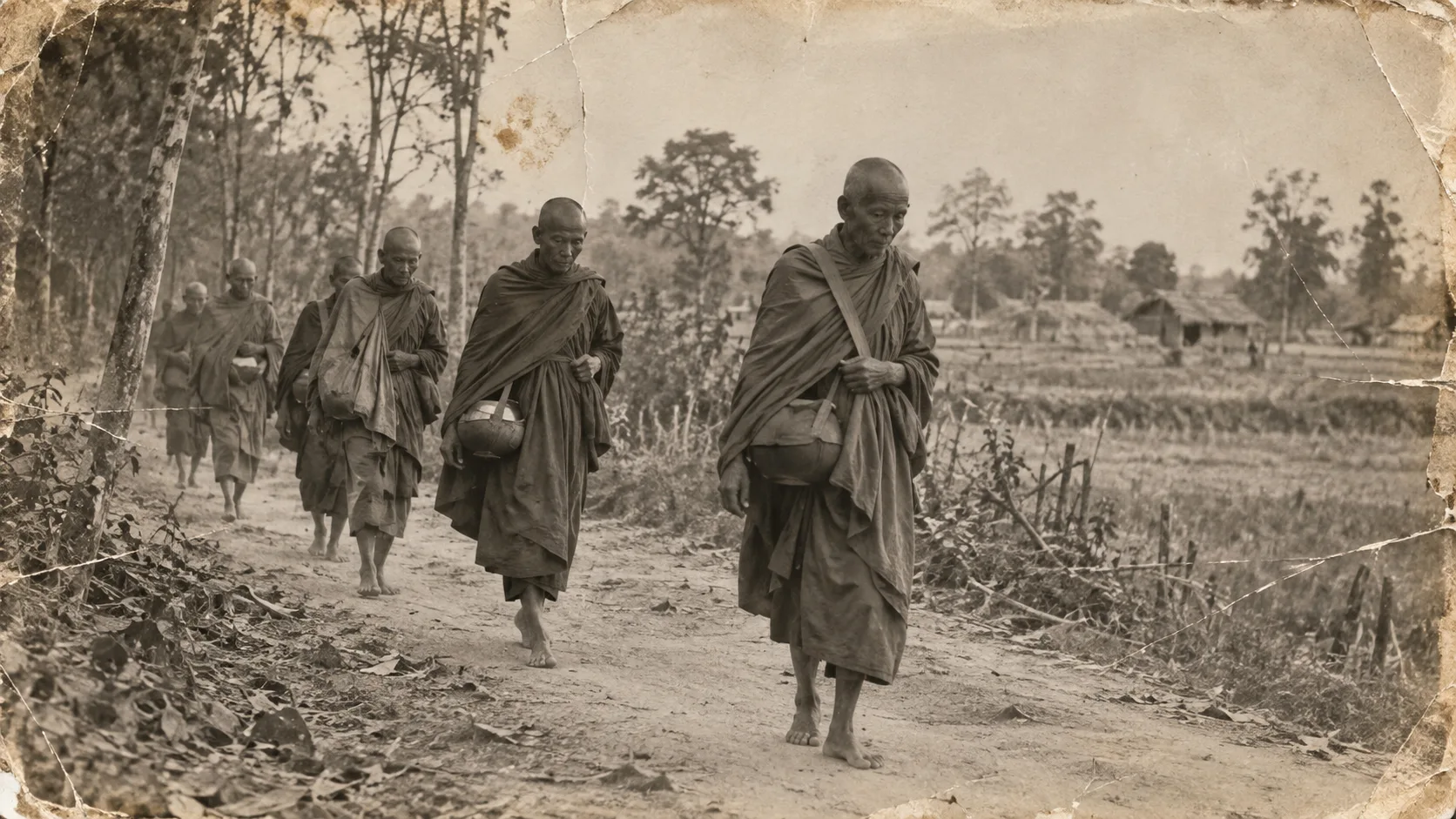
Any serious discussion of forest meditation in Thailand must mention Ajahn Mun Bhuridatto, one of the towering figures of modern Theravada Buddhism. His life and teaching shaped the Forest Tradition more than anyone else.
Ajahn Mun travelled widely through the Northeast, teaching monks and inspiring lay communities. Udon Thani formed part of that world. He spent time in the province, and his presence helped deepen the region's connection to meditation practice.
This matters because Udon's role was not just geographic. It became part of the living network through which forest meditation was transmitted from teacher to disciple, from monastery to monastery, and from one generation to the next.
That is why Udon Thani belongs in the story, not as the sole centre, but as one of the meaningful landscapes of the movement.
Wat Pa Baan Taad, Udon Thani's most important meditation site
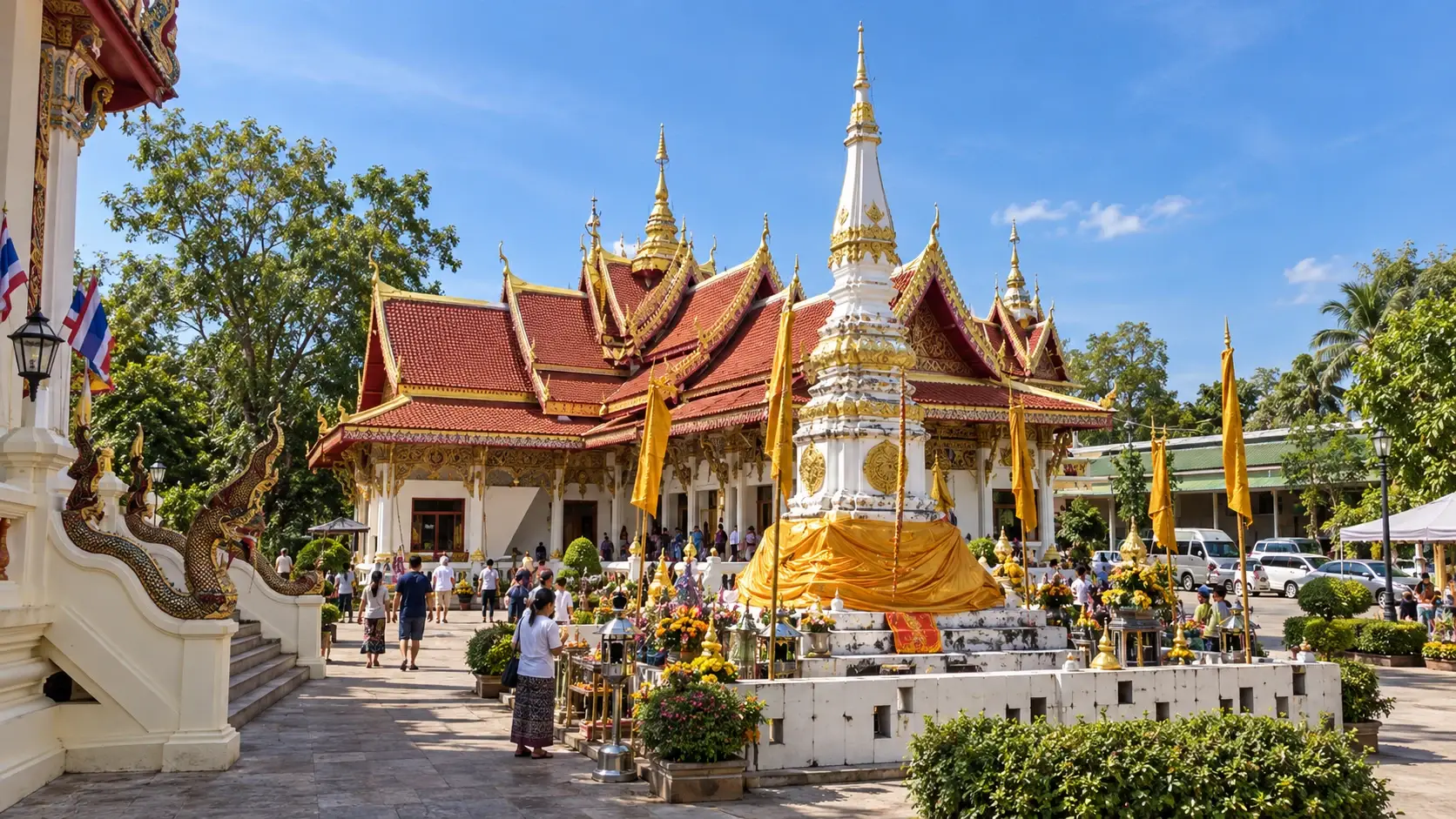
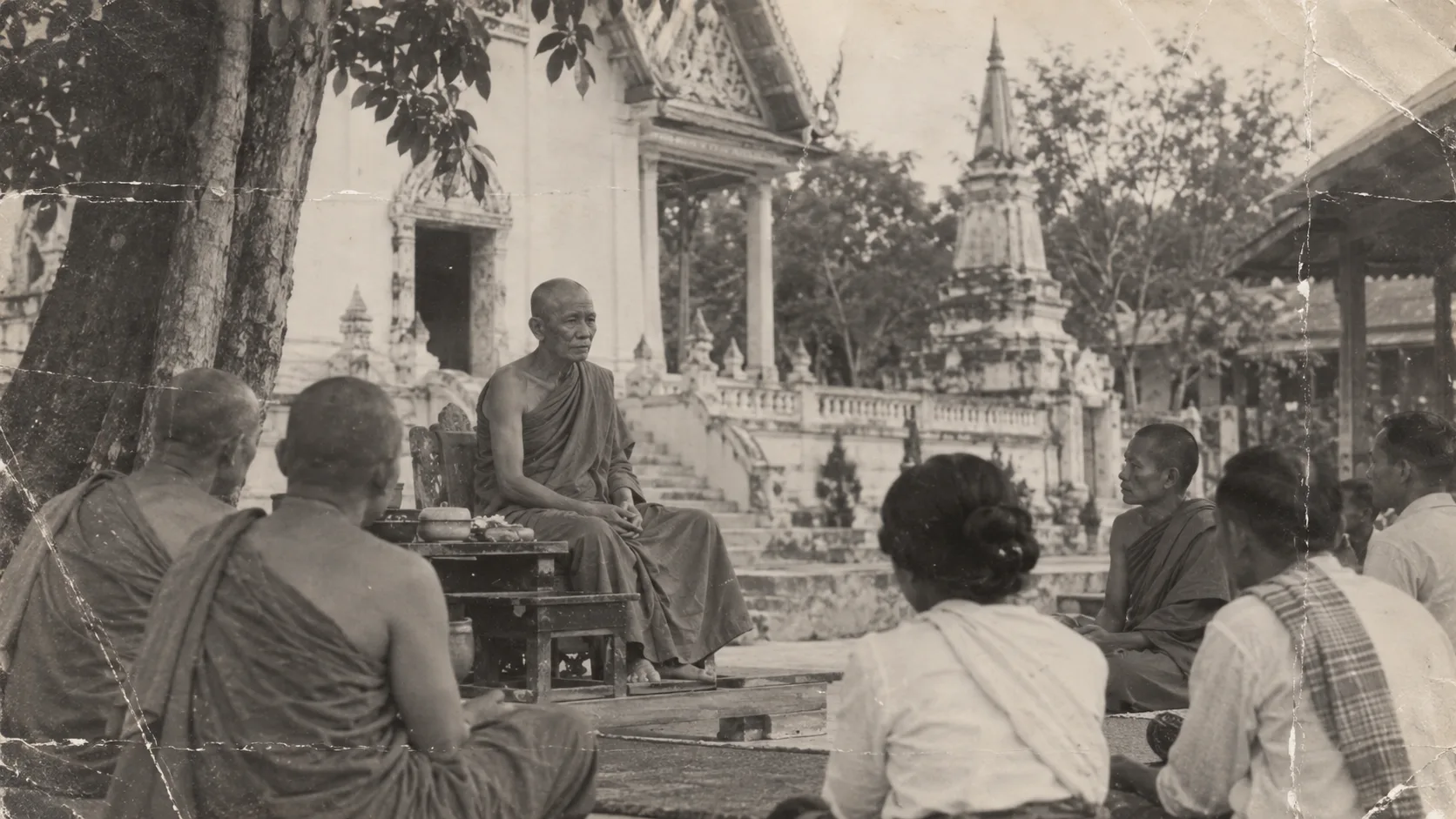
If one place symbolises Udon Thani's role in the history of meditation, it is Wat Pa Baan Taad.
Founded in 1955 by Ajahn Maha Bua Ñanasampanno, one of Ajahn Mun's most important disciples, Wat Pa Baan Taad became one of the best-known forest monasteries in Thailand. Ajahn Maha Bua was born in Udon Thani Province, and his monastery helped anchor the Forest Tradition here for the modern era.
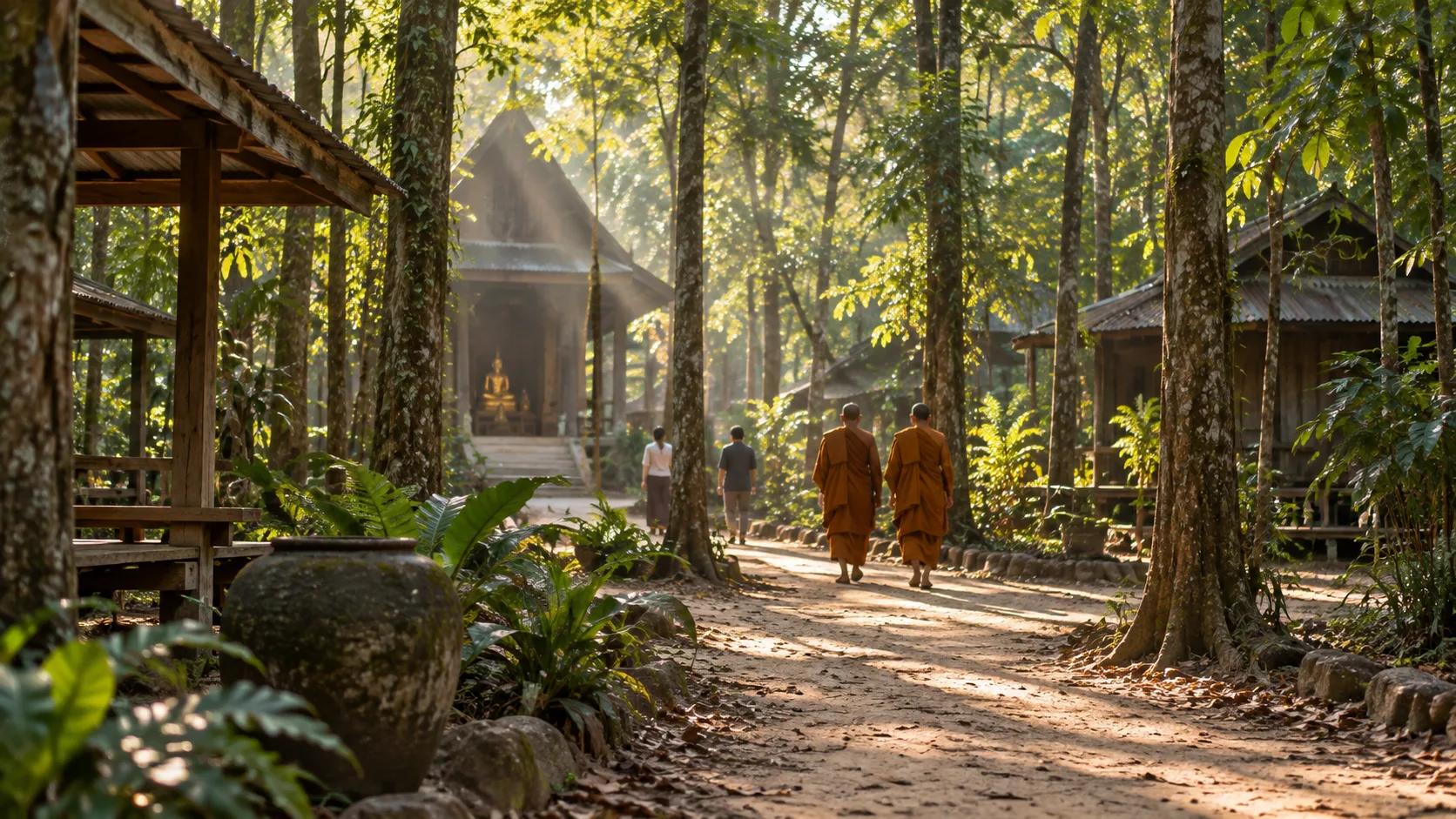
Wat Pa Baan Taad was not designed as a tourist attraction. It was built as a place of practice. Its atmosphere reflects that. The emphasis has always been meditation, mental cultivation, simplicity and seriousness of purpose.
For visitors, that makes it deeply moving. Even those with little background in Buddhism often sense immediately that this is not a decorative temple visit. It is a place shaped by discipline, silence and a genuine contemplative life.
The monastery also helped connect Udon Thani to the wider world. Western monks trained here, including the British monk Ajahn Pannavaddho, who became one of the notable international figures associated with the tradition. Through monks like him, the influence of forest meditation travelled far beyond Isan.
Wat Bodhisomphon and Udon Thani's wider meditation heritage
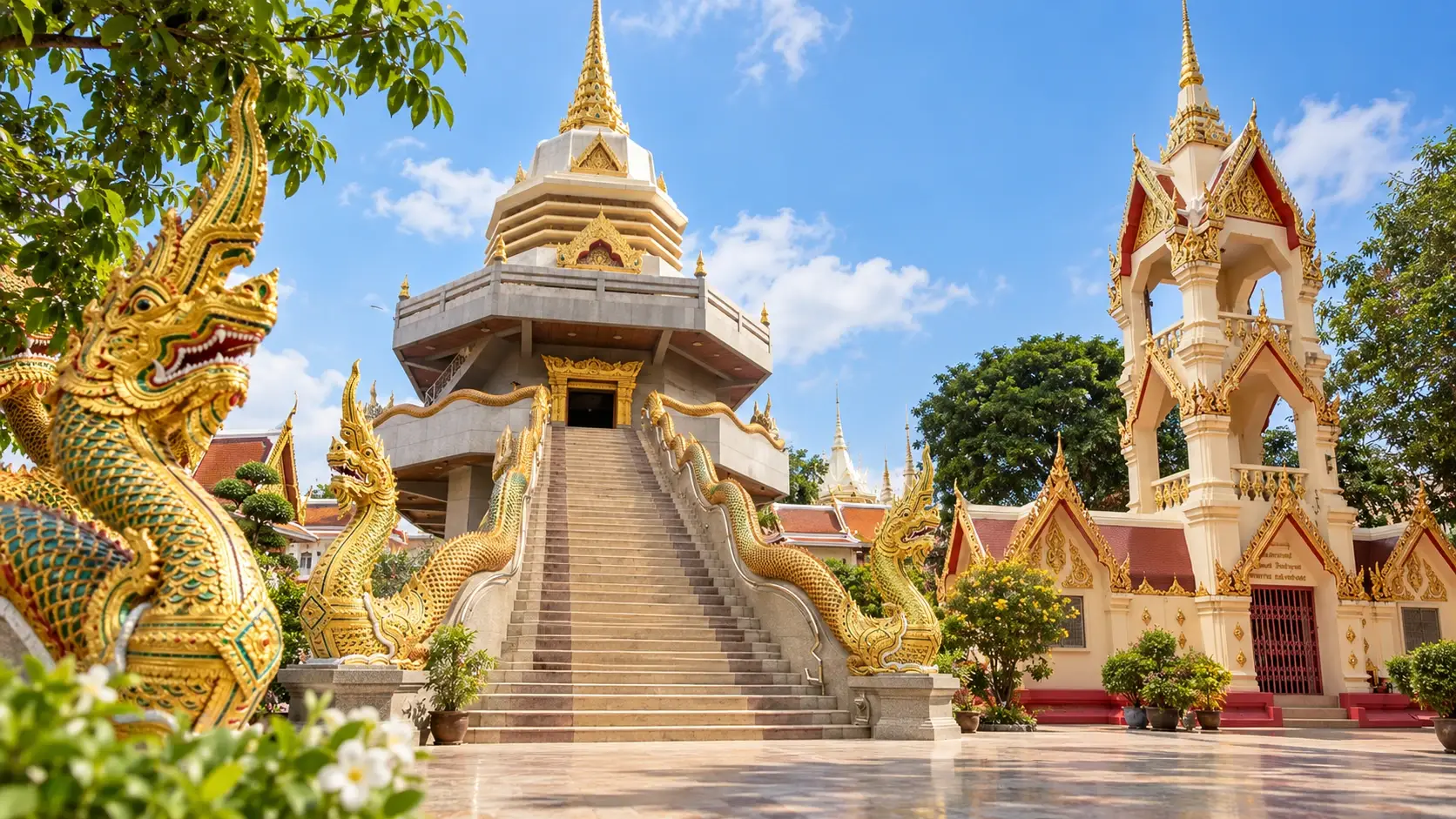
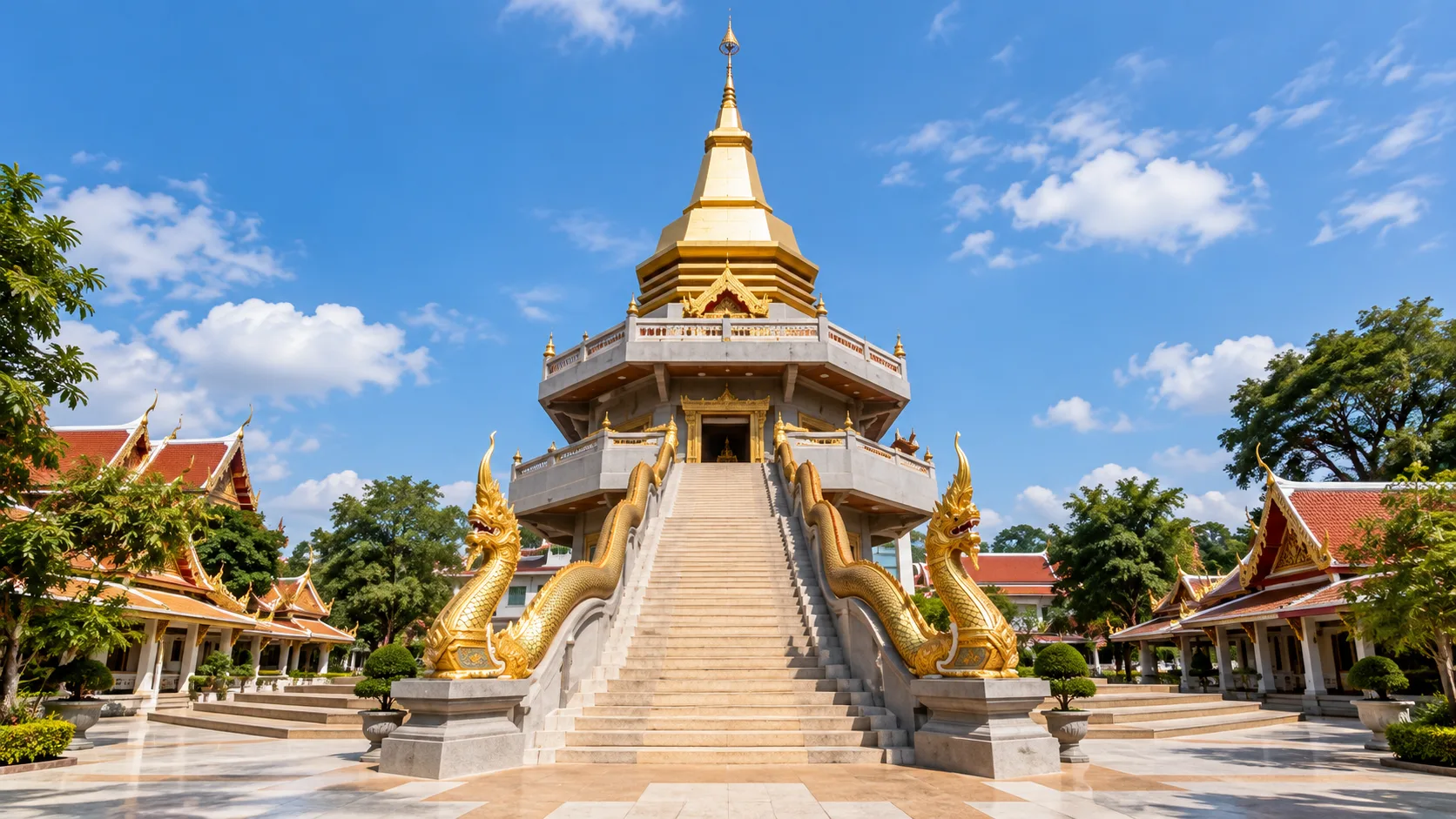
Another important place in Udon Thani's meditation story is Wat Bodhisomphon, one of the city's best-known temples. It is associated with the wider history of the Forest Tradition and helps connect the story of wandering monks and forest practice with the urban heart of Udon itself.
For visitors, this broadens the experience. Meditation heritage in Udon Thani is not only hidden away in forest monasteries. It also intersects with the city's living religious life, its temples, and its connection to the spiritual culture of Isan.
Can we really say Udon Thani helped keep meditation alive?
Yes, with one important qualification.
If by "meditation" we mean every form of meditation everywhere, then no, that would be too strong. Meditation continued in many parts of Asia, especially in Buddhist countries such as Thailand, Myanmar and Sri Lanka.
But if we mean a stricter forest-based Theravada meditation tradition that had become relatively marginal within much of mainstream monastic life, then yes, we can responsibly say that Isan, including Udon Thani, helped keep that tradition alive and renew it.
That is the truthful version, and in many ways it is more interesting than the exaggerated one.
Udon Thani's importance lies not in being the beginning of meditation, but in being one of the places where a serious contemplative lineage endured and flourished.
Exploring meditation in Udon Thani today
For travellers, Udon Thani offers a different kind of experience from Thailand's better-known tourist routes. It is not about glossy spirituality or retreat-centre branding. It is about quiet places, modest temples, the rhythm of Isan life, and a more grounded encounter with Buddhist practice.
A meditation-focused visit to Udon Thani might include:
- Wat Pa Baan Taad, for its central role in the Thai Forest Tradition
- Wat Bodhisomphon, for its place in Udon's religious and monastic history
- Time spent in quieter temple grounds and natural settings around the province
- Reading about Ajahn Mun and Ajahn Maha Bua before or after visiting
- Slowing down enough to appreciate why the forests mattered so much to these monks
You do not need to be a Buddhist, or even a meditator, to find this meaningful. Udon Thani's meditation heritage speaks to anyone interested in history, spirituality, simplicity and the search for inner clarity.
Why Nakara Villas & Glamping is a great base for exploring meditation in Udon Thani
A journey into meditation history should not feel rushed, noisy or overpackaged. That is one reason Nakara Villas & Glamping makes such a good base for exploring this side of Udon Thani.
After visiting monasteries and temple sites, many travellers want somewhere calm to reflect, rest and absorb what they have seen. Nakara offers exactly that. With its peaceful setting, tropical gardens and slower pace, it provides a welcome contrast to busy urban accommodation.
It is also a practical base. Staying at Nakara gives you access to Udon Thani while allowing you to return each day to a more restful environment. That balance matters. The story of meditation in Isan is, at heart, a story about quiet, space and attention. It feels fitting to explore it from a place that supports those qualities.
So if your Udon trip is about more than shopping malls and quick stop-offs, if you want to connect with the deeper cultural and spiritual life of the region, Nakara Villas & Glamping is an excellent choice.
Final thoughts, meditation in Udon Thani is a story worth discovering
The history of meditation is vast, and its origins lie far beyond Udon Thani. But the province still holds an important place in the story.
Here in Isan, forest monks helped preserve and renew an ancient contemplative tradition at a time when it might otherwise have remained on the margins. Through figures such as Ajahn Mun and Ajahn Maha Bua, and through places like Wat Pa Baan Taad, Udon Thani became part of a lineage that continues to inspire people today.
For visitors, this creates a powerful opportunity. Udon Thani is not just a gateway city or a stop on the map. It is also a place where you can trace one of Thailand's most meaningful spiritual traditions in the landscapes, monasteries and quiet spaces where it was lived.
If you are planning to explore this side of Udon Thani, make time for more than a quick temple visit. Stay a little longer. Read a little deeper. Listen a little more closely.
And let Nakara Villas & Glamping be your peaceful base for discovering one of Isan's most fascinating stories.