

Ho Chi Minh, US Air Bases and a City Transformed
There is an extraordinary historical irony at the heart of Udon Thani.
Udon Thani was not where Ho Chi Minh first developed his revolutionary ideas. By the time he arrived here in 1928, he had already spent years in the Soviet Union and Guangzhou, studying communist thought, training Vietnamese activists and helping build the organisations that would eventually lead to the Communist Party of Vietnam.
But Udon Thani was one of the places where those ideas began to take root among ordinary Vietnamese communities.
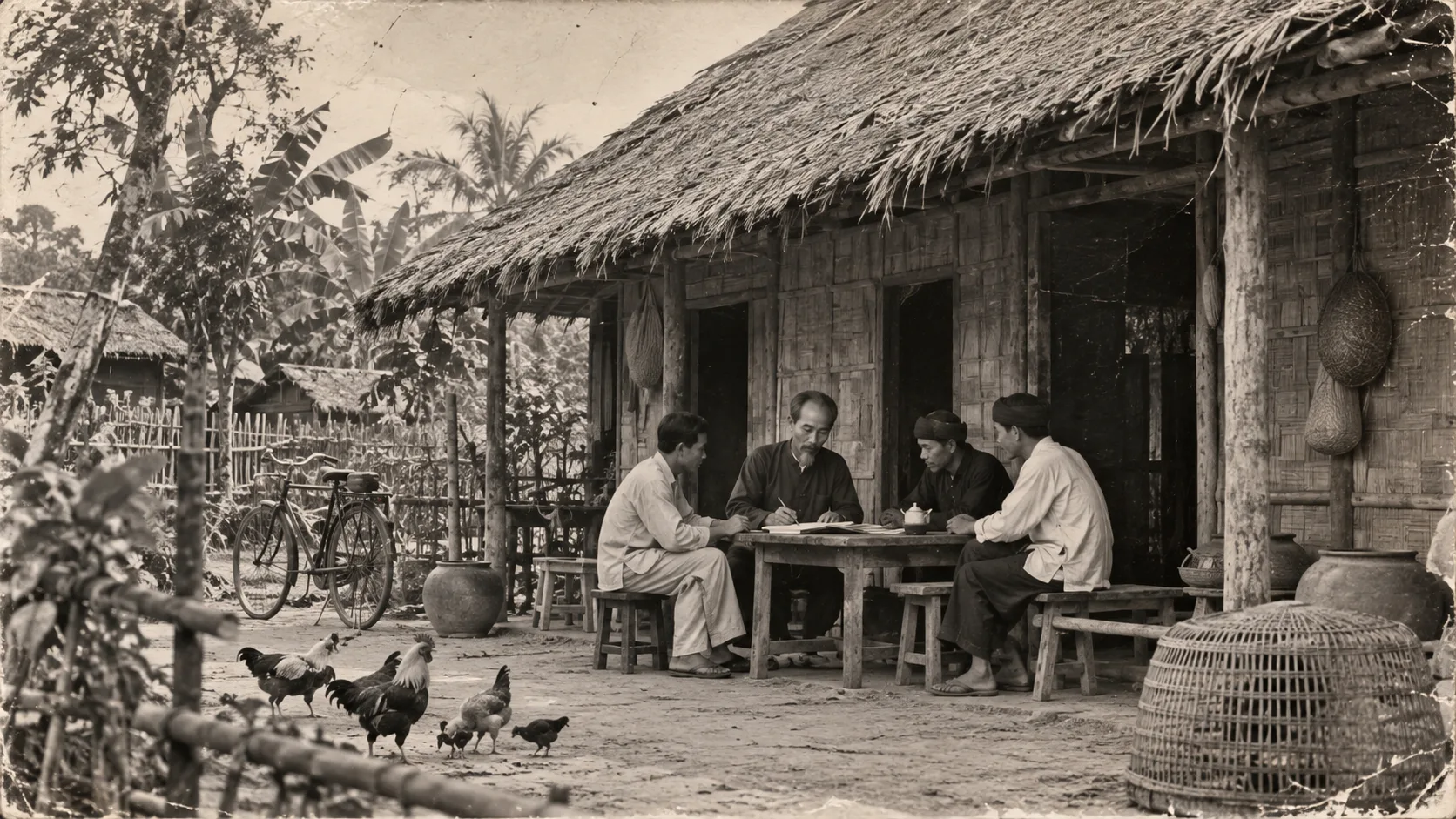
Living among the large Vietnamese diaspora in northeastern Thailand during 1928 and 1929, Ho Chi Minh helped organise local networks, opened classes, translated political texts and worked to expand support for the Vietnamese revolutionary movement. In Udon, ideas developed elsewhere were being turned into organisation on the ground.
That is what makes what happened four decades later so remarkable.
The same city that had once provided Ho Chi Minh with a base from which to nurture and organise part of the Vietnamese revolutionary movement became one of America's most important military and intelligence centres in Southeast Asia.
From Udorn Royal Thai Air Force Base, American reconnaissance and fighter aircraft operated over North Vietnam and Laos. In 1972, for example, F-4 Phantoms based at Udorn flew directly into North Vietnamese airspace to protect American strike formations during Operation Linebacker. Nearby, Udon also became a command centre for the CIA's covert war in Laos.
So the historical irony is subtler than saying that Ho Chi Minh once lived in Udon Thani and was later "bombed from Udon Thani."
The revolutionary movement was not born here. But some of its roots were strengthened here.
And decades later, from almost the same corner of northeast Thailand, the United States helped wage a vast military campaign intended to defeat the communist state and movement Ho Chi Minh had spent his life building.
It failed to do so.
Few cities illustrate the extraordinary reversals of 20th-century Southeast Asian history quite like Udon Thani.
Ho Chi Minh in Udon Thani
Before the American jets, the intelligence stations and the neon-lit bars, another chapter of the region's history was quietly unfolding.
Ho Chi Minh arrived in Thailand in 1928 while Vietnam remained part of French Indochina. During his time in Thailand he travelled among Vietnamese expatriate communities, including those in Udon Thani.
In Udon he used aliases and worked with local Vietnamese communities, helping organise political networks while also encouraging education and community development. Accounts associated with the present Ho Chi Minh Memorial Site describe him helping residents with activities such as gardening, raising animals and improving village life while continuing his political work.
He spent time around Nong Bua and later Nong On village, approximately 10 kilometres from the modern city centre.
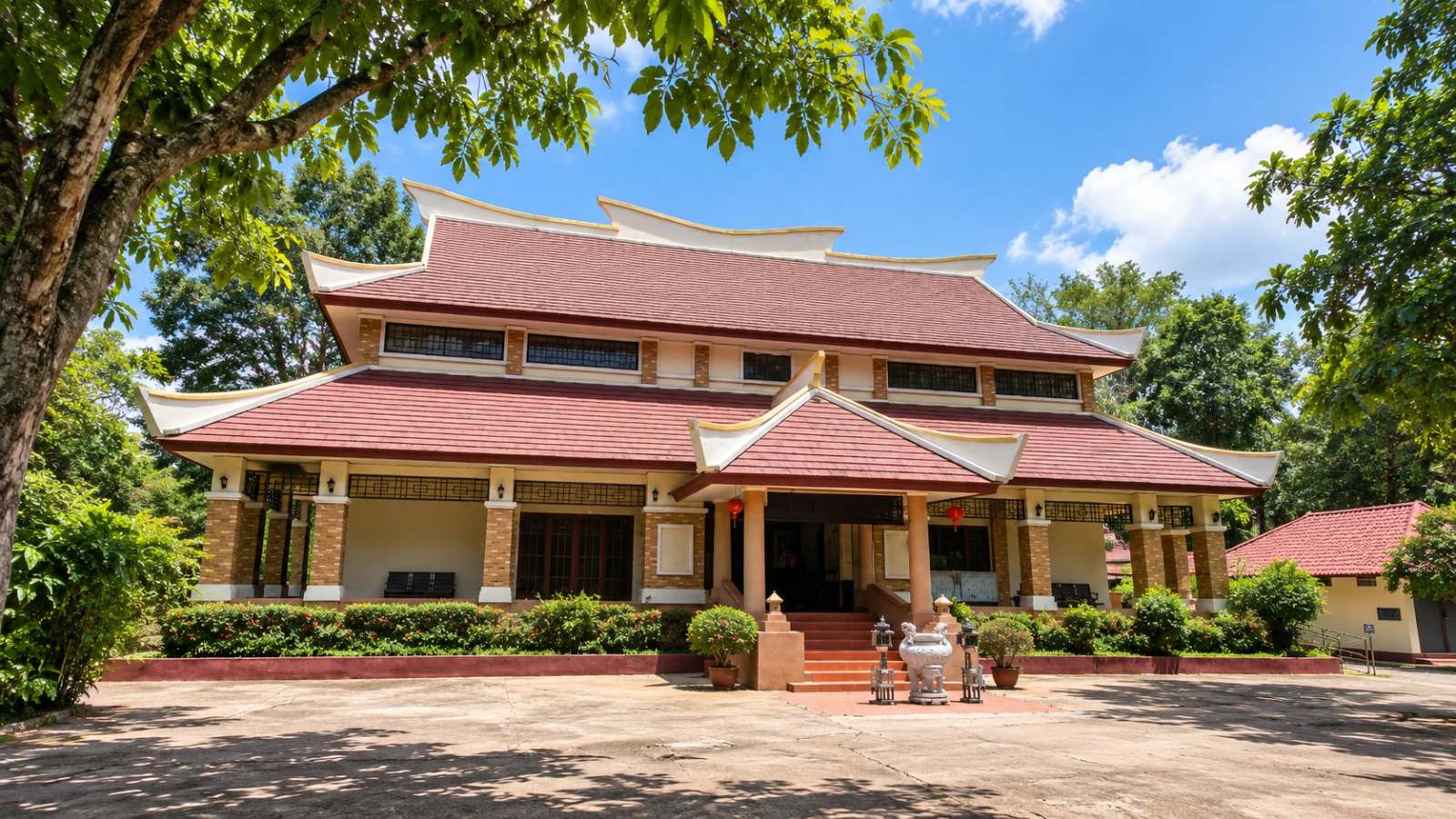
Today, the Ho Chi Minh Memorial Site at Nong On preserves this almost forgotten connection between Udon Thani and the birth of modern Vietnam. A reconstructed house shows the simple environment in which he is remembered as having lived and worked during 1928 and 1929.
At the time, nobody could have imagined how dramatically Udon Thani's relationship with Vietnam would change within a generation.
Why the Americans Came to Udon Thani
The transformation began with geography.
Udon Thani sits close to the Mekong and Laos, within flying distance of Vietnam and near the centre of mainland Southeast Asia.
During the Cold War, Washington and Bangkok were increasingly concerned about communist expansion through Vietnam and Laos. Thailand became an important American ally, and a network of Thai air bases became central to US military operations in the region.
Udon was particularly valuable.
The airfield was already an important Thai facility. By the mid-1960s, Udorn Royal Thai Air Force Base had become a major American operational centre.
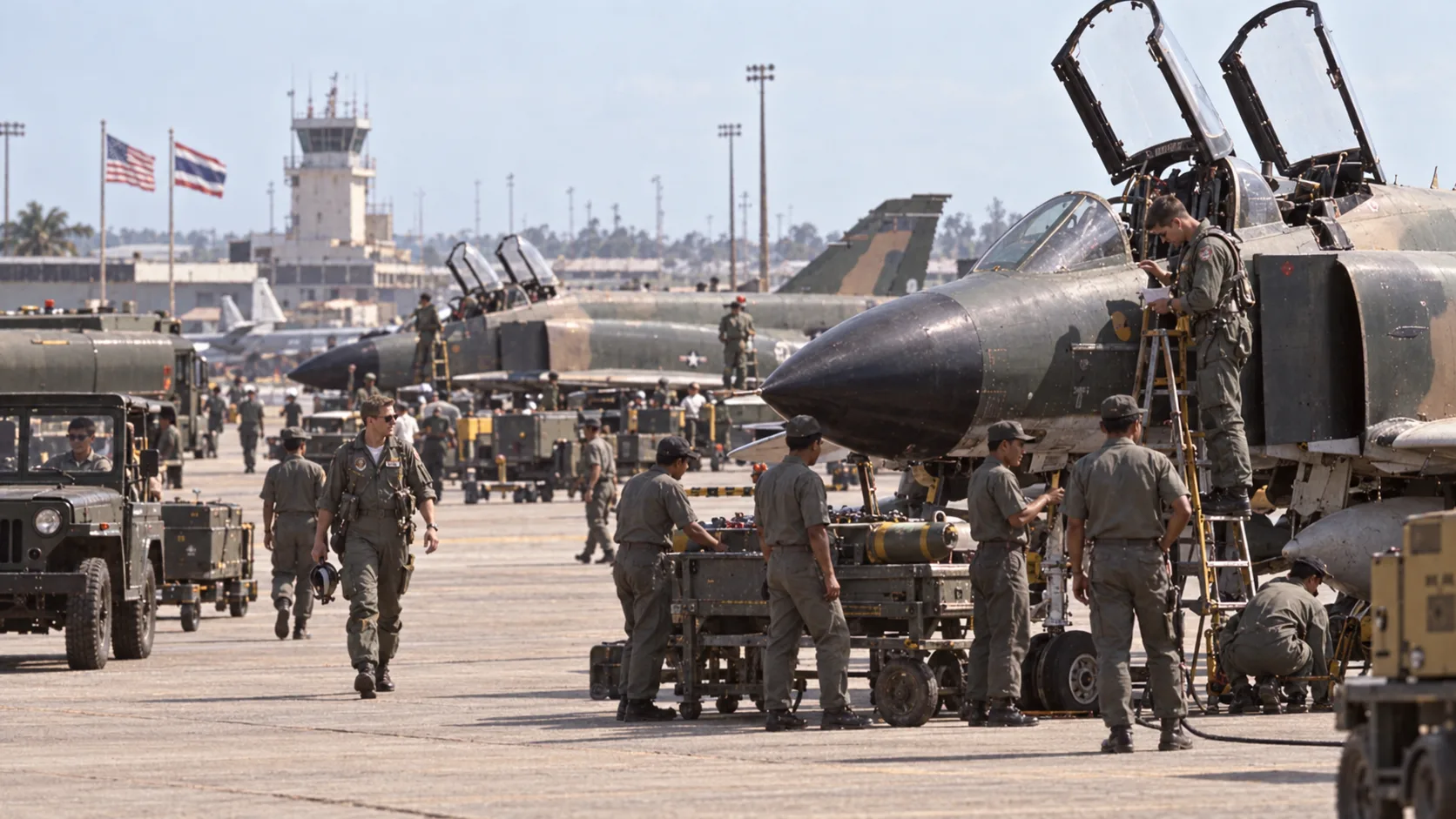
The 432nd Tactical Reconnaissance Wing was established there in 1966. Reconnaissance aircraft flew over North Vietnam and elsewhere in Indochina photographing roads, military positions and targets. Fighter squadrons flying F-4 Phantoms subsequently joined them.
During Operation Linebacker in 1972, for example, F-4s from Udorn flew into North Vietnam to protect major American strike formations.
This was not a distant support installation.
Udon had become part of the machinery of the war.
Udorn Air Base: A City Beside a War
At its busiest, Udorn was filled with aircraft, mechanics, pilots, intelligence personnel, contractors and support staff.
Fighter aircraft shared the base with reconnaissance planes, transport aircraft and the unusual collection of aircraft operated by Air America.
The effect on the city immediately outside the gates was enormous.
Thousands of Americans suddenly required accommodation, restaurants, transport, shops, entertainment, laundry services and countless other businesses.
Money circulated at a level previously unknown in the provincial economy.
Research into Udon Thani during this period describes major changes in the city's economy, society, culture and music following the arrival of American personnel and money.
For some local families the American presence created opportunities that would have been almost unimaginable only a few years earlier.
Businesses expanded. Jobs appeared. English became useful. Local employees learned new technical and commercial skills. Construction and infrastructure increased.
But a wartime economy also created dependency.
Businesses built around American spending were vulnerable to American withdrawal. Social change happened extremely quickly, and not everyone benefited equally.
The transformation of Udon therefore cannot comfortably be described as either good or bad.
It was both opportunity and disruption.
Air America and the Secret War Next Door
Some of the most remarkable activity in Udon Thani was barely discussed publicly at the time.
Across the Mekong, Laos was officially neutral.
In reality, it had become the setting for one of the largest covert operations in CIA history.
Air America, an airline secretly owned by the CIA, became a crucial part of that operation. Its aircraft carried food, supplies, troops and intelligence personnel, evacuated refugees and casualties, rescued downed airmen and supported covert operations throughout Laos.
Udon Thani was one of Air America's most important operating centres.
CIA historical material describes Udorn as a major hub for operations connected with the war in Laos, with Air America aircraft operating alongside the large US military presence at the base.
Aircraft crossed the Mekong into a war that many Americans, and much of the world, officially knew little about.
From Udon, the distance to Vientiane was tiny.
Politically, the distance between what was officially acknowledged and what was actually happening could be enormous.
What Was Udon Thani Actually Like During the American Years?
It is easy to reduce this period to aircraft and geopolitics.
For people living here, the changes were happening in the streets.
Hotels appeared.
Restaurants served unfamiliar Western food.
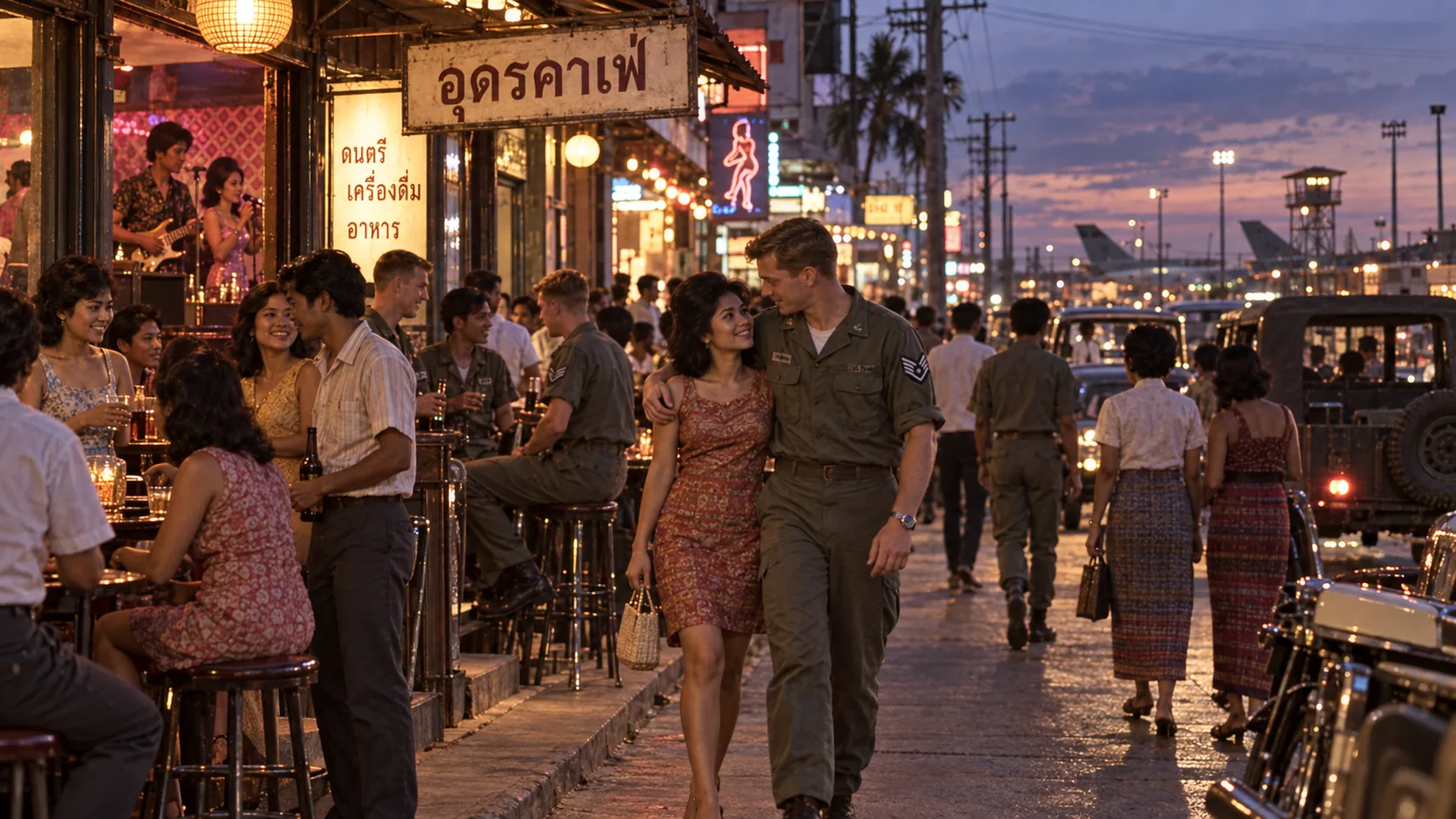
Bars, nightclubs and entertainment venues multiplied.
English-language signs became more common around areas frequented by Americans.
Local musicians encountered American rock, soul and popular music. Imported instruments, amplifiers, records and fashions influenced a generation of young people.
Research by Udon Thani Rajabhat University specifically identifies music as one of the areas transformed by the influx of American culture and money during the war.
Local memories collected decades later describe cinemas showing English-language films, young people copying American fashions, musicians gaining access to better instruments and sound equipment, and Udon developing a reputation as one of Thailand's surprisingly fashionable provincial cities.
Outside the nightlife districts, however, ordinary Isan life continued.
Markets opened in the morning.
Families farmed.
Temples remained centres of community life.
Children went to school.
Monks walked for alms.
American military aircraft might roar overhead while only a few kilometres away life continued in villages that had changed comparatively little.
That contrast must have been one of the strangest things about living in Udon during the period.
Love, Marriage, Sex Work and the Story of the "War Brides"
Another part of the American era is more difficult to discuss, but ignoring it would produce an incomplete history.
Thousands of predominantly young American men were living far from home with comparatively high incomes by local standards.
Relationships inevitably developed between American servicemen and Thai women.
Some were temporary.
Some were commercial.
Some became long relationships and marriages.
Some Thai women eventually moved to the United States with American husbands, while other couples remained in Thailand.
Research into cross-cultural marriage in Isan identifies the American military presence of the 1960s and 1970s as an important early influence on later patterns of Thai-Western marriage. Research into Thai-American migration similarly finds that part of the history of Thai-American marriage migration is rooted in the military relationship between the two countries.
The term "war bride" is sometimes used for women who married foreign servicemen, although it risks reducing thousands of individual lives to a stereotype.
The reality was far more complicated.
There were genuine love stories and families that lasted for decades.
There was also prostitution, an industry that expanded around American military installations throughout the region.
And there were unavoidable inequalities involving money, nationality and power.
The women involved should not be reduced either to romantic heroines or victims.
Their individual circumstances varied enormously.
What can reasonably be said is that the relationships created during this period became another lasting connection between Isan and the wider world.
Ramasun Station: Listening to a War
Aircraft were only one part of Udon's strategic importance.
South of the city stood one of the Cold War's extraordinary intelligence facilities.
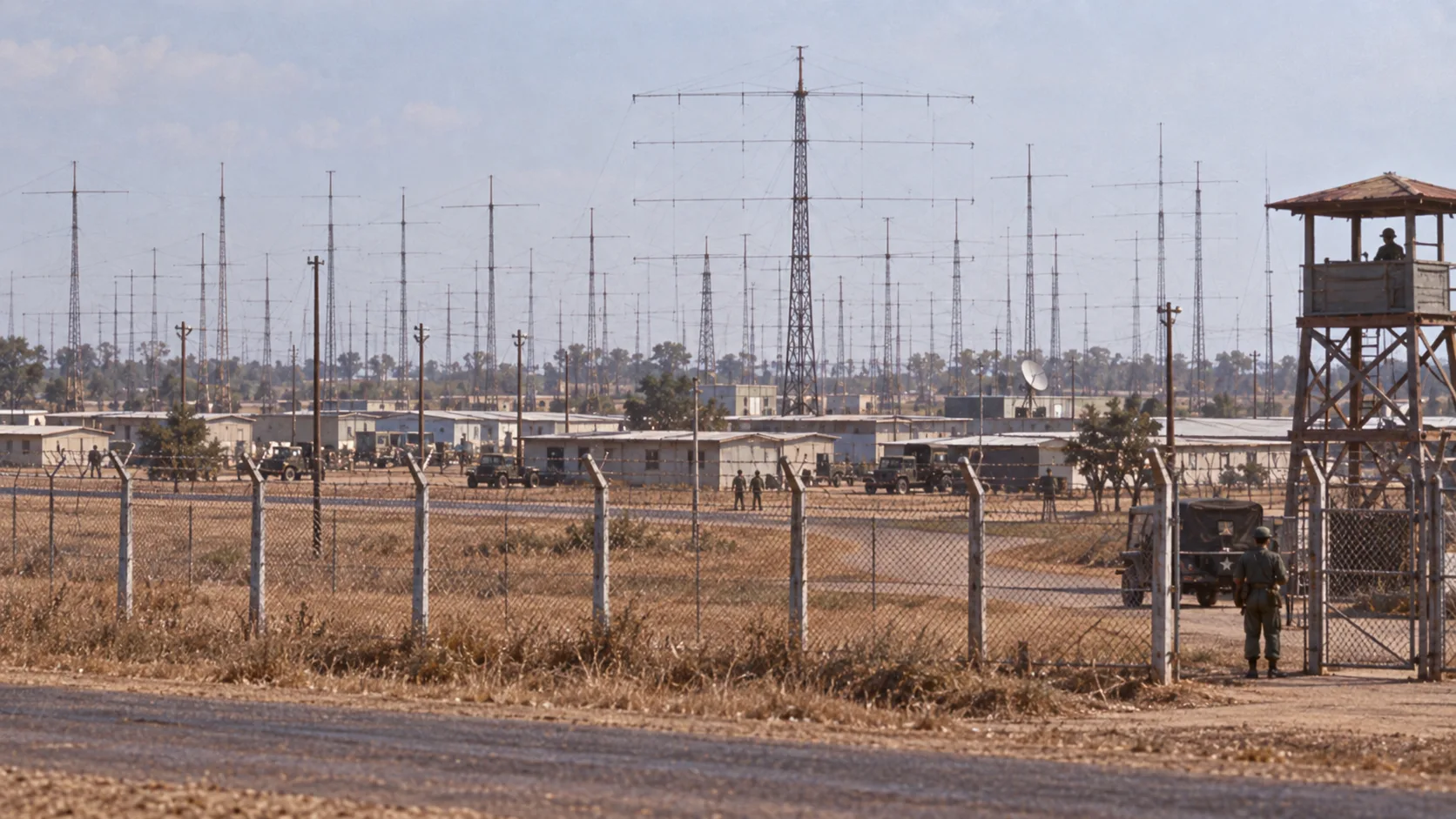
Ramasun Station, officially the 7th Radio Research Field Station, was operated by the US Army Security Agency, the Army's signals-intelligence organisation.
Its most striking feature was a huge circular antenna installation from the AN/FLR-9 family, commonly nicknamed an "Elephant Cage."
These giant arrays were designed to intercept radio communications and determine the direction from which transmissions originated.
The installation is a reminder that the Vietnam War was also an electronic war.
Signals were intercepted.
Transmitters were located.
Communications were analysed.
Intelligence moved almost invisibly through the same Udon landscape in which farmers were working rice fields and families were going about normal life.
Udon Thani, Air America and Popular Culture
The covert war eventually escaped into popular culture.
The most famous example is Air America, the 1990 Hollywood film starring Mel Gibson and Robert Downey Jr.
The movie helped introduce millions of people to the idea of a secret American airline operating over Laos.
It should not, however, be treated as a history lesson.
The CIA's own historical study of Air America argues that the film was largely responsible for a distorted popular image of the airline, particularly the suggestion that it routinely participated in narcotics trafficking.
The curious thing for visitors to Udon is that the real story behind this Hollywood mythology was not happening in some distant fictional jungle base.
A major part of Air America's actual infrastructure was here.
Its aircraft, employees and CIA connections were part of everyday wartime Udon.
In that sense, modern visitors can stand in a city that once occupied a genuine place inside one of the Cold War's most extraordinary stories.
When the Americans Left
The war did not end for Udon Thani on a single day.
American involvement gradually declined as the United States withdrew from Indochina.
Air America ended its Laos operations in 1974, while the wider American military withdrawal from Thailand followed the end of the Vietnam War.
The departure created its own disruption.
Businesses that had depended on American customers lost their market.
Workers who had learned English or acquired technical skills looked elsewhere for opportunities.
But Udon could not simply return to what it had been before.
The city was larger.
Its economy had changed.
Its population had changed.
Its relationship with foreigners had changed.
Its music, restaurants, nightlife and commercial culture had changed.
The Americans left.
Much of the Udon Thani they helped create remained.
A Darker Epilogue: The CIA Black Site Question
One later chapter must be kept separate from the Vietnam War story.
After the September 11 attacks in 2001, the CIA established a secret detention facility in Thailand known in official documents as Detention Site Green.
US Senate and subsequently released CIA material documented the existence of the Thai facility and the interrogation techniques used there.
Its precise location has long been disputed publicly.
Udon Thani has repeatedly been named in reporting about the site, including claims that it was associated with the Royal Thai Air Force base. Other accounts have suggested different locations, while Thai authorities have denied that Thailand operated such a prison.
For that reason, it would be misleading to present Ramasun Station, Udorn Air Base or any other particular Udon location as conclusively proven to have been the black site.
What is established is that a CIA detention facility operated in Thailand.
The claim that it was in Udon Thani has been widely reported, but its exact location remains publicly contested.
That distinction matters.
Udon Thani Today
Modern Udon Thani gives few obvious clues that it once stood at the edge of one of the largest conflicts of the 20th century.
Aircraft still use the airport.
The city continues to grow.
Restaurants, cafés and shopping centres have replaced many of the establishments remembered by servicemen from the 1960s and 1970s.
Yet the history has not disappeared.
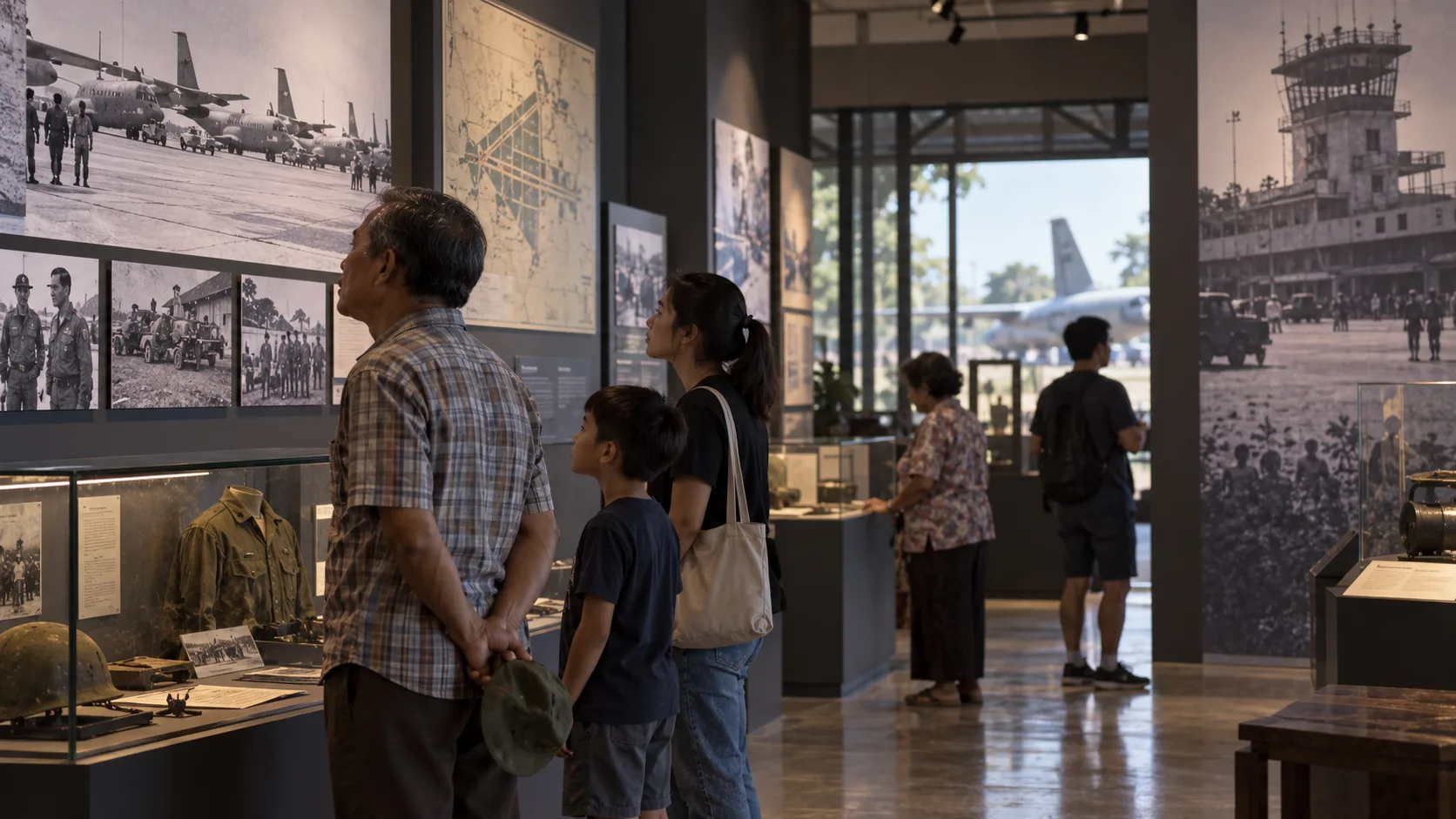
At Nong On, visitors can explore the story of Ho Chi Minh's years in Thailand.
At the former Ramasun site, the remains and memories of one of the Cold War's major listening stations survive.
The modern airport itself shares the landscape with the former Udorn military airfield.
Families in Udon still carry memories of American friends, employers, husbands and fathers.
Businesses founded during the boom years became part of the modern city.
And English words, Western food, music and relationships that once appeared startlingly foreign became part of Udon's cultural mixture.
One City, Two Sides of History
Perhaps the most remarkable thing about this story is where it began.
A Vietnamese revolutionary once lived quietly among villagers outside Udon Thani, organising a movement against colonial rule.
Four decades later, American fighter and reconnaissance aircraft were taking off nearby to operate against the country he had helped create.
Between those two moments, a provincial Isan city became connected to Washington, Hanoi, Vientiane and the wider Cold War.
The Americans brought investment, jobs, technology, new businesses, music and contact with the outside world.
They also brought the economic and social distortions that accompany major military deployments, along with Udon's involvement in bombing campaigns, covert warfare and intelligence operations whose consequences were being felt far beyond Thailand.
Both things can be true.
Udon Thani benefited from parts of the American presence.
Udon Thani was also transformed by a war whose violence was principally being experienced elsewhere.
The result is not a simple story about heroes and villains.
It is the story of how global events arrived in an Isan city and changed it permanently.
And once you know that history, modern Udon Thani looks slightly different.